

This is The Rotten Apple, an inside view on food fraud and food safety for professionals, policy-makers and purveyors. Subscribe for insights, latest news and emerging trends straight to your inbox each Monday.
Shocking figures for (supposedly) antibiotic-free meat
Unusual pathogen-food combo: botulinum in avocado pulp
Global food safety watch: a ‘low and slow’ outbreak from potatoes?
Cocaine vs olive oil
Food fraud news, horizon scanning and recent incidents
Hello,
Welcome to another issue of The Rotten Apple. An extra special huge welcome to 👏👏Chuck from the US and Erika from the bakery 👏👏 who upgraded their subscriptions. I’m thrilled to have your financial support, thank you.
In this week’s issue, I share shocking numbers related to false claims of ‘antibiotic-free’ meat - three of the United States’ four biggest meat companies are involved. Also this week: I found two unusual food-pathogen combinations in my weekly trawl of food safety news from around the globe and two new food safety terms you need to know about.
Finally, if you were involved in organised crime, which would you prefer: cocaine or olive oil? The answer might surprise you.
As always, this week’s issue concludes with food fraud updates for paying subscribers. Rice features three times in this week’s food fraud news - who would have thought rice would be a target for fraudsters?
Karen
P.S. Got a burning food safety question you need answered? Or an interesting bit of news to share? Reply to this email, or write to me at therottenapple@substack.com and let me know. I love to hear from you.
Massive fraud in U.S. antibiotic-free meat
Consumers perceive antibiotic-free meat as a healthier, more ethical choice than meat from animals raised with antibiotics and pay higher prices for such meat. However, recent investigations reveal that many ‘antibiotic-free’ products in the United States are not what they claim to be.
Last year, I shared shocking figures released by the USDA’s Food Safety Inspection Service (FSIS) based on the results of a 2023 testing program that included 189 samples from 84 slaughter establishments in 24 states.
The FSIS found antibiotic residues in liver and kidney samples of 20% of cattle destined for the ‘Raised without antibiotics’ (RWA) market.
That is, approximately 20% of US beef claimed to be raised without antibiotics was being marketed with false claims.
🍏 Find my original report here 🍏
What surprised me, when I stumbled upon that data, published in August 2024, was that it had not provoked any kind of outrage – or in fact any response at all – in mainstream media outlets.
Surely this was a scandal that consumers would want to know about?
It didn’t help that the figures were not published as a report but buried in the ‘Background’ section of an FSIS page announcing a comment period on a guideline for meat labelling claims.

This was not the first time antibiotic residues had been found in RWA meat and cattle. In 2022, researchers from the George Washington University reported that 15% of US RWA cattle contained antibiotic residues. Also in 2022, advocacy group Farm Forward found antibiotics in RWA beef purchased from Whole Foods.
In letters from the USDA to the companies found to be engaging in deceptive behaviour, obtained under freedom of information by Farm Forward, the USDA told the companies they may have produced misbranded product but would not be subject to any enforcement action.
In 2025, Farm Forward publicly named the companies with positive results, revealing that antibiotics were detected in beef declared ‘Raised without antibiotics’ from three of the four largest meat processors in the US.
In their April 2025 report, Farm Forward said JBS and Cargill continue to sell RWA, while Tyson abandoned some of its RWA brands in July 2024, after the USDA tests.
Smaller companies are also alleged to be continuing to use questionable claims, with Farm Forward stating that three smaller brands that market their meat as “no antibiotics ever” and “raised without antibiotics” continue to sell meat despite receiving positive results in the USDA survey and without announcing any changes to procedures, nor sharing any subsequent test results to verify their claims.
The USDA, which must approve all RWA claims before they may be used by a company, has not made any changes to its approval process and continues to rely on producers’ self-reporting of antibiotic use.
However, the FSIS states it now “strongly encourages meat and poultry establishments to substantiate such claims by implementing a routine sampling and testing program to test for the use of antibiotics in animals prior to slaughter.” Or, as an alternative, to obtain third-party certification that involves antibiotic testing.
This means that meat marketed as ‘antibiotic-free’ or ‘raised without antibiotics’ in the U.S. may continue to be affected by false and misleading claims. The USDA does not publicly disclose violations, nor penalise companies for mislabelling. As a result, consumers continue to pay premium prices for meat that may not be true to label.
Antibiotic-free meat: the global context
Antibiotics are used in meat production to prevent and treat bacterial infections in animals. In the United States, antibiotics are also used to promote growth and improve feed efficiency, allowing farmers to produce more meat with less feed.
However, the use of antibiotics as growth promoters is effectively banned in many other countries worldwide. Such bans aim to limit antibiotic use and curb the rise of drug-resistant bacteria, which pose major threats to public health.
In the U.S., the meat industry accounts for a significant portion of all antibiotics used in that country. For example, in 2020 it purchased 69% of the U.S. supply of medically important antibiotics, with just 31% being used for humans.
There is no publicly available information about the proportion of antibiotics that are used for prophylactic purposes, such as growth promotion, compared to treatment of already-sick animals in the U.S.. However, compared to the European Union, the U.S. uses nearly double the quantity of antibiotics for livestock, based on 2020 figures.
‘Antibiotic-free’ meat is supposed to come from animals that have not received antibiotics at any stage in their lives. In the U.S., these products are labelled ‘Raised Without Antibiotics’ (RWA), a claim that is regulated by the U.S. Department of Agriculture (USDA) but which relies on self-attestation by meat producers.
Theoretically, under the USDA RWA program, if an animal falls ill and requires antibiotics, it is removed from the program by the farm operator, and its meat should not be sold under the antibiotic-free label.
Globally, only 20% of countries still use antimicrobials as growth promoters in meat production. In the European Union, antibiotics have not been permitted for use as growth-promoters since 2006, with China following suit in 2020.
There are partial restrictions in Australia, Canada, Uruguay, and Brazil, with most countries outlawing the use of antibiotics that are medically important for humans for use as livestock growth-promoters, while allowing other antibiotics to be used for such purposes.
A loophole related to the labelling and registration of feed additives exists in some countries. Feeds may contain undeclared low doses of antimicrobials, which are then unknowingly administered by farmers and veterinarians to their animals.
Globally, false claims of ‘antibiotic-free’ status may occur in any market where consumers pay a premium for meat labelled as such.
In short: USDA testing of animals destined for the ‘Raised Without Antibiotics’ market (RWA) revealed 20% of animals contained antibiotic residues 🍏 Companies were not named and no enforcement action was taken, despite the USDA telling companies they may have sold misbranded product 🍏 FSIS says it strongly encourages meat and poultry establishments to implement testing programs or engage with certifiers that use testing programs, however this is not mandatory 🍏 Purchasers of meat marketed as ‘antibiotic-free’ or ‘raised without antibiotics’ should be aware that these claims could be false 🍏
Main sources (minor sources are hyperlinked in the text):
Gillespie, K (2025) Is “Antibiotic-Free” Meat Really Antibiotic-Free?, Farm Forward [online]. Available for download from https://www.farmforward.com/publications/is-antibiotic-free-meat-really-antibiotic-free/
USDA (2023). Availability of FSIS Guideline on Substantiating Animal-Raising or Environment-Related Labeling Claims | Food Safety and Inspection Service. [online] Available at: https://www.fsis.usda.gov/policy/federal-register-rulemaking/federal-register-notices/availability-fsis-guideline.
Unusual pathogen-food combination
I strive to keep you up to date with food safety incidents that are unusual, so you can stay on top of new trends and emerging risks.
Last week I saw a new pathogen-food combination: botulism from guacamole.
Avocado pulp in 1 kg packages – official notices also refer to it as ‘guacamole sauce’ - was recalled in Italy after nine people were hospitalised with neurological symptoms indicative of botulism.
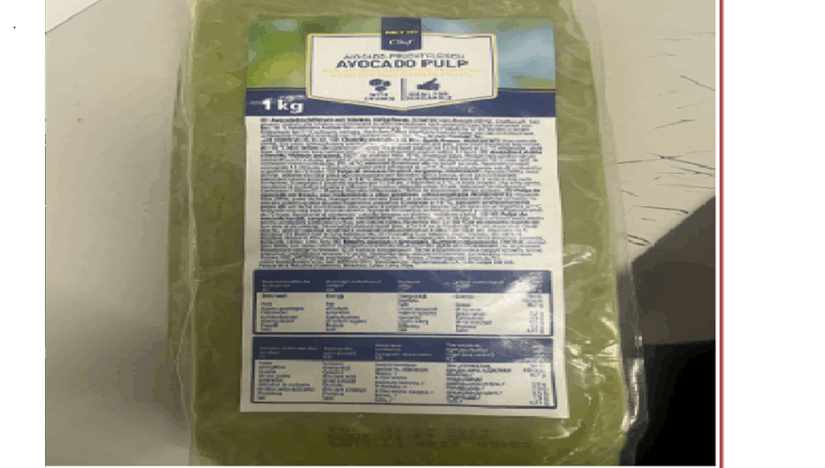
One person has died.
The cases are being investigated by food safety enforcement officers.
Botulism has never before been linked to avocado pulp, or any fruit pulp for that matter. Outbreaks are most commonly associated with home-canned vegetables, fish, meats, fermented foods, and vacuum-packed or improperly stored low-acid foods.
More outbreak and recall information: EC Notification, UnioneSarda.it
Did you know…
A Belgian professor of bacteriology chose the name Clostridium botulinum for the deadly pathogen in 1895, after its association with sausage-related food poisoning. The latin word for sausage is ‘botulus’. (Erbguth, 2004)
Global food safety watch: Listeria from potatoes?
Plus two new food safety terms you should know
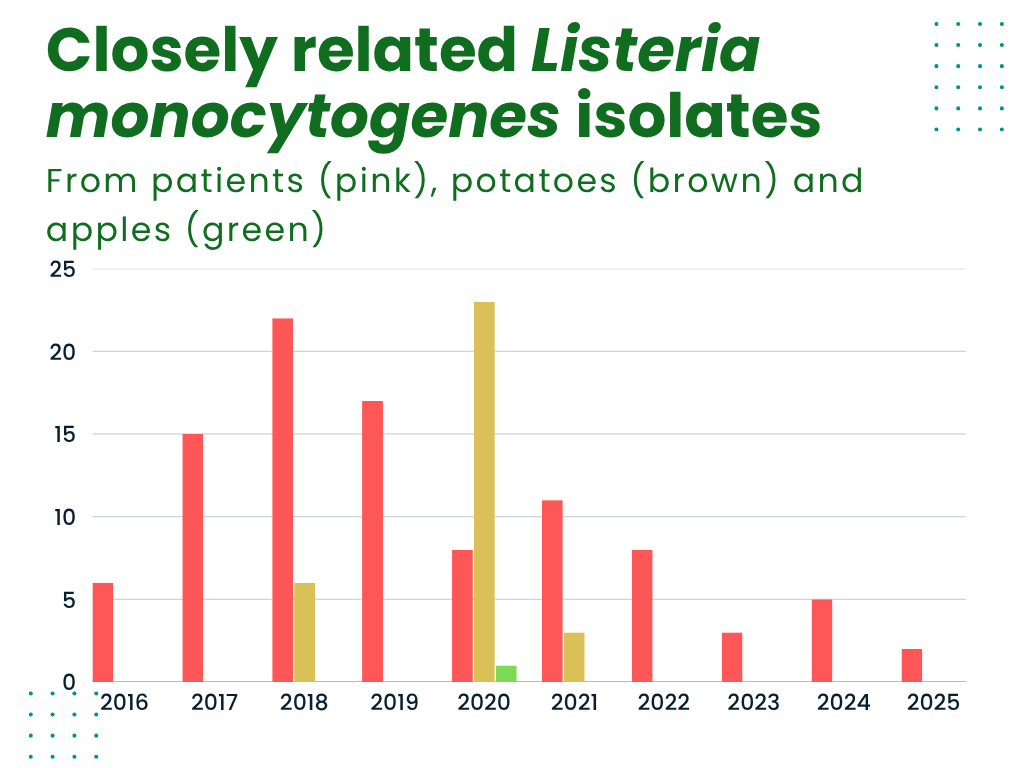
In the U.S., Bill Marler, food lawyer, writes in Food Safety News about 97 possible cases of listeriosis caused by closely related or identical strains of Listeria monocytogenes that were also found 32 times in potatoes. The strain information comes from PulseNet USA and the detections date back to 2016.
This appears to be a long-term outbreak, starting in 2016 and causing illnesses year after year since then.
Marler discusses the concept of ‘low and slow’ outbreaks that occur over long periods and explains how these outbreaks are being revealed by the increased use of whole genome sequencing in the past decade.
He suggests the multi-year occurrence of closely related L. monocytogenes isolates in potatoes and patients constitutes a ‘low and slow’ outbreak.
Marler asks: Where is the investigation? And, by inference, what’s being done to stop this probable outbreak from sickening more people for another nine years?!
Comment:
I got serious Jensen Farms cantaloupe vibes reading Marler’s article. If you recall, at least 33 people died in that outbreak – one of the deadliest in U.S. history. The deadly cantaloupes had been contaminated with Listeria during the washing and packing processes on the farm.
Investigators discovered that prior to the outbreak (2011), the farm had installed a fruit washing system that had previously been used for cleaning potatoes. The equipment was not designed for cantaloupe and had surfaces that were corroded and difficult to clean, creating conditions where Listeria could survive and thrive.
If potato washing equipment caused cantaloupe to be contaminated with Listeria, then it could certainly do the same for potatoes.
But how bad must the contamination be? Pretty bad, I think. If almost 100 people have been sickened by potatoes, a food that is always cooked before consumption, the levels of contamination and the quantities of affected produce must be quite high.
This is the first time I’ve heard the term ‘low and slow’ for multi-year outbreaks. I really like it.
Since whole genome sequencing became more common in the mid to late 2010s, we’ve seen many of these ‘low and slow’ outbreaks globally, including a multi-year listeriosis outbreak linked to smoked salmon and other fish products from a single facility in Denmark and a multi-country, multi-year outbreak from enoki mushrooms.
Low and slow outbreaks affect small numbers of people from year to year but can last for a decade or more. This means an apparently isolated illness in one year can actually indicate a significant public health issue that could ultimately affect hundreds of individuals.
Low and slow outbreaks are caused by repeating, emerging or persistent (REP) strains of pathogens. As Marler says, “REP-strains may cause outbreaks with different food vehicles if the ultimate source is outside the food production systems or with just one vehicle if a specific production system has been contaminated”.
In short: There seems to be a multi-year outbreak of listeriosis from potatoes in the US 🍏 Data from PulseNet dating back to 2016 links 97 human isolates to L. monocytogenes found in potatoes 🍏 Two new food safety terms: ‘low and slow’ outbreaks, which affect small numbers of people each year over many years and REP - repeating, emerging or persistent strains of pathogens - were introduced in this article🍏
Source:
Read more about this, including a heartbreaking description of the impact of listeriosis, here: Mystery Listeria outbreak investigation needs to be reopened | Marler | Food Safety News
Cocaine vs Olive Oil
The criminals’ choice
Organised crime in food: scary! But not new. In fact, it’s widely believed that the Italian mafia owes its existence to the early days of the Sicilian lemon export industry in the 1870s.
More recently, members of the Italian Piromalli clan, which is described as the ‘Calabrian mafia’, were arrested in 2017 for operating businesses that exported large quantities of fake olive oil to the United States. They were charged with commercial fraud crimes and with being members of mafia-type criminal networks.
When consumers think of organised crime, they usually imagine drugs and guns, not food. But food crimes are said to be extremely appealing to criminals because the penalties are typically much less severe than for other crimes.
It’s also been said that compared to smuggling cocaine, the profit margin from making and selling fraudulent olive oil is three times higher.
Cocaine smuggling is riskier, with higher penalties, and less profitable than making and selling fraudulent olive oil. No wonder the crooks have turned to food crime!
Below for paying subscribers: Food fraud news, horizon scanning and incident reports
📌 Food Fraud News 📌
In this week’s food fraud news:
📌 Two massive rice adulteration rackets uncovered
📌 Undeclared pharmaceuticals found in ‘natural’ supplements
📌 ‘Inconsistencies’ discovered in truffles and vanilla
📌 Warnings for rice, orange juice and hazelnuts.
🔹Food fraud incidents and risk predictions from iComplai’s AI-powered food safety and food fraud intelligence platform🔹
🔹 A supplement brand owner has warned consumers of fake versions of its traditional Chinese medicine products that have been detected in the market. The counterfeit products included items sourced from retail locations and advertisements on websites and social media – Singapore 04/08/2025 🔹
🔹 Authorities seized rice (12.5 tons), scales and a vehicle from a rice adulteration/blending operation that had allegedly been running for more than two years, producing 12-14 tons daily. It’s alleged that every 1 kg of premium-grade rice was diluted with 10 kg of medium-grade rice, with the resulting mix sold as premium-grade rice and labelled with falsified national standards and halal logos – Indonesia 05/08/2025 🔹
https://en.antaranews.com/news/371277/premium-rice-scandal-east-java-police-bust-125-ton-operation 🔹
🔹 iComplai is an AI-powered food safety intelligence platform that helps companies detect potential risks, monitor their supply chains, and optimize food safety protocols through advanced analytics and real-time data🔹
🔹Horizon scanning news from iComplai’s AI-powered food fraud risk prediction service🔹
🔹 Rice (Japan)
Key rice-producing regions in Japan have