
202 | A Child Writhing in Pain (Why This Food Safety Professional Will Never Compromise) |
Plus: cultivated chicken taste test - 15 consumers share their thoughts

This is The Rotten Apple, an inside view on food fraud and food safety for professionals, policy-makers and purveyors. Subscribe for insights, latest news and emerging trends straight to your inbox each Monday.
Follow-up: botulism root cause and manslaughter charge
“I nearly lost him”… a heartbreaking story of food safety failure
Food Safety News and Resources
What does cultivated meat really taste like - 15 consumers share their experience
Food fraud news (lots of incidents this week)
Today’s issue comes with a trigger warning. I cried when I first read today’s headline story on LinkedIn. And I’m crying again as I prepare it for you.
I’d like every ignorant, penny-counting food company executive who forces bad decisions on their food safety team to cry too. If you know someone who needs a wakeup call about the importance of preventive controls, please share this week’s edition with them.
And pass the tissues.
Also this week, a follow-up to last week’s botulism story and an interesting perspective on cultivated meat, straight from the mouths of ordinary consumers.
Thanks for being here,
Karen
P.S. Shoutout to 👏👏 Kristine from Norway, Ben from the UK, Corlia from South Africa, Jessica from Australia, Ana from Poland and Concetta 👏👏 for renewing your paid subscriptions. Thank you for your ongoing support, this newsletter couldn’t exist without readers like you.
Follow-up: Botulism investigation reveals possible cause
Officials investigating the botulism deaths linked to guacamole consumed at a festival in Italy last month have told a Sardinian newspaper about a possible cause.
As I reported last week, this is the first time the deadly foodborne illness botulism has been linked to avocado pulp or guacamole.
Acting on the instructions of the public prosecutor, members of the special food safety enforcement agency, the NAS Carabinieri, visited a warehouse used by the organisation that operated the festival that served the suspect food. The organisation and its warehouse are located in Turin, many hundreds of kilometres from the location of the outbreak on the island of Sardinia.
At the site they found food and beverages stored incorrectly and exposed to high temperatures.
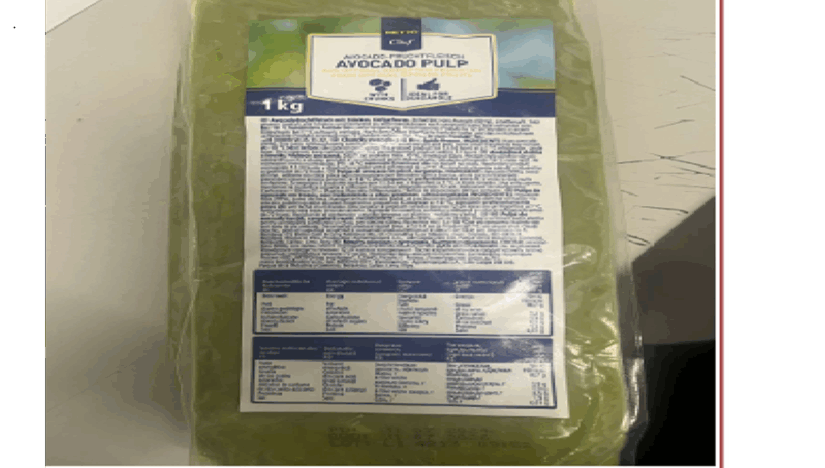
Foods that are supposed to be refrigerated to prevent the growth of Clostridium botulinum, but which have been subject to ambient or high temperatures, pose significant risks. When such foods are warmed, the pathogen can grow and produce the toxin that causes botulism.
I wonder if that is what happened with the deadly avocado pulp? (Avocado pulp has a pH of 6.5)
This reminds me of a case in 2023, when an Australian man was hospitalised with severe symptoms after consuming plant-based milk containing botulinum toxin. The milk was supposed to be kept chilled but did not carry a warning to keep refrigerated.
I’m impressed with the speed of the investigation and the willingness of Italian authorities to share details with the media. One person has already been charged with manslaughter in relation to this outbreak. We don’t often hear of such decisive action from other countries.
Source:
Redazione (2025). Botulinum: NAS at the Fiesta Latina headquarters: massive food seizure. [online] L’Unione Sarda English. Available at: https://www.unionesarda.it/en/sardinia/botulinum-nas-at-the-fiesta-latina-headquarters-massive-food-seizure-b0169wpa.
🍏 Learn more about Clostridium botulinum in Issue 79 Remarkable Botulism – the Putin of food pathogens | The Rotten Apple 🍏
“I nearly lost him”… This is the face of a food safety failure
Guest article by Bonna Cannon
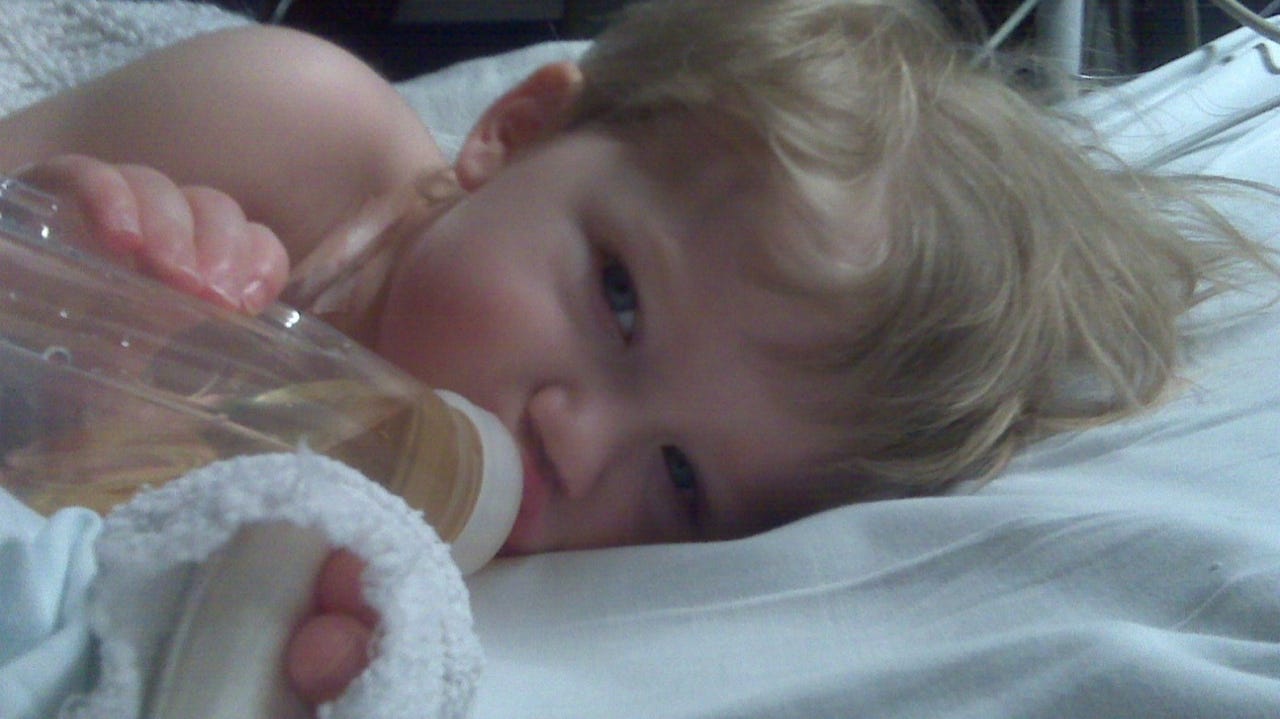
This is my son in 2009—one of only three photos I have from that time. Not because I didn’t want to remember. I was too busy trying to help him fight to stay alive.
He had just barely survived. Dialysis, blood transfusions, and trauma no child should ever endure, all from E. coli O157:H7 in contaminated food.
Let me be clear: I was with him nearly every minute. I saw everything. The things no one talks about in recall announcements. The things people tell me they want to know and then can't hear.
⚠️ It Was a Horror Movie I Couldn’t Leave
He suffered from excruciating abdominal pain, convulsing constantly. His intestines were shedding cells. Shiga toxin poured from his body, and every surface it touched—internal and external—became inflamed and raw as layers of tissue died.
The pain was relentless. He couldn’t rest. He couldn’t even cry anymore—he was in shock and had stopped speaking entirely.
I kept trying to reposition him. To ease a spasm. To shift the pressure. To make the pain just a little less. Nothing worked.
And just as the spasms began to slow… his body started to swell. His kidneys had completely shut down. As the toxin dissolved his red blood cells, fragments lodged in the kidneys. Then, they began to necrotize—a clinical way to say they rotted from the inside out.
🛑 The Day Before, I Was Just an “Overreactive First-Time Mom”
That’s what the pediatrician told me. I was “overreacting.” “Just a rash.” “Just a virus.”
That night, I was in the back of an ambulance, holding my son and praying he’d survive the ride to Seattle Children’s. There was no helicopter available.
The next morning, we were in a hospital room. A central line had been placed in his neck—for blood transfusions, dialysis, and IV nutrition.
I sat beside him, stroking his hair, whispering lullabies, and in my head I was bargaining with God.
Then my phone buzzed.
An automated message from Costco about a meat recall. I was enraged. As a Food Safety and Quality Director for a Costco supplier, I had contacts—and I used them. I called. I demanded answers.
And while I was still reeling, the phone rang again. Another product. Another recall. I couldn’t believe what I was hearing.
I wanted life to go back to “normal.” But there is no going back.
He Survived. But We Did Not Walk Away Unchanged.
Today, my son lives with the lifelong effects of hemolytic uremic syndrome (HUS):
Permanently compromised kidneys
Continual lab work and specialist visits
Hydration that must be precisely managed—especially when he’s ill
Life shaped by vigilance and restriction
And the question that never goes away: How long do we have before something changes?
💸 $737,000 and Counting
His medical expenses now exceed $737,000.
And still—we’re lucky. We lived 2 hours from Seattle Children's Hospital, where so many of the Jack-in-the-Box victims [of a previous and deadly E. coli outbreak] were treated. He survived.
But every day, we carry the cost of someone else’s decisions:
To ignore a control
To sit on positive test results
To delay action
To say, “Let’s wait and see,” before issuing a recall.
⚠️ I Live With the Consequences Others Shrug Off
I’ve spent decades in food safety, quality, regulatory, engineering, and operations. I’ve led programs at some of the biggest names in the industry. I’ve been called intense. Difficult. Uncompromising.
But I’m not biased.
When people don’t know my story as a mother, they just see a problem-solver. A risk mitigator. And that’s what I am.
I’m not biased. I’m more informed than anyone should ever have to be.
Because I’ve lived through the cost of “wait and see.” Because I’ve held the agonizing weight of failure writhing in my arms. Because I’ve walked through plants and heard people say:
“We can’t afford to fix that this year.”
Yes—you can. You just haven’t witnessed what happens when you don’t. Or had the courage to listen to someone who has.
🧬 Quality Is Shades of Gray. Food Safety Is Black and White.
Want to debate quality issues - color variation, flavor drift, or market expectations? Sure. I’ve released plenty of product after consumer panels and sound judgment. That’s quality. That’s gray.
But food safety is not subjective. It is safe—or it is not.
I have shut down plants. Turned truckloads of product around. Gotten into heated arguments with some of the biggest names in the industry—and sent their product straight to the landfill as they threatened to have me fired.
Why? Because no job, no title, no bonus is worth compromising someone’s life.
And I’d do it all again without hesitation. There is no “gray” when someone’s life is on the line.
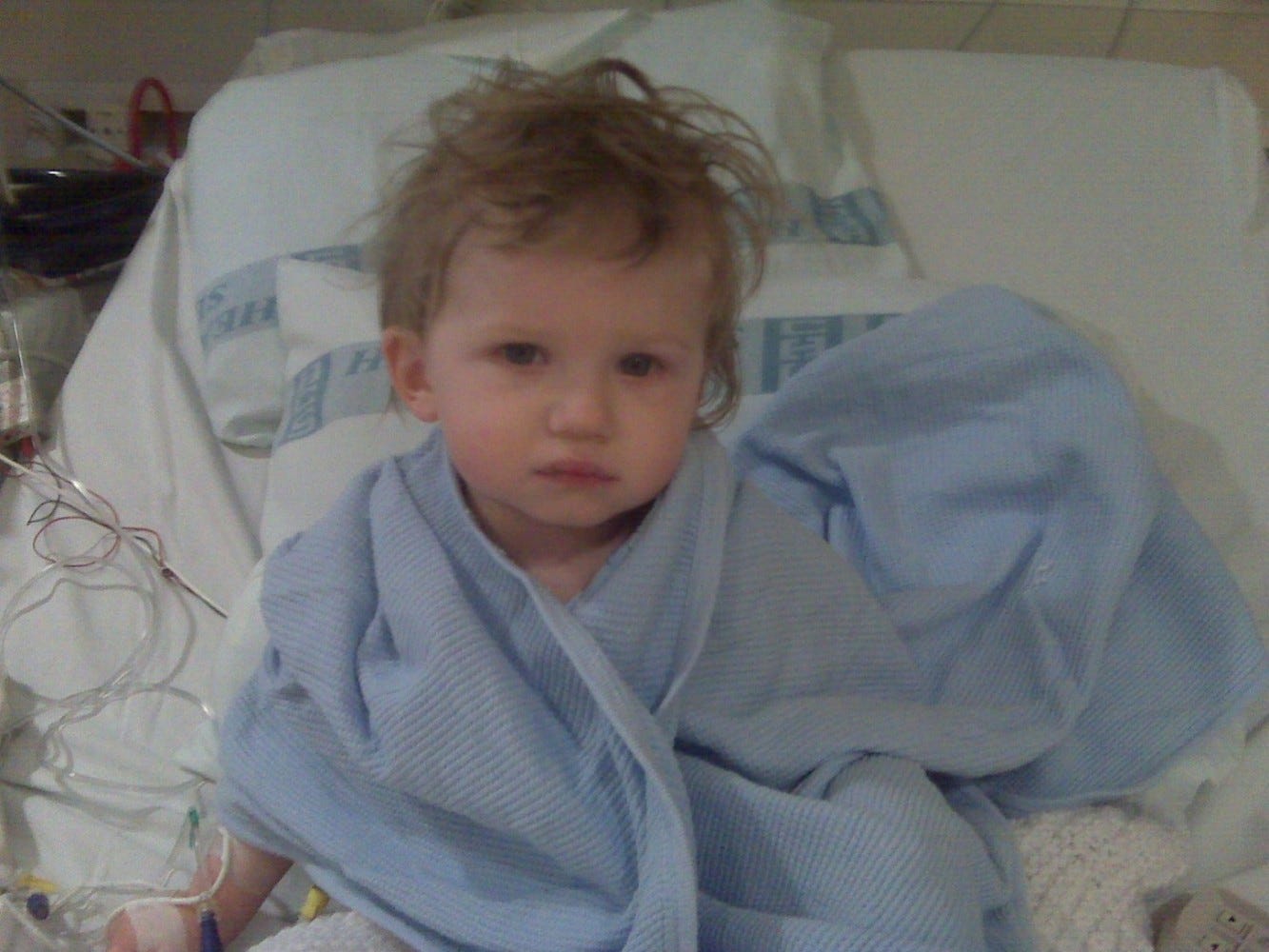
💡 Final Thought
If this photo makes you uncomfortable, it should.
Because this isn’t about:
Metrics
Dashboards
PowerPoints
Board Reports
This is about:
A child writhing in pain
A parent singing through tears
A lifetime of irreversible consequences
Food safety is not a department. It is not a cost center. It is not a luxury.
It is a responsibility. And you either honor it—or you don’t.
So no— I will not be quiet. I will not be more “accommodating” of potential adulteration. And I will never treat food safety like a budget line item.
Food safety is a basic human requirement.
If it were your child? You’d see it in black and white, too.
Thank you, Bonna for sharing your story with us.
Bonna Cannon is a food safety and sanitation leader with deep expertise across food processing, including operations and engineering, and is driven by the near loss of her child to E. coli O157:H7. With a technical lens and a systems-based approach, she transforms complex food safety and regulatory challenges into scalable, preventive solutions. Get help from Bonna.
Food Safety News and Resources
I personally select food safety news from around the globe for The Rotten Apple’s food safety news roundups, to ensure you will learn something new and not have to wade through any spammy stuff or boring bits.
In this week’s roundup: another deadly botulism outbreak in Italy 😮
Click the preview box below to access it.

What does cultivated meat really taste like - 15 consumers share their experience
When I first started The Rotten Apple, food industry news was bursting with excitement for cultivated meat. Not so much anymore.
Investors seem to be losing interest. There are major challenges with scaling production and these don’t appear to have been successfully tackled yet. And there are ongoing safety and ethical issues.
Safety-wise, the low-likelihood-but-high-consequence hazard of prions in mammalian meat doesn’t seem to have been adequately addressed.
On the ethical front, the use of significant quantities of fetal bovine serum (FBS), which is harvested from the blood of the foetuses of slaughtered pregnant cows, remains problematic.
Read more about these two challenges (and get a glimpse of a mammoth meatball) in the special issue linked below.
🍏 Cultivated Meat Safety, Fraud Risks and Surprises | The Rotten Apple 🍏
The other aspect of cultivated meat I’m super-curious about is the eating experience. What does it taste like? Is the texture too weird? Is there an inadvertent ‘eww’ response to eating something made with foetal serum and growth promoters?
I’d love to know more.
So I was very excited to discover a peer-reviewed paper in npj Science of Food that describes a public tasting of cultivated chicken, hosted by Upside Foods, the first company to achieve regulatory approval in the United States.
While there have been other small tasting events of cultivated meat globally, those are typically attended by food writers and creatives who have been selected by the cultivated meat company or its partners.
This event, however, was open to the public. Attendees watched a chef cook Upside Foods cultivated chicken in the form of “small, amorphous cutlets,” which were then used in a tostada - a layered dish of fried tortilla, guacamole, chipotle aioli and sprouts.
As the meat cooked, it developed “randomly distributed red and browning rivulets,” say researchers who attended the event and interviewed members of the public who were present.
Approximately 75 servings of tostada were prepared. Nineteen people were interviewed. Of those, 15 had tasted the food, including 5 vegans.
Here’s what they said about it.
58% liked the taste
11% didn’t like the taste
11% mixed reaction
11 out of 15 tasters (73%) requested improvements
16% wouldn’t try it again
26% would try it again
32% willing to consume or purchase regularly
All but one interviewee said the cultivated chicken needed substantial further improvement. The meat was described as:
Rubbery
Real thing
Similar to plant-based meat
Worse than plant-based meat
… and three of the fifteen people who had eaten the meat said it was worse than alternatives, with respect to flavour and texture.
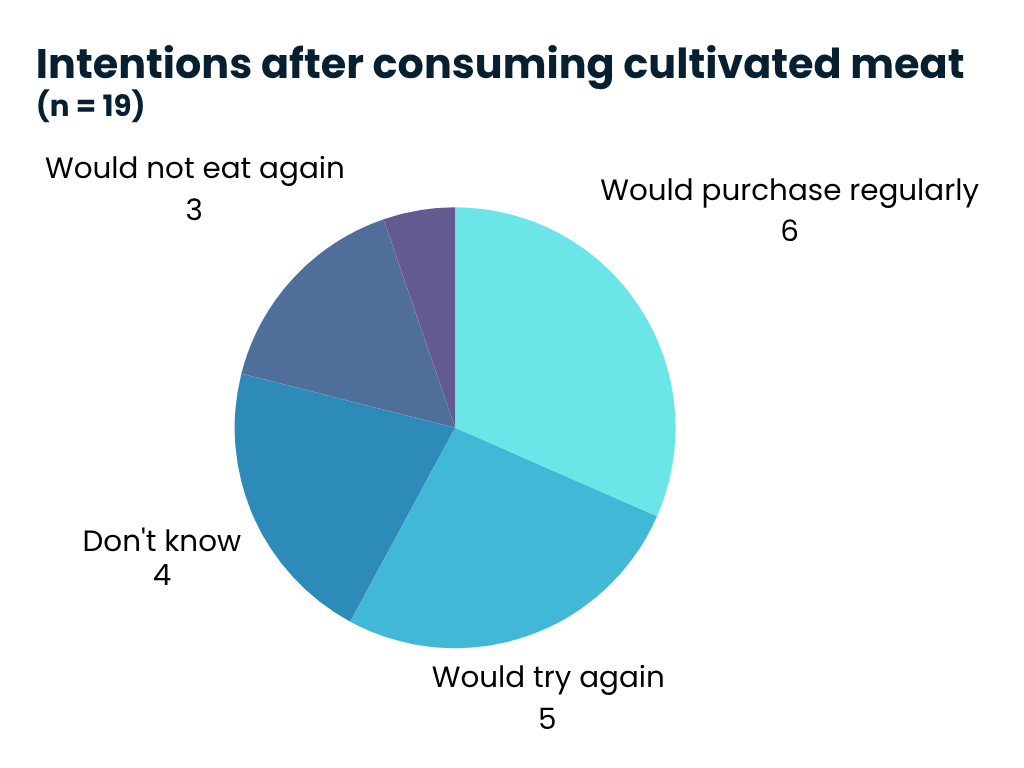
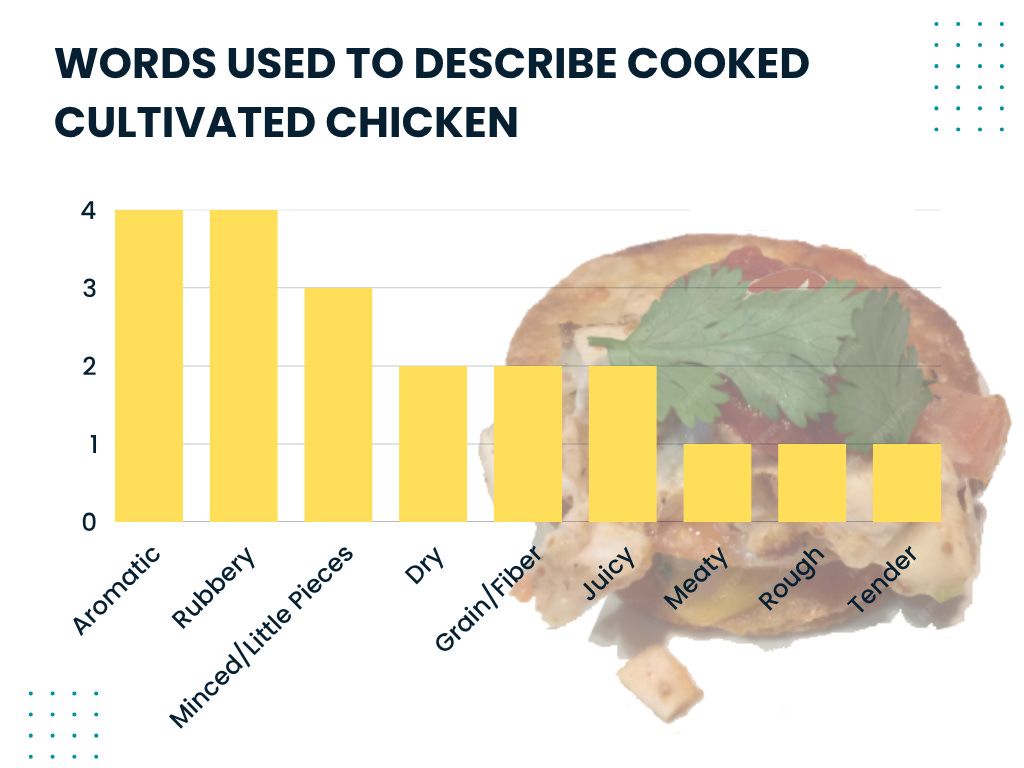
The characteristic of the meat that elicited the most responses was its texture, with descriptors such as “rubbery”, “minced meat”, and “sliced just like conventional chicken” used by tasters.
“The fibers of the chicken breast weren’t there; it felt a bit more like minced meat put together into a nugget. A little bit rubbery, tougher.” A member of the public after eating Upside Foods’ cultivated chicken
Attendees raised concerns about the meat during their interviews, including:
Is it authentic cultivated meat (how do we know you didn’t just buy this at Walmart?)
Concerns that cultivated meat includes animal ingredients
The event was promoted to vegans and vegetarians via social media. Unfortunately, tasters only learned the product was made with bovine serum after they had eaten it.
Vegans and vegetarians were shocked that it tasted so chicken-like, saying they had forgotten the taste of chicken. One said the chicken taste “knocked me off guard”. Others said the experience was “disturbing” and “overwhelming”.
“It actually looks, smells, and tastes kind of like real meat.”
I loved learning about this event, and seeing consumer responses documented scientifically in a peer-reviewed journal.
What about you? Would you eat cultivated meat? Are you concerned about its safety or ethics?
Source:
Gerber, S., Bae, H., Ramirez, I. and Cash, S.B. (2025). Publicly tasting cultivated meat and socially constructing perceived value politics and identity. npj Science of Food, [online] 9(1). doi: https://doi.org/10.1038/s41538-025-00449-0.
Below for paying subscribers: Food fraud news, horizon scanning and incident reports
📌 Food Fraud News 📌
In this week’s food fraud news:
📌 Online event for food fraud thought leaders
📌 EU food fraud roundup
📌 Methods for turmeric, avocado oil, chicken meat origin, chilli powder and dong quai
📌 Incidents with fresh fruit and veg, an outrageous rate of species fraud in seafood, buffalo meat, ginger and warnings for goat milk and coconut oil.