
204 | The Scariest Food Invention of the Decade? |
Plus, radioactive shrimp update, an awesome webinar and some very silly memes

This is The Rotten Apple, an inside view on food fraud and food safety for professionals, policy-makers and purveyors. Subscribe for insights, latest news and emerging trends straight to your inbox each Monday.
Webinar invitation: innovation in early warnings for outbreaks
The scariest food invention of the decade
Update: radioactive shrimp
Silliest shrimp memes from the past week 😁
Food fraud news and recent incidents.
Welcome, hello, hi!
It’s fantastic to have you here, for Issue 204 of The Rotten Apple. If you’re new here, I’m Karen and every week I collect the most interesting food safety and food fraud news from around the world just for you. My aim: to keep you up to date while respecting your inbox.
Before we jump into this week’s issue, I want to share some extra context around last week’s somewhat cynical comment related to FSIS inspections at the U.S. liverwurst manufacturer that sickened and killed dozens of people with Listeria last year.
What I said was not strictly correct, in that the facility in question was inspected by inspectors employed by the State of Virginia, not by the Food Safety Inspection Service (FSIS). I was aware of this but chose not to include it because it overcomplicated what was already an aside to the main topic of the article.
The State inspectors were working on behalf of the FSIS, which authorises State agencies to perform inspection duties on its behalf under the Talmadge-Aiken Act. However, the FSIS retains ultimate responsibility for ensuring such inspections meet federal standards.
To speak with my usual Aussie bluntness, if the State inspectors were not good at their jobs, any failings were still on the FSIS - the buck stopped with them.
Thank you to Caleb for writing in about this and keeping me on my toes. I really appreciate it when readers take the time to share their knowledge with me.
Moving on! In this week’s issue, I discuss the scariest food invention of the past decade - and bemoan the fact that I haven’t tasted it yet. And I share some very interesting new angles on the radioactive shrimp story.
And paying subscribers can read about how a whistleblower with a video camera resulted in multiple jail sentences and large fines for fraud affecting thousands of lots of food.
Enjoy!
Karen
Join us! How food brands are using consumer self-reporting for early warning
Webinar
Our next live event is with Patrick Quade, the founder of IWasPoisoned.com who is going to share an increasingly powerful system that can flag outbreaks earlier than traditional medical reporting networks, and show us how brands can use this knowledge to reduce the size of recalls and limit brand damage.
This webinar is for:
Food safety managers at quick service restaurant chains, manufacturers and retailers
Policy makers and enforcement agencies.
Click the preview box below for joining details.
And add it to your calendar - no reminders will be sent!

Is this the scariest food invention of the decade?
Dubai chocolate, a perfect storm of food safety and food fraud risks

My mission for today was to track down and purchase some Dubai chocolate, but it was surprisingly difficult to source in my part of Sydney. And then I researched this article and wondered whether it’s too much of a food safety risk to eat anyway…
Dubai chocolate is a filled chocolate confectionery that was developed by a chocolatier in Dubai in 2022 and went viral globally in 2024.
It is a milk or dark chocolate bar filled with a Middle Eastern-inspired composite of pistachio paste, tahini (sesame seed paste), and toasted, crispy kataifi (shredded phyllo/filo) pastry.
By all accounts, Dubai chocolate is super-tasty, but it is also a perfect storm of food safety risk at the moment. Let’s explore the food safety and food fraud risks one by one, from Salmonella, to food fraud, mycotoxins, allergen risks and illegal imports….
Salmonella in pistachio and sesame paste
Salmonella is notorious for remaining infective for long periods in high-fat, low-moisture foods like nut butters and sesame paste.
In Canada there were multiple recalls of pistachio-based products last month due to links with a Salmonella outbreak. Pistachio kernels, pistachio spread, pistachio gelato, and chocolate containing pistachio and knafeh (‘Dubai chocolate’) from various brands were recalled.
In the United States, pistachio cream spread was linked to an outbreak of Salmonella oranienburg that began in June and sickened four people. The pistachio cream was manufactured in Turkiye and was recalled in July.
Dubai chocolate has led to a surge in demand for pistachio cream in countries where it was previously rare, as home bakers and commercial confectioners recreate the product themselves.
My theory? Unscrupulous manufacturers and importers are rushing to meet the demand for pistachio creams and pastes, and not taking due care with their food safety processes and supplier approvals.
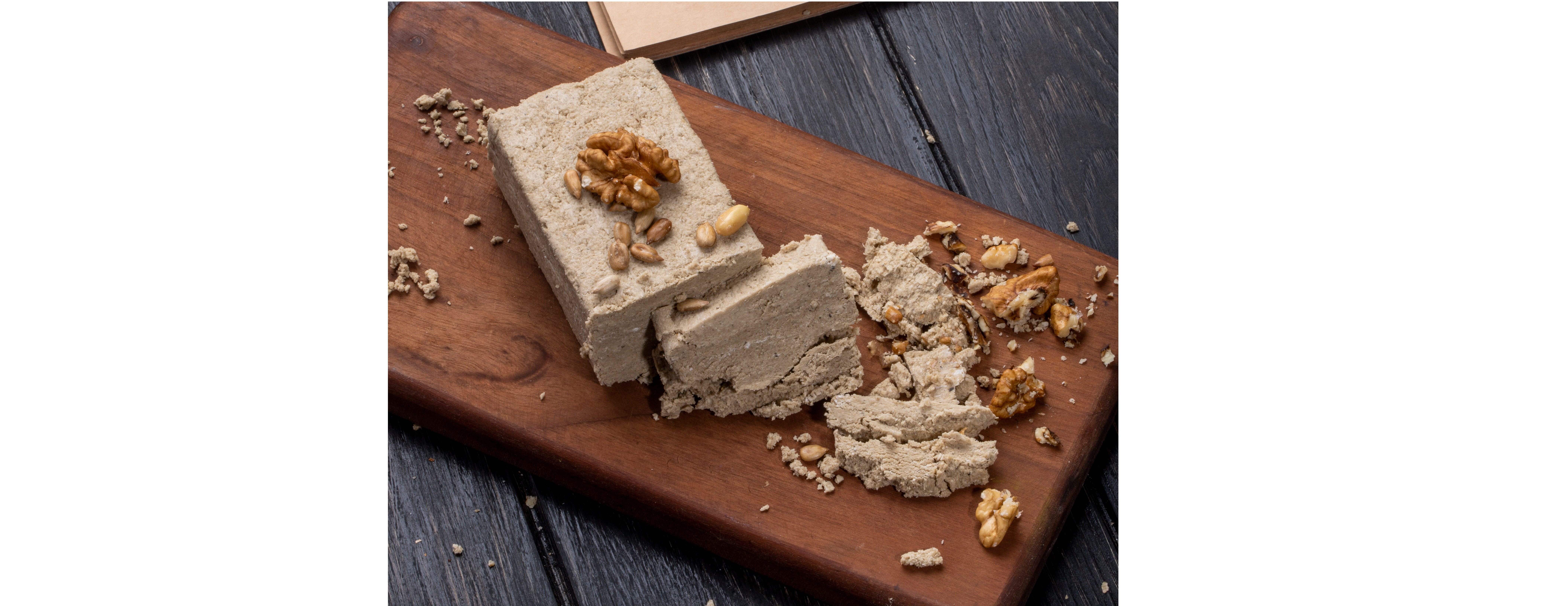
Another ingredient in Dubai chocolate, tahini (sesame paste), along with halva (a dense confection made from tahini combined with sweeteners like sugar or honey) is often implicated in Salmonella outbreaks, with more than 20 outbreaks from these ingredients documented in Western countries between 1995 and 2022.
Fraud risks for pistachios
There is a global pistachio shortage due to the popularity of Dubai chocolate. Supplies are tight, with the main global producers, the United States, Iran and Turkiye struggling to meet demand.
Prices are significantly higher than they were in 2024, with a 35% increase in prices in Europe and a 15% increase for U.S. wholesale prices between early 2024 and early 2025.
In April 2025, I published a food fraud warning for pistachio nuts, saying their prices had increased significantly in the previous twelve months, due to demand created by the extreme popularity of ‘Dubai chocolate’. Exports of pistachios from Iran to the United Arab Emirates had risen by 40%, while U.S. exports of pistachios had decreased by 20%.
The situation has not improved since April, with commodity supplier Kienia saying prices are expected to stay elevated until the last quarter of 2025, with prices only likely to fall if demand drops or harvests improve.
Increasing prices and sudden spikes in demand can increase the likelihood of food fraud, with false claims of quality grade, false claims of aflatoxin status, the addition of rocks or sticks to whole pistachios to increase weight and the undeclared addition of non-pistachio material in ground pistachio all possible.
Mycotoxins in pistachios and chocolate
With shortages, high demand and high prices, there is plenty of motivation for unscrupulous suppliers and traders to engage in deceptive behaviour that will enable them to fulfill orders and gain extra profit.
One form of deceptive behaviour is the forging of health certificates, laboratory results (certificates of analysis) and other documents intended to provide evidence that ingredients are safe and free from harmful contaminants such as mycotoxins.
Sadly, it was no surprise to learn last month that German officials had found excessive levels of aflatoxins and ochratoxin A in Dubai chocolate bars produced in the United Arab Emirates.
Aflatoxins and ochratoxins are potent human carcinogens and cause harm at tiny amounts - you don't want them in your sweets!
Aflatoxins are toxic compounds produced by Aspergillus flavus and Aspergillus parasiticus, that can grow on pistachios during growth, harvest, and storage. A study of imported pistachios purchased in Spain in 2007 found 50% of samples of bulk roasted nuts contained detectable levels of aflatoxin B1, albeit at levels below the maximum permitted level.
Unfortunately, if a load of pistachios is rejected by a conscientious buyer due to high aflatoxin results, the seller may attempt to sell the nuts to another buyer, or create falsified laboratory results so the nuts look ‘safe’. The result? Contaminated nuts are unwittingly used by manufacturers of pistachio pastes, creams and confections, resulting in too-high aflatoxin concentrations in finished products.
Ochratoxin A is a mycotoxin found in cereals and cereal products, coffee, dried fruits, spices, chocolate and wine, with cereals being the primary source contributing to about 50% of human dietary exposure to ochratoxin A compared to other mycotoxins.
I'm glad the German authorities tested the imported Dubai chocolate bars and found the toxins, but it makes you wonder.... how many other importing countries haven't tested?
Allergen risks
Undeclared allergens account for a huge proportion of food recalls worldwide every year. And Dubai chocolate is an allergen labelling minefield, containing at least five common human food allergens: tree nuts, milk, sesame, gluten-containing cereal (wheat).
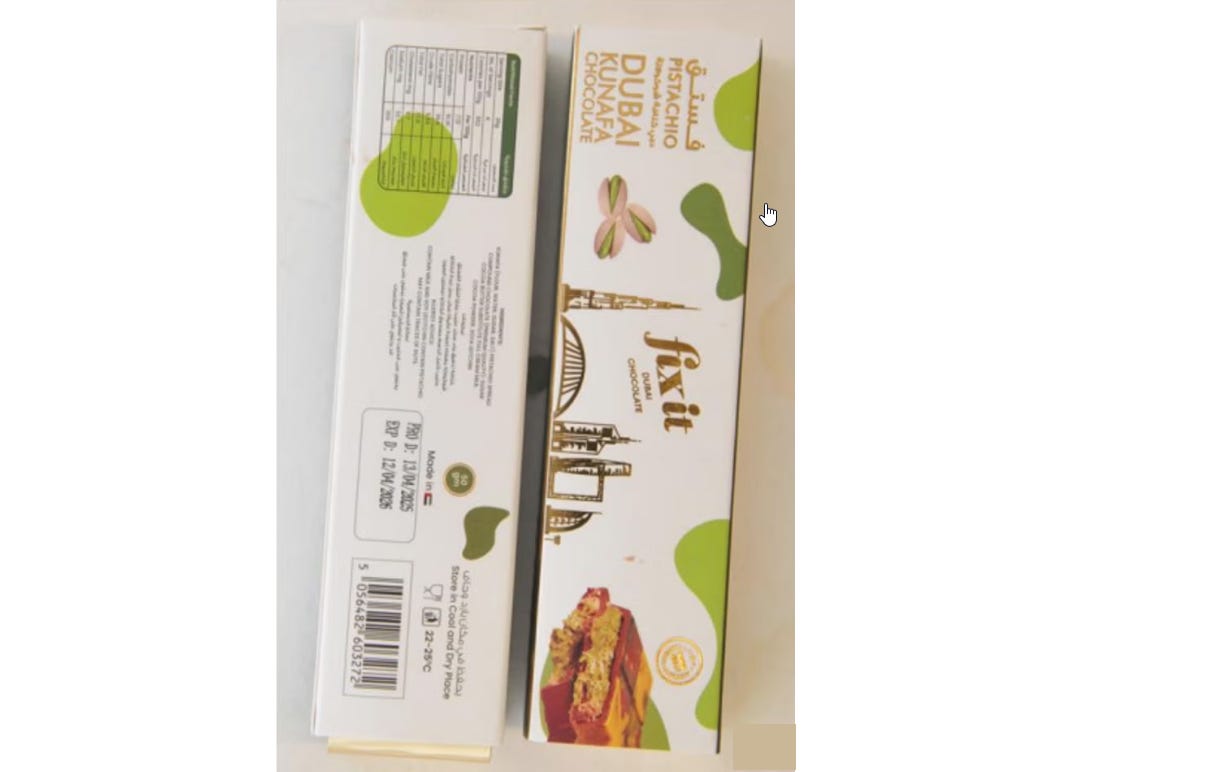
Last month, three brands of Dubai chocolate were recalled in the United Kingdom due to the presence of undeclared peanuts, almonds, cashews, and walnuts. Businesses received the products from a mysterious trading company that was uncontactable at the time of the recall.
One brand owner told news outlets that the affected products had not been manufactured by them or with their authorisation, saying the allergen-containing bars were counterfeits, made to mimic their products.
Illegal imports
In January 2025, a woman was caught in Germany with 460 bars of chocolate weighing 90 kg (198 lbs) concealed in her luggage after an international flight. Customs officials suspected they were being imported for commercial sale, because of the large number of bars and because of the popularity of the product.
Each bar was worth around 25 euros in Germany, and the woman told officials she had purchased them for 4.60 euros each. If successful, the smuggling would have resulted in the woman evading more than 330 euros of import duties. Concerningly, the bars had no ingredient or allergen information on their packs, posing serious risks to consumers.
Final thoughts
After writing this article, I’m kind of glad I didn’t succeed in my mission to purchase Dubai chocolate today. There seems a good chance I could have ended up with a product that was counterfeited, smuggled, contaminated with Salmonella or mycotoxins, and containing undeclared allergens.
Wowsers, is this the scariest food ‘invention’ of this decade?!
In short: Dubai chocolate was invented in 2022 and became a massive global food trend in 2024 🍏 Its popularity has resulted in a global pistachio shortage increasing food fraud vulnerabilities for the nut and causing prices to skyrocket 🍏Salmonella outbreaks have been linked to pistachios in recent months, and sesame paste, another ingredient in Dubai chocolate, is frequently linked to Salmonella outbreaks 🍏 Dubai chocolate has been found to contain carcinogenic mycotoxins, likely from pistachios and chocolate or wheat-based components 🍏 It has also been counterfeited, smuggled and marketed with improper allergen declarations 🍏It’s a food safety and food fraud ‘perfect storm’ (and supposedly quite delicious!) 🍏
Did you know…
While I always assumed mould growth mostly affected nuts during storage – that is, after harvest – last week I learned the moulds that cause aflatoxin (Aspergillus species) - can also grow on and inside nuts while they are on the tree.
Damage to the nuts by insects, including navel orangeworm (Amyelois transitella), creates physical openings that allow the fungus to invade. Drought stress increases the susceptibility of pistachios to fungal infection by impairing the trees’ defence mechanisms.
Update: Radioactive Shrimp
Last week, I reported on an unusual series of recalls for shrimp for contamination with a radioisotope (radionuclide) and tried to understand the root causes.
🍏 Radioactive Shrimp: The Story Behind the Recalls | Issue 203 🍏
This week, the plot thickens…
Cs-137 and (intentional) food irradiation
During the week, I learned that Caesium 137 (Cs-137) can be used as a source of gamma rays in legitimate (intentional) food irradiation processes. The other source of gamma rays for food processing approved by the United States Food and Drug Administration (FDA) is Cobalt 60 (Co-60).
Co-60 is more commonly used for large-scale commercial food irradiation than Cs-137 because it is not water-soluble, which reduces the risk of environmental contamination. Cs-137 is water-soluble, making environmental contamination more likely in the event of a leak, spill or accident.
In Indonesia, there are five foods that may be legally irradiated for shelf life extension and safety for the local market: cocoa powder, edible bird’s nest, frozen fish, tea, and powdered honey. All irradiated foods must be labeled as irradiated if they are to be sold in Indonesia.
Shrimp is approved for irradiation in the U.S. but must be labeled as such. The labeling must include the radura irradiation symbol (pictured below) along with wording such as "treated with irradiation" or "treated by irradiation."

Could it be that the shrimp intended for the U.S. market was intentionally irradiated in Indonesia at a facility using Cs-137 for that purpose? We don’t know. But we do know Indonesian investigators say there are indications of possible radioactive sources at the shrimp processing facility.
We also know that if the shrimp was intentionally irradiated, it should have been exported with appropriate indications on the labels.
Possible radioactive sources inside the facility?
The Indonesian Environment Minister Hanif Faisol Nurofiq, commenting on an investigation launched after the country was notified of the shrimp issue by the United States, told local media that preliminary indications pointed to possible radioactive sources at the shrimp processing facility.
The Indonesian Ministry of Environment and Forestry continues to investigate.
Environmental contamination near the facility from iron and steel recycling?
Another Indonesian news outlet reported that Indonesia’s Nuclear Energy Regulatory Agency (Bapeten) had detected Cs-137 in iron scrap yards located near the shrimp processing plant, with further reports confirming that Bapeten is investigating the scrap yards and has implemented radiation monitoring in a 2 km radius around the area.
It’s worth noting that this does not tally with the idea that the shrimp products seized by the FDA at the U.S. border had been contaminated through contact with dirty shipping containers.
FDA update
The (U.S.) FDA has updated its advisory notice in the past week.
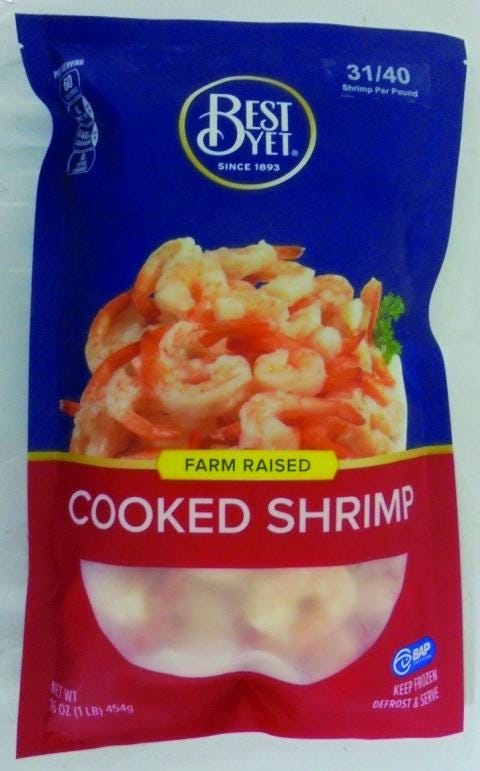
More recalls have been initiated, for a further two brands. Accompanying the recall notices, the FDA has reiterated that no product that entered the U.S. marketplace has tested positive for Cs-137.
Its position has not changed, with the FDA saying, as before, that “product from PT. Bahari Makmur Sejati violates the Federal Food, Drug, & Cosmetic Act in that it appears to have been prepared, packed, or held under insanitary conditions whereby it may have become contaminated with Cs-137 and may pose a safety concern.”
No new information about the root cause has been shared by the FDA.
In short: Indonesian authorities are investigating and say preliminary indications point to possible radioactive sources at the shrimp processing facility 🍏 Cs-137 can be used legally for intentional food irradiation processes 🍏 Food irradiation is legal in Indonesia and is legal for shrimp in the U.S. – though not without correct labelling 🍏 Indonesian media outlets suggest contaminated metal at nearby iron scrap yards could be the source of the Cs-137, with authorities implementing a 2 km radiation monitoring zone around the scrap yards 🍏 These ideas do not tally with the theory that contaminated shipping containers are the root cause 🍏
Sources:
Isaac, J. (2025). Indonesia probes suspected cesium-137 contamination in shrimp exports to U.S. [online] https://indonesiabusinesspost.com/. Available at: https://indonesiabusinesspost.com/5061/markets-and-finance/indonesia-probes-suspected-cesium-137-contamination-in-shrimp-exports-to-u-s [Accessed 1 Sep. 2025].
Sapariah Saturi (2025). Udang Beku RI Terpapar Radioaktif, Berikut Temuan Bapeten di Cikande. [online] Mongabay.co.id. Available at: https://mongabay.co.id/2025/08/26/udang-beku-ri-terpapar-radioaktif-berikut-temuan-bapeten-di-cikande/ [Accessed 1 Sep. 2025].
Christabel, A. (2025). Bapeten Ungkap Pabrik Udang PT BMS Terpapar Zat Radioaktif Cesium-137. [online] detikfinance. Available at: https://finance.detik.com/berita-ekonomi-bisnis/d-8075296/bapeten-ungkap-pabrik-udang-pt-bms-terpapar-zat-radioaktif-cesium-137 [Accessed 1 Sep. 2025].
Human Foods Program (2025). FDA Advises Public Not to Eat, Sell, or Serve Certain Imported Frozen. [online] U.S. Food and Drug Administration. Available at: https://www.fda.gov/food/alerts-advisories-safety-information/fda-advises-public-not-eat-sell-or-serve-certain-imported-frozen-shrimp-indonesian-firm. [Accessed 1 Sep. 2025].
Funniest Radioactive Shrimp Memes
The situation surrounding the shrimp recalls is not at all funny. But you just can’t keep a good meme down.
A reminder:
The shrimp that were seized at the U.S. border have radioactivity levels way below FDA safety limits.
The shrimp products that are currently being recalled do not contain any detectable radioisotopes.
Okay, now that I’ve done my earnest duty as a conscientious food safety professional by sharing the facts, I’m going to share some silly and factually incorrect memes.


The video below, by Kyle Hill, is factually correct and balanced, despite the visual style. But…
But I’m just here for the comments. And the decades-old gopher meme.
Comments spotted on this video:
I dunno about shrimps, but what I do know is that if I ever have a daughter, I'm naming her Bequerel (@ScoobieDoobieDonut)
I ate a radioactive shrimp and became Prawn Boy! ...my powers are swimming, fighting cancer, and going well with marinara sauce (@rabbitwithagun3240)
If you bite a radioactive shrimp, does the shrimp become Man Shrimp? A shrimp with all the powers of a human! Watch in awe as he files his annual tax returns, votes in local elections & performs daily household chores! (@Londonsabers)
Chris Hemsworth called, he wants his hair back (@DamienBlade)
And to finish, a viral video about the recalls, featuring a singing cat. It’s factually rubbish but musically fabulous.

@beancat123 RADIOACTIVE SHRIMP FROM WALMART 😹💚 Credit to original audio, whoever you are, you’re the best!
Below for paying subscribers: Food fraud news, horizon scanning and incident reports
📌 Food Fraud News 📌
In this week’s food fraud news:
📌 Justice for perpetrators - meat and expiry date fraud cases;
📌 User-friendly methods for porcine DNA and seafood species;
📌 Illegal dyes in specialty sugars;
📌 Pig smuggling, fake dairy foods and suspicious honey.
NOAA Fisheries tests seafood with new rapid tool (United States)
The United States National Oceanic and Atmospheric Administration (NOAA) has used an in-field tool that performs rapid tests based on the polymerase chain reaction (PCR) to authenticate the species of seafood in New Jersey and California. The tool allows enforcement officers to quickly test seafood in the field. It has been improved since its first field test in 2024.
Officers of NOAA used the tool in Long Beach, California in July 2025 for testing imported tuna and detected multiple instances