
210 | Food Fraud 2015 to 2035: Mitigation Advice from Industry Leaders |
With 4 big takeaways. Plus more radioactive foods found in the U.S.

This is The Rotten Apple, an inside view on food fraud and food safety for professionals, policy-makers and purveyors. Subscribe for insights, latest news and emerging trends straight to your inbox each Monday.
Fake Coke follow-up
Not just shrimp! More radioactive foods found in the U.S.
Food Fraud 2015 to 2035: Insights from Industry Leaders
This is food fraud (real-life pictures)
Food fraud news, horizon scanning and recent incidents
Uh oh, more radioactive food has been discovered at U.S. ports. Was the frozen shrimp just the tip of the iceberg? In this week’s issue, I explain how the discoveries were made and what’s going on at the source.
Plus, a reader from the industry shares their insights into soft drink counterfeiting in the United Kingdom (thank you (you know who you are!))
Also this week, insights, soundbites, screenshots and four big takeaways about how to mitigate food fraud from a recent event featuring some of the biggest names in food fraud prevention.
And plenty of food fraud news too.
Karen
P.S. Love this newsletter? Please share it with your friends and colleagues and help grow our global food safety community.
Cover image: Freepik
Fake Coke follow-up
One of my fabulous readers wrote in after last week’s article about possibly fake Diet Coke in the United Kingdom. They held a senior role in UK soft drink manufacturing and confirmed that counterfeiting is an issue for their former employer.
We don’t hear this in the mainstream media because the affected brands choose not to talk about the problem publicly.
In addition to counterfeiting, which is where criminals manufacture copies of a beverage product, the reader described another major food fraud issue for soft drink manufacturers in wealthy countries: the fraudulent sale of reject or out-of-date products. This is where products which are not suitable for sale and earmarked for disposal are stolen and returned to the human food supply chain.
“The correct disposal of branded waste and reject materials is a key factor for limiting the opportunity for these crimes,” the reader told me.
The reader also revealed that the loss prevention teams of major beverage brands can include former police detectives whose job is to detect and investigate these types of fraud.
And finally, the reader shared that, in their experience, TACCP teams are a better fit for processes designed to limit such crimes, rather than VACCP/food fraud teams. The reason: VACCP (food fraud) assessments focus on the supply chain, but the people who work in product security and loss prevention would be more interested in TACCP systems. Similarly, procurement professionals have little interest in counterfeiting crimes.
Makes sense to me. What do you think?
Big thanks to the reader who shared these insights with us!
Have you got something to share? Reply to any of my emails or send me a DM through Substack.
Not just shrimp! More radioactive foods found in the U.S.
Uh oh…
We now have more information about the radioactive shrimp root cause. And the issue has now spread beyond shrimp!
The situation so far
In early August 2025 the United States Food and Drug Administration (FDA) detected the radioactive isotope caesium-137 (Cs-137) in one sample of frozen shrimp from Indonesia. The product had been transported in a shipping container that was flagged for radioactivity.
The shrimp that tested positive for Cs-137 never made it into U.S. commerce, but the FDA recommended that other shipments from the same manufacturer be recalled anyway. As a result, frozen shrimp with multiple brand names has been subject to a total of ten recalls, with the most recent recall being announced on 30 September.
The source of the contamination was initially a mystery, with publicly available information not sufficient to understand whether empty containers had contaminated the shrimp or whether the shrimp had left its manufacturing site already contaminated.
Other suggested sources of the radioactivity, such as terrorist acts, contaminated seawater from the Fukushima nuclear disaster in Japan, or failures in a food irradiation process, were quickly ruled out by food safety experts.
Soon after the first recall was announced, I discovered reports in the Indonesian media that seemed to suggest a problem at an industrial site near the shrimp processing facility. This has now been confirmed by the US FDA.
A special emergency
On 30th September, the Indonesian government declared a “special radiation emergency” in the area around the shrimp facility, with scrap metal used by a steel smelting company in the area suspected of being the source of the Cs-137. Decontamination activities are underway.
In Indonesia, nine workers and local residents are being treated for radiation exposure associated with the steel processor.
It’s shocking that the only reason these nine people were tested for radiation – and hence able to commence life-saving treatment – was because the US FDA tested food on the other side of the world.
Discovery
Why did the US FDA test shrimp for Cs-137? It seems likely that the radioactive shipping containers were first discovered because vehicles leaving major US ports drive through large radioactivity detectors known as radiation portal monitors, designed to detect radiological threats, such as nuclear weapons, in cargo entering the United States.
Once the vehicles carrying the contaminated shipping containers were flagged as radioactive, all items inside would have been subject to extra testing, including that done on the shrimp by the US FDA.
It is unclear whether the radioactive cloves were discovered similarly. However, it’s worth noting that the FDA has since specified Cs-137 contamination risks for two separate regions of Indonesia.
Origins
On 3rd October, the U.S. FDA published an import alert that explains possible sources of the contamination and describes two areas of Indonesia:
The entire island of Java, which is the size of the state of North Carolina, and contains Banten Province, the location of the shrimp processing facility and the Cs-137 contaminated metal smelting facility;
The Province of Lampung, the origin of the cloves, which is approximately 350 km (217 mi) from Banten Province, on the island of Sumatra.
The import alert (# 99-52) covers all shrimp and all spices from both regions.
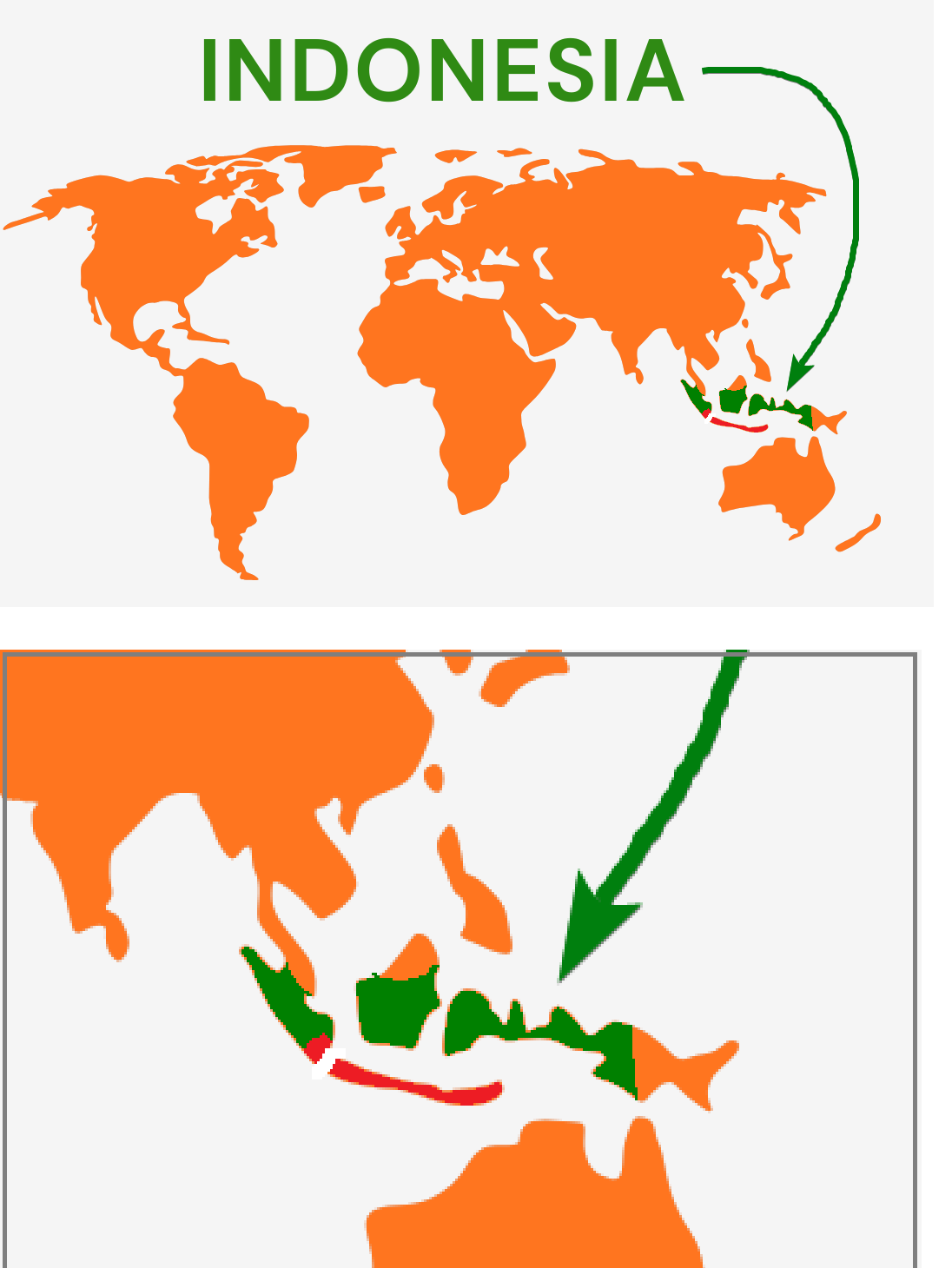
The FDA says radioactive contamination was discovered in Banten Province in 2020 and also mentions the possibility of airborne radioactive debris being spread from metal smelting facilities.
Indonesian authorities inspected the clove facility and a nearby former industrial site and did not find any radioactive contamination.
Takeaways for food professionals
The US FDA has flagged safety concerns for shrimp and spices from large parts of the country of Indonesia after discovering the radioactive isotope caesium-137 (Cs-137) in frozen shrimp and cloves from two importers. An import alert has been published.
The Cs-137 contamination was likely discovered by U.S. authorities because shipping containers holding contaminated food set off alarms in radiation monitoring systems designed to detect nuclear weapons in cargo entering the United States.
Indonesian authorities have confirmed the presence of Cs-137 at a metal processing site in Banten Province near the shrimp processing facility. However, Indonesian authorities have not detected Cs-137 in or near the clove processing facility, which is approximately 350 km (217 mi) from the contaminated metal site and shrimp facility.
The US FDA has implied that airborne movement of Cs-137 could have been a factor in the contamination of the foods.
Food professionals are advised that more Indonesian materials may prove to be contaminated. Foods and ingredients imported through ports without radiation monitoring could contain undetected radioactive contaminants.
Indonesia’s top food exports are palm oil, vegetable oils (including coconut oil), seafood, coffee, tea, mate, spices, fruit and nuts.
In short: Market withdrawals and recalls of frozen shrimp started in August in the U.S. after the radioactive isotope caesium-137 (Cs-137) was found in product from one facility 🍏 The FDA has since detected Cs-137 in cloves from Indonesia 🍏 The source of the Cs-137 contamination of the shrimp appears to be a metal processor near the shrimp facility and this site is being decontaminated under Indonesian government supervision 🍏 The source of the Cs-137 in the cloves, which were processed hundreds of kilometres away, is unknown 🍏 Be wary of foods imported from Indonesia, at least until authorities there have explained the presence of Cs-137 in cloves 🍏 Currently, Indonesian shrimp and spices are considered at risk by the US FDA and these are subject to an import alert, but more foods may be affected 🍏
Main sources (other sources are hyperlinked in the text):
Fda.gov. (2025). Import Alert 99-52. [online] Available at: https://www.accessdata.fda.gov/CMS_IA/importalert_1188.html [Accessed 13 Oct. 2025].
Human Foods Program (2025). FDA Response to Imported Foods Potentially Contaminated with Cesium-137. [online] U.S. Food and Drug Administration. Available at: https://www.fda.gov/food/environmental-contaminants-food/fda-response-imported-foods-potentially-contaminated-cesium-137.
Food Fraud 2015 to 2035: Mitigation Advice from Industry Leaders
In Issue 202, I told you about an online event for food fraud thought leaders I was attending, hosted by the Food Authenticity Network (FAN) and IFST (UK) and titled
Two Decades of Detecting and Preventing Food Fraud: 2015 – 2035.
It promised new perspectives on food fraud mitigation, signposts to best practice, futurology from different perspectives, tools, resources and networks, plus a Q&A.
I promised to share an overview and describe the most insightful and unexpected learnings of the event.
Click the preview box below to find out what I discovered.

This is food fraud
It’s unusual for media reports of food fraud to contain images of the fraud - more often the accompanying photographs are stock pictures of the affected food. But this week, three of the reports I read contained actual photographs of the crimes.
Here they are. Find the details in this week’s Food Fraud News.


Below for paying subscribers: Food fraud news, horizon scanning and incident reports
📌 Food Fraud News 📌
In this week’s food fraud news:
📌 A warning about the infiltration of organised crime groups to waste disposal companies
📌 Lots of expiry date fraud, including meat treated with hydrogen peroxide and bleach
📌 False origins for bananas
📌 Egg smuggling, sentencing for bluefin tuna fraud and more…
🔹Food fraud incidents from iComplai’s AI-powered food safety and food fraud intelligence platform🔹
🔹 Authorities seized more than 12 tons of expired canned food from a secret warehouse. The expiration dates on the canned food products had been falsified for the purpose of reintroducing the expired food back to the market – Morocco 06/10/2025 🔹
https://elfarodeceuta.es/desmantelan-almacen-tanger-falsificar-fechas-caducidad-alimentos/ 🔹
🔹 Meat (231 kg) that was expired and treated with bleach was discovered at a processing facility where the traceability of meat was manipulated to make it appear like it was still within date - Spain 07/10/2025 🔹
🔹Bananas (2,000 tonnes) falsely labelled as from the Canary Islands but actually from Portugal were discovered to have been traded using falsified customs documents – Spain 07/10/2025 🔹
🔹A food company has been investigated for processing pork products with industrial-grade hydrogen peroxide – Taiwan 10/10/2025🔹
https://news.pchome.com.tw/healthcare/hoomedia/20251010/index-76007441619642344012.html 🔹
🔹A sack of potatoes labelled as 22 kg contained 13 kg of potatoes and 9 kg of soil – Turkiye 11/10/2025 🔹
https://www.sondakika.com/yasam/haber-ahlaksizlikta-son-nokta-22-kiloluk-cuvaldan-13-19137143/ 🔹
🔹 iComplai is an AI-powered food safety intelligence platform that helps companies detect potential risks, monitor their supply chains, and optimise food safety protocols through advanced analytics and real-time data🔹