

What changed in food safety in 2025?
Emerging issues in food safety: a review
Honey madness in Europe
Trypanosoma cruzi: An emerging food pathogen
My (silly) Food Fraud Gift Guide
Hello,
I was going to start this issue with Happy Hanukkah but in view of yesterday’s events in my home city of Sydney, happy is not the right word. I have no words 😪.
In this week’s issue, you’ll find a huge, hand-curated collection of all the food safety trends, new hazards and emerging risks from the past 3 years: I’ve bundled them into a fully sourced guidebook for paying subscribers.
Also this week, a crazy development in the European honey market (it feels a bit fraud-y but is completely legal) and I introduce you to Trypanosoma cruzi - a food pathogen that’s gaining more recognition in wealthy countries.
Plus, there’s a special offer to celebrate the year’s end, and a food fraud gift guide for the holiday season.
Karen
P.S. A big thank you to 👏👏Rali from Madagascar and Peter and Rarpas from Australia 👏👏for upgrading your subscriptions. I work so hard every week to find and share the best food safety and food fraud information from around the globe. Readers like you make it possible. Thank you.
Pay Today. Get a Second Year Free 💲
It’s almost the end of the financial year (for some). Don’t let your work budget go to waste; get a paid subscription to The Rotten Apple.
Upgrade from a free to a paid annual subscription in the next week and get a second year free. That’s a saving of US$100.
80% of subscribers pay annually.
90% of annual subscribers renew every year.
Join them and support my efforts to bring you the most interesting food safety and food fraud information every week.
Are you in?!
What Changed in Food Safety in 2025
As the creator of this newsletter, my job is to stay on top of all the food safety news in the world every week, so you don’t have to. It’s kind of overwhelming at times!
Most food safety principles don’t change from year to year… we still need to keep our facilities clean, train our staff and have robust systems in place to stop consumers from getting sick. Major food pathogens still pose the same risks as before, and we still use the same controls as we have for decades to keep them from causing illness.
But things change too.
This year, perhaps the biggest news in (or adjacent to) food safety has been the upheavals in the United States regulatory systems due to the current administration.
In the US there were staff cutbacks and fewer resources for research and enforcement. The impacts are likely to be felt for years to come. Changes to rules about ‘dangerous’ additives did not eventuate at the federal level, except for the revocation of authorisation for Red No. 3 in food.
2025 saw a number of global updates for packaging and food contact materials, with new or tightened migration limits and substance listings across multiple jurisdictions (EU, China and others), especially targeting plasticisers like some phthalates and improving traceability.
The safety of seed oils was discussed ad nauseam in mainstream media, while food industry media obsessed over the safety of ultra-processed foods (UPFs). And the first government-backed lawsuit about UPFs commenced in the United States (see Issue 198 and Issue 218).
Also this year, a severe outbreak from Listeria monocytogenes in heat-and-eat meals, which were supposed to be fully cooked before consumption, caused 6 deaths in the United States and led to concerns that some food manufacturers may still be relying on consumers’ cooking processes as a critical control point for Listeria.
And let’s not forget the unusual case of the radioactive shrimp, which reminded us all that radiological hazards are not just the stuff of food safety textbooks.

Sadly, I didn’t observe any significant downward trends in global recalls or food fraud events in 2025. In fact, Europol reported that the prevalence of organised crime groups in expiration date fraud is at an unprecedented scale. Products affected by such frauds, such as canned foods and other ambient goods, present real health risks, not just economic losses.
“One of the main trends identified [in] this year’s [operation] was organised crime groups infiltrating waste disposal companies with the intent to get access to expired food awaiting destruction. The criminals then remove the original “best before” or expiration dates using solvents and print new, falsified dates on the packages. These relabelled products are then reintroduced into the supply chain. In terms of quality, they may not only be poor but often also pose a health risk, as seen in cases involving canned fish. As a criminal modus operandi, the practice of relabelling expired food is not entirely new, but its current scale is unprecedented.” Europol, discussing Operation OPSON XIV (2025)
Emerging Issues in Food Safety: A Review
This month’s special supplement is a curated collection of new, emerging and growing food safety threats identified between 2021 and 2025 and drawn from dozens of sources over multiple years.
From novel pathogens to plant toxins, climate-change-induced mycotoxin risk profiles, rare viruses to unusual zoonotic threats, these are the hazards, risks and drivers of risk that will reshape the future of food safety.
Contents
1. Chemical hazards (acute) (3)
2. Chemical hazards (chronic/long-term) (8)
3. Biological hazards (12)
4. Allergens (2)
5. Other trends and drivers of risk (7)
Emerging Issues in Food Safety

This special supplement is a curated collection of new, emerging and growing food safety threats identified between 2021 to 2025 and drawn from dozens of sources over multiple years.
Honey madness
Okay, so this is wiiild... (at least to a food fraud nerd like me)
Europe’s largest honey packer has started selling rice syrup to consumers as a honey alternative. Rice syrup has traditionally been used as an adulterant in honey.
Yup: a honey adulterant is being sold as a honey alternative by a major European honey company.

I learned about this crazy situation from a LinkedIn post by an account called Clean Up The Honey Market.
Rice syrup makes a good honey adulterant because it contains C3 sugars, not the C4 sugars found in sugarcane or corn syrup. This means that ‘honey’ adulterated with rice syrup can evade detection by some official test methods.
It appears to some people that the honey company is trying to get rid of its stores of rice syrup before strict European rules for honey traceability and honey origin information for consumers, colloquially known as ‘The Breakfast Directive’, take effect in June next year.
That is, they say the honey company had purchased bulk quantities of the rice syrup to dilute its products, but has decided it cannot use all the rice syrup in its blended ‘honey’ products and so is using it up by launching a new non-honey product.
I don’t know whether that’s true or not, but if it is true, it’s absolutely wild.
I wrote about the European honey fraud crisis and the shocking test results, which led to significant enforcement actions and the creation of the Breakfast Directive, in 2023. 🍏 Honey Fraud in Europe | Issue 81 🍏
Trypanosoma cruzi: An emerging food pathogen
Trypanosoma cruzi and Chagas disease
Trypanosoma cruzi, a parasitic protozoan, causes Chagas disease, also known as American trypanosomiasis. Chagas disease is a well‑known human disease in Central and South America but has only recently begun to be formally recognised and quantified as a foodborne pathogen in global burden‑of‑disease work.
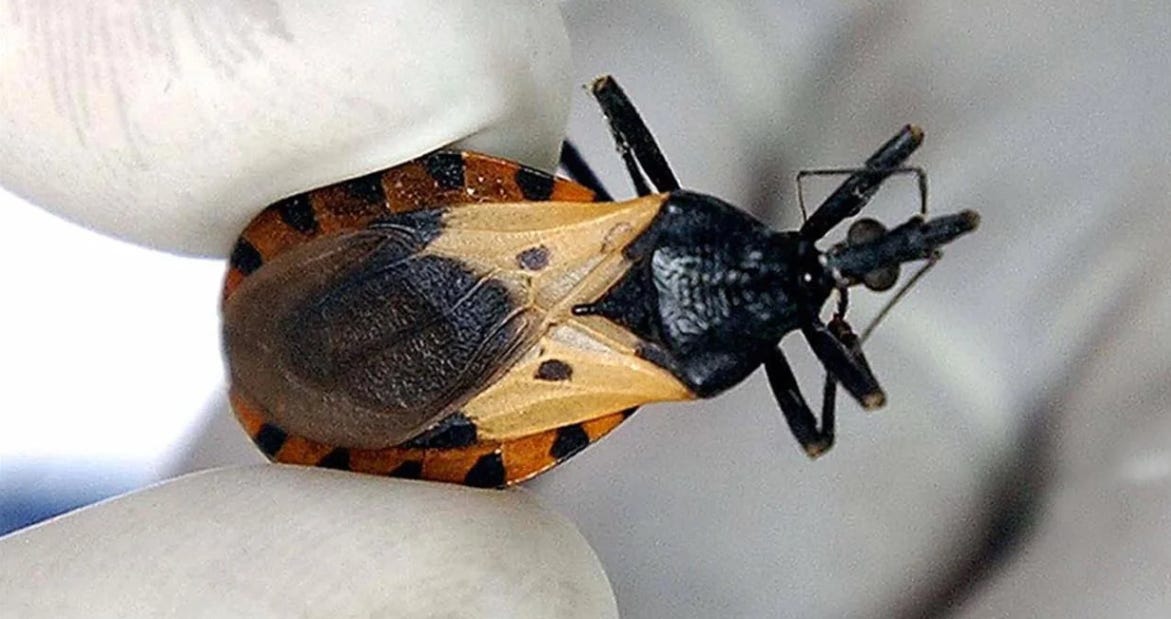
The disease is transmitted by insect bites and by eating foods contaminated with insect faeces - unpasteurised açaí juice, bacaba palm fruit juice and sugarcane juice have been implicated – and possibly by the ingestion of undercooked meat from infected animals. Food-borne transmission appears to cause more severe illnesses than insect-borne, with a higher mortality rate.
In wealthy countries, the incidence of Chagas disease is increasing. This is due to the migration of already‑infected people, rather than new local insect‑borne infections.
The European Food Safety Agency (EFSA) included Chagas disease in their 2024 emerging food safety risks report.
Symptoms
Symptoms begin 3 to 22 days after infection. The most common acute symptoms of Chagas disease are mild, flu‑like and non‑specific, including fever, fatigue, body aches, headache, rash, loss of appetite, swollen lymph nodes, and sometimes local swelling at the entry site or around one eye (Romaña’s sign).
Years after infection, some people develop serious heart problems (arrhythmias, heart failure, sudden death) or digestive problems (trouble swallowing, constipation, abdominal pain) due to damage to the heart and gut.
When Chagas disease is acquired from food or drink, acute illness is usually more obvious and severe, with most patients developing high, persistent fever plus systemic signs such as marked fatigue, muscle and joint aches, headache, swollen lymph nodes, and often prominent facial or generalised oedema, along with frequent heart involvement (myocarditis, pericardial effusion, ECG changes) and sometimes gastrointestinal symptoms like abdominal pain, nausea, vomiting or diarrhoea.
Mortality rate
A 2021 systematic review and meta‑analysis of 2,470 orally acquired acute cases across Latin America estimated a case‑fatality rate of 1% for orally transmitted acute Chagas disease.
However, some documented outbreaks (for example, among Colombian soldiers and certain community clusters) have reported fatality proportions in the range of 8–35%, particularly when diagnosis and treatment were delayed or when parasite dose was presumed very high.
Commonly implicated foods
Raw plant-based foods, particularly juices, are the most commonly implicated foods for foodborne Chagas disease. Some sources report the consumption of undercooked meat as a source of Chagas disease, although no case studies were found.
Contamination sources
Plant foods are contaminated with the protozoan Trypanosoma cruzi through contact with the faeces of infected triatomine bugs – “kissing bugs”- (from the subfamily Triatominae), and sometimes secretions or faeces from infected wild mammals.
It has been hypothesised that mammalian meat from infected animals could also transmit the disease if eaten undercooked, though no outbreaks from undercooked meat have been confirmed.
Prevention and controls
Foodborne Chagas prevention requires food handlers to keep the protozoan T. cruzi out of foods and inactivate it if contamination occurs. Fresh juices and artisanal plant products from endemic areas are the most at-risk foods.
Triatomine insects and reservoir mammals such as opossums, armadillos and raccoons must be prevented from contacting raw materials by excluding them from harvest, transport, storage and processing areas and avoiding storage of açaí fruit on the ground or near palms with triatomine infestations.
Processors of at-risk fruit such as acai and sugarcane must reject incoming lots that show signs of contamination with pests or their faeces and apply validated decontamination steps such as washing in disinfectant (e.g. sodium hypochlorite) and using heat treatments (blanching or pasteurisation).
Routine hygiene and GMP processes such as the exclusion of pests and dirt, thorough regular cleaning and disinfecting, the protection of processed fruit and juices, personnel hygiene practices and the use of potable water for washing and processing are also required.
Sources:
Robertson, L.J., Havelaar, A.H., Keddy, K.H., Brecht Devleesschauwer, Banchob Sripa and Torgerson, P.R. (2024). The importance of estimating the burden of disease from foodborne transmission of Trypanosoma cruzi. PLOS Neglected Tropical Diseases, 18(2), pp.e0011898–e0011898. doi: https://doi.org/10.1371/journal.pntd.0011898 .
Simões-Neto, E.A., Wagner, D., Rosa, M., Maurício, J., Simões, A.F., Vasconcelos, L.D., Domingos Carvalho Sodré, Cleide, A., Vieira, S., Bruna and Pedrozo, M. (2024). Oral Chagas disease outbreak by bacaba juice ingestion: A century after Carlos Chagas’ discovery, the disease is still hard to manage. PLoS neglected tropical diseases, 18(9), pp.e0012225–e0012225. doi: https://doi.org/10.1371/journal.pntd.0012225 .
🍏 Want more mysterious food pathogens? Check out Bacillus cytotoxicus: Mystery Bacillus Explored | Issue 115 🍏
A (silly) Food Fraud Gift Guide
For your favourite frenemies
Looking for the perfect food-lover’s gift for a not-so-special someone in your life? You can’t go wrong with my 2025 Food Fraud Gift Guide.
Seafood makes a fantastic Christmas treat. Why not surprise them with shrinkflation-riddled salmon, like the French brand that increased its price by 19% while simultaneously reducing the pack size?
Or a scallop terrine containing no scallop, with the first ingredient hake fish.
Honey is perfect if you’d like your frenemy to experience the taste of food fraud. For the full fraud experience, choose one with no origin information or botanical designation, like this product with the mysterious moniker ‘Holiday Infused Honey’, marketed with the baffling slogan “If the North Pole had a beehive, its honey would taste just like this” 🤔

High-end hams are also a food fraud magnet. Genuine Iberico ham, for example, comes from uniquely fatty Iberian pigs, raised free-range in oak woodlands and fattened on acorns, then cured for at least 12 months and up to two years or more. You can purchase such a ham for $1,109 for your frenemy. But could they even tell the difference between that and a basic supermarket ham?
On the other hand, you could be sure they would get the genuine article if you ordered a 40-ounce custom-engraved tomahawk steak ($168) for them. The bone arrives engraved with a name of your choice.

However, if they aren’t a meat eater, they might prefer a limited edition caviar gift set for $2,800 or a gift subscription to a monthly oyster club (perhaps with a bonus side serve of Vibrio).
For the food safety-conscious gift-buyer, there are bamboo serving bowls (with bonus melamine-formaldehyde migration risks), non-stick cookware coated with PFAS and AI-controlled grills to choose from. AI-controlled barbequing: what could possibly go wrong?
Other foodie gifts that caught my eye this season include:
A giant mushroom-shaped chocolate infused with reishi, maitake, and turkey tail mushrooms and covered with hazelnut ganache. It’s half a foot tall and feeds up to 18 people.
An iced coffee machine for just $495. A machine for *iced* coffee?
A cutting board supposedly made from pure titanium, for a suspiciously low price.
A microwave egg maker that is literally just a dish with a lid ($65)
Camel milk vodka, made from the fermented whey of Australian camel milk and described by its makers as “Smooth. Dreamy. Exotic.”
A tabletop cigarette lighter shaped like a jelly dessert ($225)
Trail mix snacks inexplicably called Pee in Pools ($25); and
Kangaroo poo chocolate (not genuine poo - where’s the fun in that?)
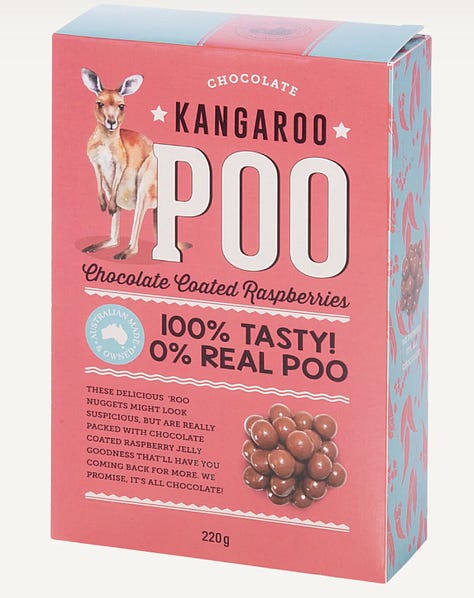

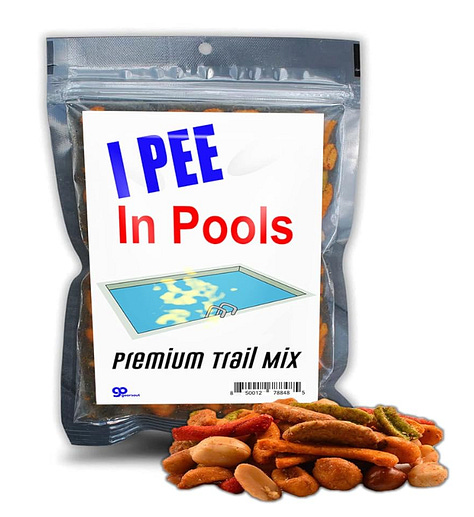
Who wouldn't want a giant-sized coffee table cigarette lighter shaped like a jelly?


Below for paying subscribers: Food fraud news, research and incident reports
📌 Food Fraud News 📌
In this week’s food fraud news:
📌 Sea cucumbers 📌 Bush meat 📌 Frozen pangolins 📌 Preservatives in fresh meat