
238 | Supplier red flags | Is a 5-log reduction actually correct?
Plus, how did humans evolve to drink animal milk?

Red flags in suppliers: how to spot them + what to do about them
Is a 5-log reduction actually correct?
We drank milk before we could digest it
The easiest way to make the world smarter (the history of iodine supplementation)
No food fraud news this week
Hi, Welcome!
We’ve had so many new subscribers join us in the last three weeks. I’m so happy you are here. If you haven’t had a look at our huge collection of food safety resources, you can check them out here… you’ll find plenty to bookmark for later.
And an extra special welcome to 👏👏 Graham from South Africa 👏👏 for becoming a paid subscriber. Your financial support helps me do what I do every week.
This week, I’ve got an exclusive guidance document for you: How to Perform Red Flag Reviews for Supplier Integrity. What are the red flags to look for with new suppliers, and how did a major British retailer miss a huge red flag with one of their tomato paste suppliers in 2024?
Also this week, an overview of microbial performance standards, milk drinking and iodine supplementation.
See you next week,
Karen
Red flags in suppliers: how to spot them + what to do about them
This month’s special supplement is a guide to performing supplier integrity reviews using my unique red flag system. It’s a systematic process for examining new and existing suppliers across seven criteria, to determine and document any concerns that could signal food fraud risks.
Guide: How to Perform Red Flag Reviews for Supplier Integrity [+ downloadable checklist]
![Guide: How to Perform Red Flag Reviews for Supplier Integrity [+ downloadable checklist]](https://substackcdn.com/image/fetch/$s_!pcVi!,w_1300,h_650,c_fill,f_webp,q_auto:good,fl_progressive:steep,g_auto/https%3A%2F%2Fsubstack-post-media.s3.amazonaws.com%2Fpublic%2Fimages%2F7fdd5bec-1ffb-40fc-8b27-5aa524a1daf9_1720x1384.png)
This guide explains how to perform a red flag review of new and existing suppliers to discover potential food fraud vulnerabilities.
Micro performance standards: Is 5-log correct?
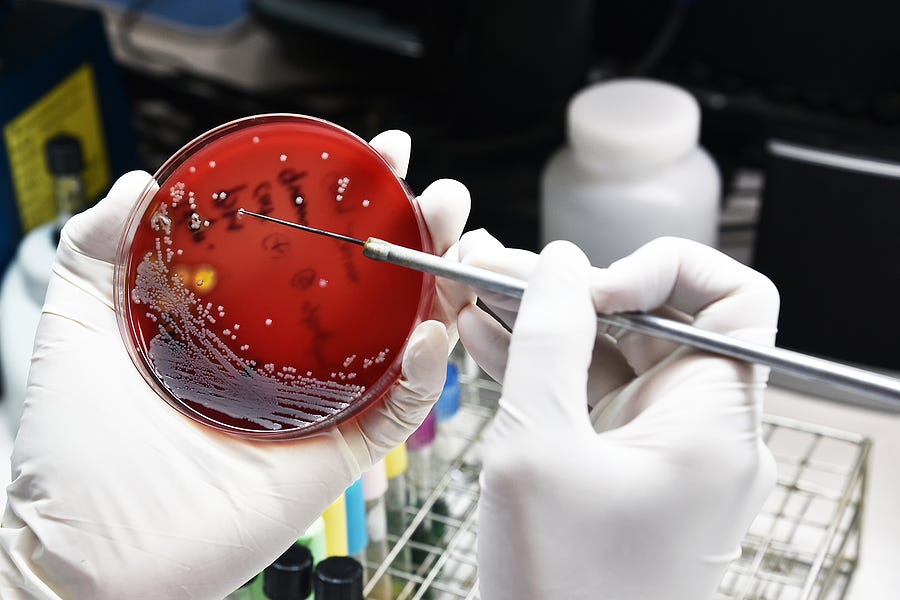
In food safety, it’s standard practice to aim for a 5-log reduction when performing a kill step or sanitisation process. In this post, I examine why 5-log is considered the ‘right’ number, what 5-log actually looks like in practice and whether the value needs a rethink in 2026.
What does 5-log mean, exactly?
Log reduction is a term used to express the relative number of living microbes that are eliminated by one or more processes.
A 5‑log reduction process is one that reduces a microbial population by a factor of 105, which is equivalent to reducing viable cells by 99.999%.
Examples
Reducing Salmonella in low-moisture foods using heat (learn more)
Processing biltong to reduce Salmonella using antimicrobials, marination and drying (learn more)
Moderate pressure pasteurisation at room temperature to reduce Listeria innocua, Salmonella senftenberg, and Escherichia coli in milk through hyperbaric inactivation (learn more)
What steps are taken to achieve a 5-log reduction?
The multiple hurdle concept is often used to achieve a 5-log reduction.
This multiple hurdle concept employs a series of processes or preservative factors – such as heating, retorting, washing, decreasing pH, adding preservatives and sanitation practices – that individually have a pathogen reduction step that is lower than 5-log, but that add up to meet or exceed 5-log when working together.
Each process or preservative factor is required to have its own validation proving its individual pathogen reduction ability.
For best practice, each step of the multiple hurdle process should occur in the same facility, and storage time between steps should be minimised or eliminated to prevent unintended bacterial growth.
How was 5-log chosen?
Performance standards are the specific pathogen reduction levels that must be attained during processing to ensure that proper food safety has been achieved.
Performance standards can be chosen based on available scientific literature, scientific studies performed by the company, or by using risk-based pathogen modelling.
The minimum 5-log reduction performance standard has been previously established by the U.S. Food and Drug Administration (FDA) as acceptable in both the 2001 Juice Hazard Analysis and Critical Control Points (HACCP) regulation and for in-shell egg treatments. A minimum 5-log reduction in pathogens is also the accepted goal for the pasteurisation processes.
Based on these examples, a minimum 5-log reduction in the pathogens of concern has been generally adopted by the industry as a good starting point for processing performance standards in the absence of other scientific information.
While this performance standard is generally accepted, it may not be applicable to the specific product and process being analysed.
A 5-log reduction may not be required if other supporting information shows that the product will be safe.
How is a 5-log process validated?
A 5-log process is validated through kill-step testing.
Kill-step testing provides scientific confirmation that specific food processing steps – such as cooking, retorting, high-pressure pasteurisation (HPP) and sanitisation – are not just theoretical but are effective in practice, consistently eliminating or reducing pathogenic microorganisms to levels considered safe for human consumption.
Thermal inactivation studies, microbial challenge studies, and thermal mapping and temperature profiling are commonly used to validate the lethality of a processing step. However, innovations in infrared and radiofrequency heating, predictive modelling software, and continuous temperature monitoring systems are providing manufacturers with additional tools to ensure food safety.
Documentation of validated kill steps is a cornerstone of food safety plans and is subject to audit by regulators for certain food types.
Current thinking on 5-log
Industry experts are beginning to acknowledge that 5-log might not be neccessary under all circumstances, and less stringent standards such as 4-log might be suitable for certain commodity-pathogen combinations. However changing the standards and industry expectations will take time and further research.
What’s next for microbial reduction measurements?
For now, nothing’s changed: sorry!
Takeaway for food professionals
Current practices aren’t perfect, but they are the best we have for now, so keep doing what you’re doing.
Main source:
Food Safety Magazine (2022). Determining Microbiological Performance Standards for Food Safety. Available online at: https://www.food-safety.com/articles/7941-determining-microbiological-performance-standards-for-food-safety
We drank milk before we could digest it
Here’s a question to ponder over your morning coffee: if drinking milk makes approximately two-thirds of the world’s adult population uncomfortable, why did we ever start drinking it in the first place?
It turns out the story of lactose intolerance is a tale of human stubbornness, desperation, and a genetic puzzle that kept researchers guessing for decades.
As many of you will know, to digest lactose, the sugar in milk, you need an enzyme called lactase. Almost all human babies produce lactase because it’s essential for surviving on breast milk. In most people, however, lactase production drops off sharply after weaning.
Once your body stops producing lactase, eating food that contains lactose becomes very uncomfortable. The lactose travels undigested to the large intestine, where gut bacteria ferment it, producing gas, bloating, cramping and diarrhoea.
Humans are unique among mammals in that some of us keep producing lactase into adulthood, a trait known as lactase persistence.
For a long time, everyone assumed that humans started drinking animal milk after they domesticated cattle and other animals, and those who could digest had a survival advantage, so the lactase persistence gene spread.
However, a recent study published in Nature shows that we started drinking milk before we began to develop the lactase persistence gene.
Archaeological evidence from nearly 7,000 organic animal fat residues extracted from pottery fragments across 554 European sites shows that humans were processing and consuming milk as far back as 9,000 years ago.
However, the lactase persistence gene didn’t become common in Europe until around 3,000 years ago. Why was it that humans were drinking milk they could not comfortably digest?
The answer, it seems, involves famine, disease, and a grim natural selection experiment.
The researchers found the lactase persistence gene wasn’t selected because milk drinking was pleasurable or even particularly advantageous under normal conditions. It was selected because, under the wrong conditions, drinking milk could kill you.
In healthy people, lactose intolerance is unpleasant but survivable. In people already weakened by famine or infectious disease, the diarrhoea triggered by undigested lactose could tip the balance into fatal dehydration.
Prehistoric people were most likely to reach for milk – a calorie-dense, hydrating food source – precisely during the times it was most dangerous to drink it: when crops had failed and disease was rife.
In those moments, being able to digest lactose wasn’t just a convenience; it could have meant the difference between surviving a crisis and not. The gene spread not because milk was good, but because the consequences of not tolerating it were, under certain circumstances, fatal.
That’s not all.
The same study found that among the half a million people in the UK Biobank, 92% of lactose-intolerant participants still preferred fresh milk over alternatives, and lactose tolerance showed no clear health or fertility benefits.
As one of the researchers put it, for a healthy person, the symptoms are unpleasant, but not life-threatening. We spent thousands of years evolving a workaround for a problem that, in practice, most of us were already living with.
Main sources (others are linked inline):
Evershed, R.P., Davey Smith, G., Roffet-Salque, M., Timpson, A., Diekmann, Y., Lyon, M.S., Cramp, L.J.E., Casanova, E., Smyth, J., Whelton, H.L., Dunne, J., Brychova, V., Šoberl, L., Gerbault, P., Gillis, R.E., Heyd, V., Johnson, E., Kendall, I., Manning, K. and Marciniak, A. (2022). Dairying, diseases and the evolution of lactase persistence in Europe. Nature, [online] 608(7922), pp.336–345. doi:https://doi.org/10.1038/s41586-022-05010-7.
Gerbault P, Liebert A, Itan Y, Powell A, Currat M, Burger J, Swallow DM, Thomas MG (2011), ‘Evolution of lactase persistence: an example of human niche construction’, Philos Trans R Soc Lond B Biol Sci, 366(1566):863-77.
The easiest way to make the world smarter
The marvellous history of iodine supplementation
This week’s ‘just for fun’ clip is a fascinating, and scientifically rigorous, history of iodine supplementation - why it started, the problem it solved and why iodine deficiency is again being seen in modern countries.
📌 Food Fraud News Returns Next Week📌
Paying subscribers can access a searchable list of food fraud incidents and a searchable archive of emerging issues (horizon scanning). Any incident or warning we list here in the weekly email is also copied into the relevant searchable list.
🍏 That’s all for this week,
Signing off with a dairy-inspired cow joke, borrowed from Marion Nestle’s Food Politics blog
Q. Why do cows have hooves?
A. Because they lactose.
Bye!