
240 | Irish Special: Potatoes, Potatoes, Potatoes |
Competition: The Safe or Sorry Potato Salad Challenge

This is The Rotten Apple, an inside view on food fraud and food safety for professionals, policy-makers and purveyors. Subscribe for insights, latest news and emerging trends straight to your inbox each Monday.
Deadly potato toxins - what you need to know
Competition: Safe or Sorry? Potato Salad Challenge
Food fraud in potatoes
3 fun food facts from Iceland
Food fraud news, emerging issues and recent incidents
Hello dear reader,
Welcome to our special issue about potatoes. Next Saturday, the 30th May, is International Potato Day, which recognises the potato’s role in food security, nutrition, and livelihoods globally.
And speaking of potatoes, I happen to be in Ireland this week, that famously potato-loving land, in preparation for the Authentic Food Conference in Dublin.
In this week’s issue, we take a quick look at the deadly potato toxin solanine, revisit food fraud in potatoes, and launch a new food safety competition. Enter for your chance to win exclusive ‘Food Safety Champion’ mugs for you and your team.
Plus, I finally got to taste fermented shark in Iceland, and discovered why Icelandic Coca-Cola tastes so fantastic.
Thank you to everyone who renewed their paid subscriptions in the past week. Your continued support means the world to me.
Sláinte mhaith! (good health)
Karen
Safe or Sorry? Potato Salad Challenge
Another in our series of fun and educational competitions. Enter for a chance to win a food safety mug
This is the tale of four potato salads.

Each salad has had a different journey to arrive on the table.
Your job is to decide which, if any, of the salads is safe to eat now or keep for later.
Three winners will be drawn from correct entries and will each receive a food safety mug.

How to enter
Review the handling history of each potato salad (below)
Decide the safety status of each salad, choosing from A, B or C
A: safe to eat now or put back in the fridge OR
B: safe to eat now but do not put back in the fridge OR
C: not safe: discard immediately
Be sure to read the hint at the end of the challenge.
Submit your answers by replying to this email, including a brief justification for each answer.
Entries close midnight London time this Friday (29 May 2026), and winners will be announced next week.
The challenge: Safe or sorry?
Review the scenarios below. Assumptions: all refrigerators are operating at a temperature of (4 °C / 39 °F) or below, with adequate airflow and infrequent door operation. There have been no major contamination incidents during salad preparation (the family dog did not put its head in the salad bowl). The current ambient temperature is 22 °C / 72 °F.
—
Salad 1: roasted potatoes combined with a homemade mayonnaise-based dressing, crispy bacon, chopped gherkins, and white wine vinegar, served cold.

Salad 1 Handling history
This salad was prepared by a professional caterer in a clean commercial kitchen.
The potatoes were cooked two days ago and cooled rapidly to refrigerator temperature, then stored - covered - in the fridge until used in the salad.
The salad was prepared yesterday and placed straight in the commercial refrigerator (covered).
The salad was removed from the refrigerator at 9 am, transported in a cooler (4 °C / 39 °F) for delivery and received by the purchaser at 10:30 am.
The purchaser did not have room in the refrigerator and placed the salad on the table at 10:30 am.
The current time is 3 pm
Is this salad…. (A) safe to eat now or put back in the fridge; or (B) safe to eat now but do not put back in the fridge; or (C) not safe, discard immediately?
—
Salad 2: boiled potatoes combined with a sour cream dressing, pickles (gherkins), and a sprinkling of paprika, served cold.

Salad 2 Handling history
This salad was prepared in a chaotic residential kitchen for a family lunch.
The preparation began at 8:00 am.
The cooked potatoes were drained at 8:30 am and spread in a shallow tray to cool for 30 minutes in the refrigerator before combining with other ingredients.
The salad was placed in a covered shallow container and put in the refrigerator immediately after preparation was completed at 9:00 am.
The salad was removed from the refrigerator and placed on the table at 1:30 pm.
The current time is 3 pm.
Is this salad…. (A) safe to eat now or put back in the fridge; or (B) safe to eat now but do not put back in the fridge; or (C) not safe, discard immediately?
—
Salad 3: boiled potatoes with a vinaigrette dressing, sliced onion and fresh herbs.

Salad 3 Handling history
This salad was prepared in a small café kitchen by a trained food handler.
The potatoes were boiled, then drained and immediately combined with the other ingredients at 11:30.
The finished salad was placed on a self-serve counter immediately after preparation, at 11:35.
The current time is 3:00 pm.
Is this salad…. (A) safe to eat now or put back in the fridge; or (B) safe to eat now but do not put back in the fridge; or (C) not safe, discard immediately?
—
Salad 4: boiled potatoes combined with a commercial mayonnaise-based dressing, red onion, spring onion and Dijon mustard, served cold.

Salad 4 Handling history
This salad was prepared at home for a picnic.
The potatoes were cooked at 7:00 pm the night before, cooled in a large pot on the stove, then placed in the fridge at midnight.
The salad was assembled at 9:00 am on the day of the picnic and left on the kitchen bench while other dishes were prepared.
At 11:00 am, the salad was covered and put into an insulated cooler with a small ice brick for transport.
At 12:00 pm it was removed from the cooler and placed on a picnic table.
The current time is 3:00 pm.
Is this salad…. (A) safe to eat now or put back in the fridge; or (B) safe to eat now but do not put back in the fridge; or (C) not safe, discard immediately?
—
HINT: I’ll be judging these entries with consideration of the two-hour-four-hour rule, as described here.
Solanine: the deadly potato toxin
Did your mother tell you not to eat green crisps (chips)? Mine did!
You probably already know that green potatoes are associated with a naturally occurring toxin, and you might also know it can be deadly.
But, like me you might be a little rusty on the details. So I’ve done the homework and looked it up for you.
Here’s the lowdown.
What is solanine?
Solanine is a type of chemical known as a glycoalkaloid produced by plants belonging to the Solanaceae family as a defence mechanism. Potatoes, tomatoes and eggplants (aubergine, brinjal) are all capable of producing solanine.
Solanine can form in any part of the plant and functions as a natural pesticide. In potato plants, it tends to concentrate in the leaves, stems, sprouts and fruits of the plant.
In potato tubers (the part we eat) that have been grown, harvested and stored correctly, the concentration of solanine is very low, at levels that do not pose a threat to human health. However, exposure to light and physical damage can lead to an increase in solanine concentration in potatoes.
When potatoes are stored in a warm, bright place, the tubers detect that they might be in a suitable growing location and prepare to sprout. Chlorophyll production increases, which slowly creates a green tint in the peel and flesh.
At the same time, the same environmental stimuli promote glycoalkaloid production as a chemical defence against herbivores and pests.
While chlorophyll is harmless, visible greening of potatoes is a sign that solanine may be elevated, because both accumulate in and near the skin of light‑exposed tubers, and because solanine increases with the duration and intensity of light exposure.
Why is solanine dangerous?
Solanine is a neurotoxin and cholinesterase inhibitor. Ingestion by humans can cause symptoms like nausea, headaches, vomiting, diarrhoea, and can lead to serious neurological issues. Severe cases from high doses (over 2-5 mg/kg body weight) can lead to coma or death.
Solanine poisonings are not common and generally resolve without long-term damage.
Some countries have established specific limits for solanine content to prevent potential poisonings (Karaca and Erbaş (2024)).
Eat, cook or discard?
Potatoes showing signs of greening, sprouting, rotting or physical damage should not be consumed as they may contain high levels of solanine.
The solanine content is higher in the skin compared to the inner part of the potato. Peeling the potato by 3 to 4 mm can help remove toxic solanine content, with peeled potatoes containing 30 to 80% less solanine compared to unpeeled potatoes.
While cooking can also reduce the solanine content in potatoes by up to 40%, solanine is heat-stable, so cooking will not fully eliminate it.
The best approach is to discard any suspicious-looking potatoes or at least remove the green parts of potatoes entirely before cooking.
Source: Karaca, M and Erbaş, O (2024) ‘Solanine Poisoning: Effects, Risks, and Management Strategies’, Journal of Experimental and Basic Medical Sciences, 5(2):189-193 https://www.jebms.org/full-text/177#r1.
Food Fraud in Potatoes
When we think about food fraud, we often think about foods like olive oil and honey or expensive beverages like champagne and whisky. Potatoes? Not so much.
Food fraud comes in many forms, with the most concerning being crimes in which food or drink is adulterated or faked entirely by people who are more concerned about profits than safety.
Adulteration-type food fraud shows up like toxic melamine powder added to baby formula and lead chromate added to cinnamon, which caused up to 300,000 illnesses in China in 2008 and a multi-million-unit recall in the USA in 2023, respectively.
It’s the type of food fraud that carries the highest risk of harm to consumers.
When it comes to potatoes, food fraud does occur, but adulteration-style food fraud is rare.
Adulteration is not usually a fraud seen in fresh whole vegetables like potatoes because their whole form and discrete pieces aren’t well-suited to adulteration. And in any case, you can’t easily boost the economic value of a potato by adding a nitrogen-boosting compound or toxic colourant.
However, it’s not unheard of. I couldn’t believe my eyes when I read, in 2024, that criminals in India had been discovered colouring 2,100 kg of white potatoes with illegal and undeclared red dye. In that area, red potatoes were more desirable to consumers than white potatoes. The fraudsters sold the red potatoes at a significantly higher price than white potatoes, making them a tidy profit.
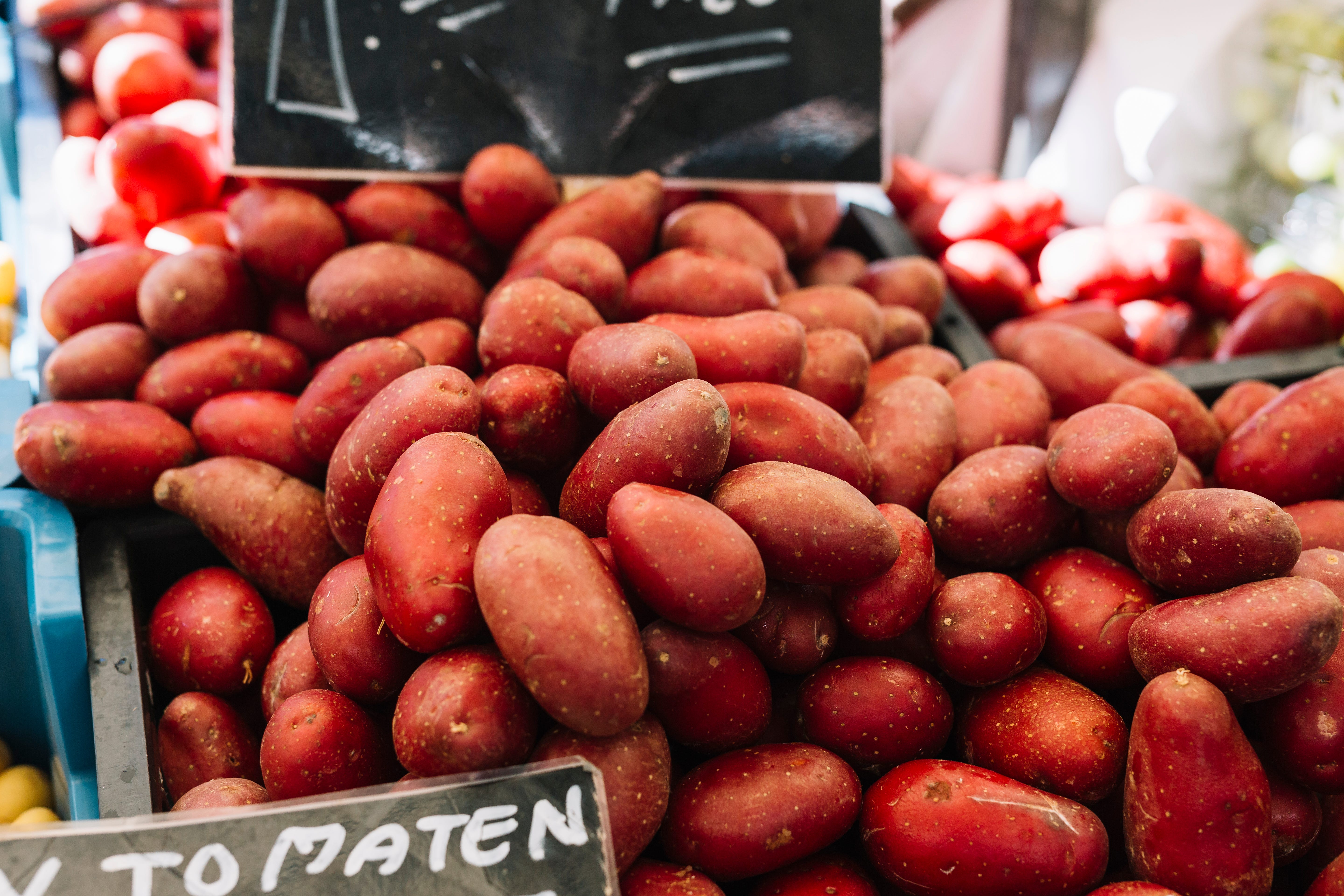
Adulteration is rare in potatoes, but there are, of course, other ways for criminals to profit by misleading their customers and consumers. When it comes to whole vegetables, the frauds we most often hear about are smuggling, theft and misrepresentation.
Fraud suspicions, as listed by the European Commission’s Alert and Cooperation Network (ACN) in their monthly agri-food fraud suspicions reports, include many related to vegetables and fruit. In fact, fruit and veg is the category with the highest number of fraud suspicions in the monthly ACN reports.
In these reports, fraud suspicions for vegetables and fruit are usually related to the presence of pesticide residues. They are called ‘suspicions’ because it’s impossible to know whether the pesticide residues are present due to intentional law-breaking or because farmers and/or traders are unaware of the presence of the pesticides or their regulatory status.
Although there are possible frauds related to pesticide use in potato supply chains, I suspect that a more common type of fraud for potatoes is misrepresentation. Claims about the organic status, the geographical origin and the quality grade are called credence claims by food fraud experts because consumers have no way to verify their validity.
We don’t have many records of credence claim fraud for vegetables because food fraud incidents are more likely to be investigated and reported in official systems when they have the potential to impact human safety, and falsified credence claims don’t pose a food safety risk.
However, in 2022, the United Kingdom’s National Food Crime Unit investigated a company that was alleged to be selling low-grade potatoes in place of premium-grade potatoes.
Similarly, in 2023, Italian authorities seized 33,000 kg of potatoes that had been imported but were fraudulently marketed as Italian-grown.
Among my list of food fraud incidents, the others related to potatoes are for theft from farms in Spain, consignments without proper documentation - and so probably stolen - in Italy and alleged anti-competitive trading of frozen potato products in the USA.
The final example from my files is a fraud as old as trade itself, which occurred in 2025 when a sack of potatoes in Turkiye labelled as 22 kg was found to contain 13 kg of potatoes and 9 kg of soil.
The takeaway: all foods can be affected by food fraud, even potatoes.
🍏 Paying subscribers get access to my personal food fraud files, containing every food fraud incident report ever published in The Rotten Apple, with all sources, in a searchable format. Check them out here and upgrade for unlimited access 🍏
3 Surprising food facts from Iceland
Plus: I ate fermented shark!
#1 Excellent Coca-Cola
Icelanders (and/or their visitors) consume Coca-Cola at a rate higher than most other countries.
I learnt this fact in Iceland last week while trying to figure out why the can of Coke I was drinking tasted just a bit more delicious than Coke from Australia. I thought it may have been the European beet sugar.
Turns out it’s the water.
Despite Iceland’s tiny population (400,000), they have a Coca-Cola bottling plant in the country, where the most popular SKUs are made with Iceland’s famously pure and delicious water.
I can confirm the can of Coke I had there was especially delicious (I should know: I used to taste Coke professionally when I worked in the QA lab for Coca-Cola South Pacific in the early 90s).
#2 Fish jerky is a thing
A popular traditional snack in Iceland is fish jerky. It’s made with lightly seasoned fillets of white fish and used for a tasty, high-protein snack while hiking.
You can get it everywhere in Iceland. It’s sold from large display units at service stations and supermarkets.
They also make a crispy version of the fish jerky, in smaller pieces, sometimes labelled as Fish Chips. They’re quite nice, with a mild salty flavour
#3 Hot dogs are upside down in Iceland
Although not invented in Iceland, the Icelanders have a proud hot dog heritage. The first and still much-loved hotdog stand in Iceland, Bæjarins Beztu Pylsur, was the first place Icelanders could go to purchase food that was warm and affordable when it opened in 1937.
Hot dogs in Iceland are assembled with the ‘toppings’ on the bottom. They are assembled with two types of onion: crispy dried fried onion pieces and diced raw onion, which are placed in the bread first, with the sausage placed on top.


Below for paying subscribers: Food fraud news, horizon scanning and incident reports
📌 Food Fraud News 📌
In this week’s food fraud news:
📌 Emerging risks in canned fish;
📌 Method for authentication of ghee;
📌 Frozen shrimp sold as ‘fresh’;
📌 Incidents with honey, sardines and mackerel.