
242 | What does fraud taste like? |
Plus, food safety gifts for you

This is The Rotten Apple, an inside view on food fraud and food safety for professionals, policy-makers and purveyors. Subscribe for insights, latest news and emerging trends straight to your inbox each Monday.
It’s World Food Safety Day (yesterday)
Webinar archive unlocked
Food Safety News Roundup
What does fraud taste like?
Food fraud news, emerging issues and recent incidents.
Happy Food Safety Day!
Welcome to Issue 242 of The Rotten Apple, where we celebrate (yesterday) World Food Safety Day (7th June 2026).
To celebrate, I’m sharing some of my top food safety articles from past issues of The Rotten Apple. Including the one about the time I swallowed a big sharp thing and needed emergency surgery.
Also: what does food fraud taste like? Plus, the IAFP unlocks its members-only archive of food safety webinars for everyone for the month of June.
As always, there’s food fraud news for paying subscribers at the end of the issue, with (can you believe it?) more problems for pistachio buyers.
Enjoy!
Karen
Food Safety Top Picks
To celebrate World Food Safety Day, I’ve compiled a list of our best (and most intriguing) food safety articles, starting with a link to our ultra-popular Food Safety Resources Page, which contains a hand-curated selection of more than 287 free food safety resources.
“I nearly lost him”… This is the face of a food safety failure
Sequelae: The Mysterious Long-term Outcomes of Foodborne Illness - January 2025
I swallowed a big sharp thing (emergency surgery from a food contaminant) - August 2024
The Food Safety Impact of Food Fraud: What 795 Food Fraud Cases Tell Us About Real Risk
What is a food safety risk assessment (really)? - February 2025
Paying subscribers can access a complete archive of food safety articles from past issues, organised by topic, here.
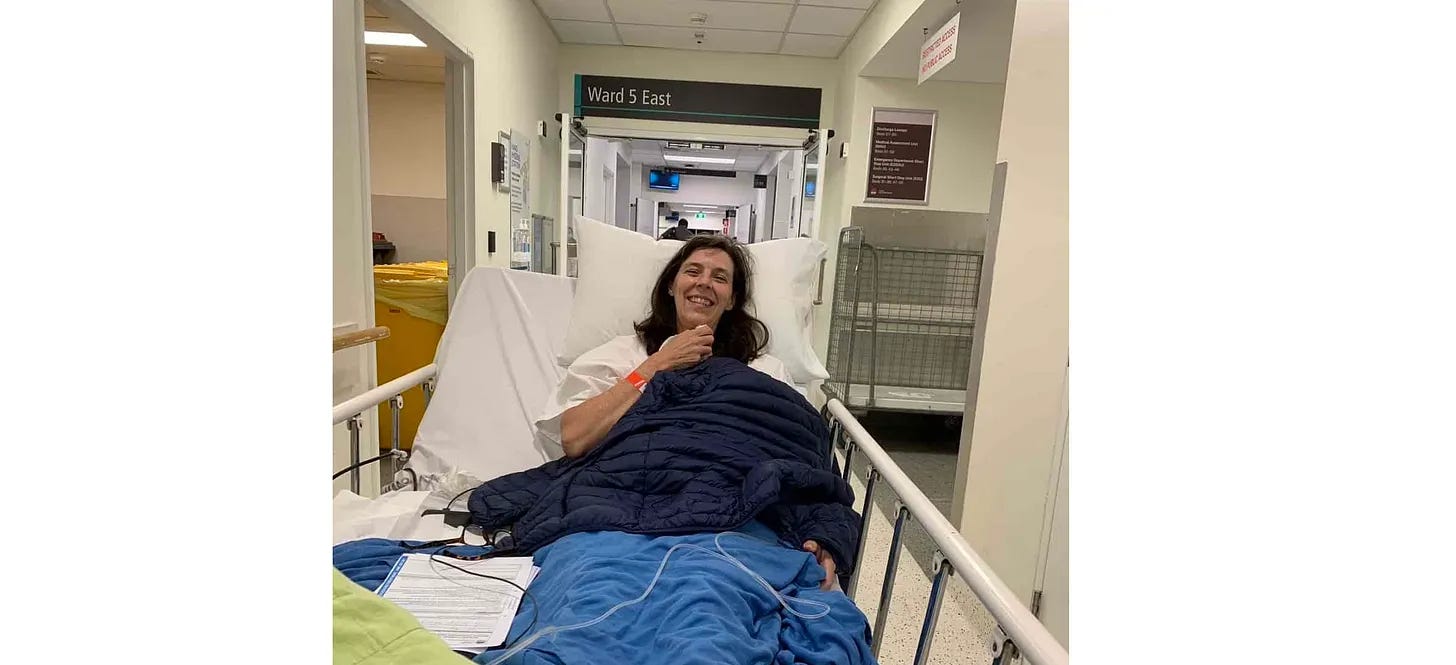
… and talking of injuries from swallowing big sharp things… just last month, Global Seafood Distributors (Australia) Pty Ltd recalled 500 g packages of Seafood Marinara Mix due to “the presence of foreign matter (mussel shell fragments with product)”, with the regulator stating “food products containing shell fragments may cause illness/injury if consumed.” I can attest to that!
Thank you to reader Andrew from Australia +Taiwan for bringing this recall to my attention
Webinar archive unlocked
In honour of World Food Safety Day, the International Association of Food Protection (IAFP) has thrown open their webinar archive - a treasure trove of one-hour on-demand webinars on every food safety topic imaginable for the month of June.
The archive is usually only accessible to members of the IAFP. It includes:
Advancing Food Safety Culture Together - A Dialogue Between Auditor and Auditee
Assess Food Safety Culture: Choosing Methods and Maximising Results
Root Cause Analysis: Adopting Standard Practices for the Food Industry
Bridging Cybersecurity and Food Protection: A Multidisciplinary Approach
… plus many more.
Access the complete webinar archive here (scroll down to see the list of topics)
Food Safety News and Resources
This week’s food safety news features 5 unusual food safety alerts, 2 helpful (free) webinars and some good (or not?) results for chemical hazards in infant formula in the United States.
Food Safety News and Resources | June

5 unusual alerts/recalls, 2 free webinars, and good news (?) for infant formula
What does fraud taste like?
A few months ago I saw an intriguing story on LinkedIn, told by a food industry professional, involving butter from Italy. He recounted an incident that occurred 25 years ago, in France.
It began with an opportunity that his company’s buyers felt was too good to pass up: butter from Italy, offered by an unknown supplier at a very attractive price.
Fortunately, at his company, there was a policy to taste every batch of every raw material upon receipt, before it was accepted or used in production.
When this particular consignment of butter arrived and was duly tasted, both the production and quality personnel detected a strange, metallic taste. They rejected it.
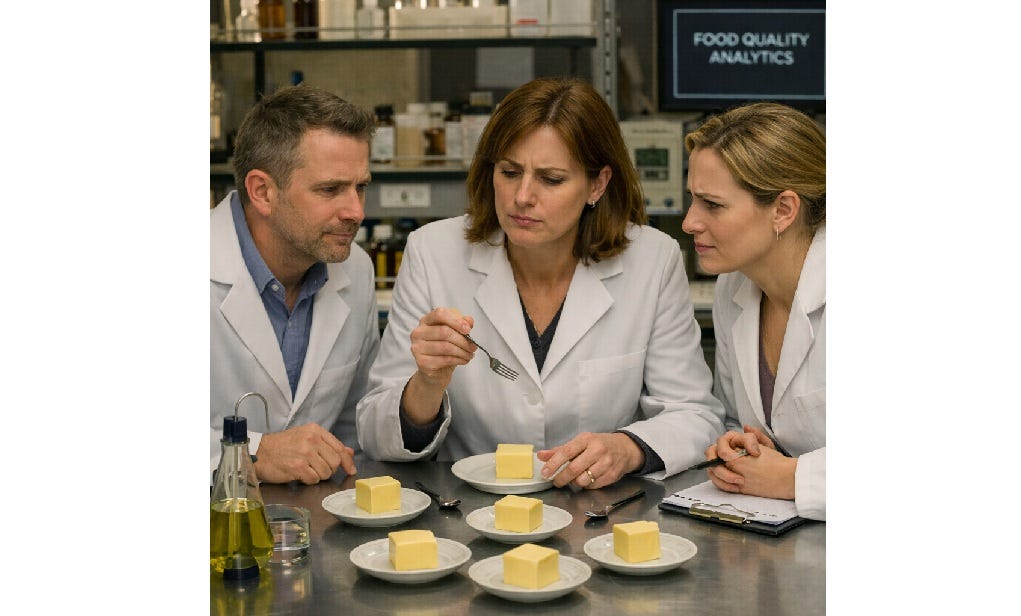
A few weeks later, the press reported that the three largest French cheese factories, including the company he worked for, had purchased adulterated butter from Italy. His company was the only one that had rejected it and had not used it in production.
The butter was adulterated. It was later revealed it had been produced by an organised crime group in Italy, and contained almost one-third adulterants, which included chemical additives, vegetable fat, beef tallow and other substances normally intended for use in cosmetics.
The crime group not only made profits directly from the production and sale of the ‘butter’, but also from falsely obtained European subsidies.
Detecting fraud is not usually as easy as performing a simple taste test, but this story illustrates how even the simplest of controls can be effective. And even simple controls can be overlooked by big companies when they purchase bulk quantities of ingredients.
After that episode, buyers at the man’s company understood that behind every attractive opportunity, unknown risks can be hiding. And (no doubt) the other French cheese manufacturers, the ones who had NOT tasted the butter before using it in their products, implemented organoleptic testing for incoming materials.
Thank you to Bruno Sechet for sharing that story on LinkedIn
More about the large-scale Italian butter fraud (2000):
1. European Commission / OLAF press material on adulterated butter
https://europa.eu/rapid/press-release_DOC-00-15_en.htm2. European Parliament written question on the Fléchard adulterated butter case
https://www.europarl.europa.eu/doceo/document/E-5-2000-3240_EN.html3. Just‑Food article “ITALY: Butter Fraud” (trade press summary of the OLAF case)
https://www.just-food.com/news/italy-butter-fraud/4. Euractiv brief “OLAF uncovers huge butter fraud”
https://euractiv.com/de/news/olaf-uncovers-huge-butter-fraud/5. European Commission press release on convictions in the adulterated butter case (Créteil court, France)
https://ec.europa.eu/commission/presscorner/detail/en/ip_08_38
Below for paying subscribers: Food fraud news, horizon scanning and incident reports
In this week’s food fraud news:
📌 Warnings for lychee, almonds and pistachio
📌 Shocking stats for online supplements
📌 Large fine for prolonged kebab fraud
📌 Incidents with halibut, speciality liquor and panela
📌 Food Fraud News 📌
UK Kebab Maker Fined
A kebab meat manufacturer has been fined for selling kebab meat that was claimed to be ‘lamb’ but was mostly skin, fat, assorted meats and mechanically reclaimed materials such as neck trim.
The kebabs, which were supplied to takeaway stores and restaurants, carried labels that indicated they contained specific quantities of specific meats; however the court heard the manufacturer’s owners knew that these label claims were false.
The ‘lamb’ kebabs contained goat, lamb fat, skin, sheep meat and mutton. One sample, labelled 87% lamb, contained 51% meat and 40% fat. Other products contained meat species different to those declared on the labels.
The crimes were initially discovered when a local trading standards team undertook a regional sampling exercise for meat species in kebab meat in 2020 and 2021.
Invoices showed the company had purchased very little lamb but large volumes of skin, fat, goat and lower grade materials that cannot be legally labelled as meat. The court found the crimes had been deliberate and had continued for a “prolonged period”.
I’m disappointed to say that the company was fined just £500k. Sentencing guidelines allow for fines of between £15m and £24m, but the prosecutor told the court those amounts are "wholly unrealistic".
Kebab firm fined £500k for selling lamb that was mostly skin and fat