
246 | Campylobacter Cheat Sheet |
Plus, 2 unusual incidents and crimes against cheese
This is The Rotten Apple, an inside view on food fraud and food safety for professionals, policy-makers and purveyors. Subscribe for insights, latest news and emerging trends straight to your inbox each Monday.
The Pathogen Files: Campylobacter
What’s new in the Knowledge Vault
2 Unusual food safety incidents
Crimes against cheese
Food fraud news, emerging issues and recent incidents
Happy Independence Day, Americans!
I’m starting this issue with a shoutout to 👏👏 Sanjuana, Simione, Esalud from the dry mix company and Mary from the essential oil company 👏👏 for upgrading to paid subscriptions. Your subscriptions help keep this publication independent and ad-free. Thank you.
But the biggest shoutout is for 👏👏Helen 👏👏 who is a long-term Good Apple subscriber – one of the beautiful and generous readers in our top tier whose subscriptions support scholarships for academics and students. Thank you, Helen.
We’re continuing our pathogen files series with Campylobacter this week, followed by 2 unusual food safety incidents. Plus, you won’t believe what a YouTuber did with a wheel of Parmesan cheese.
And, in this week’s food fraud news, criminology researchers who used cost of crime economic frameworks to estimate the cost of food fraud in the United Kingdom have reported that food fraud occurs at a lower rate than other fraud crimes. That’s something to celebrate!

Welcome to July 2026
Here’s your guide to everything new in the Knowledge Vault this year
Welcome to the second half of 2026 (that came quick!)
The Rotten Apple’s Knowledge Vault is a curated collection of articles extracted from past issues - think evergreen guidance, deep dives, curated collections and expert insights. If you’ve ever needed specific information and couldn’t remember which issue it was in, it might just be in the Knowledge Vault.
Here’s a small portion of what we’ve added to the Vault this year:
Spice Fraud - An Introduction — how fraud in turmeric, saffron, cinnamon, pepper and chilli happens, and how it’s detected
Food Safety Standards Library — key standards from BRCGS, IFS, SQF and FSSC, all in one place
Guide: How to Perform Red Flag Reviews for Supplier Integrity — with downloadable checklist
Food Safety Guidance Library — key guidance documents to support compliance and risk mitigation
How to Perform a Mass Balance: Step-by-Step Guide — with downloadable worksheets
Visit the Knowledge Vault for the full library.
The Pathogen Files: Campylobacter
Another of our super-popular pathogen files: everything you need to know about this foodborne pathogen, without the fluff and filler.
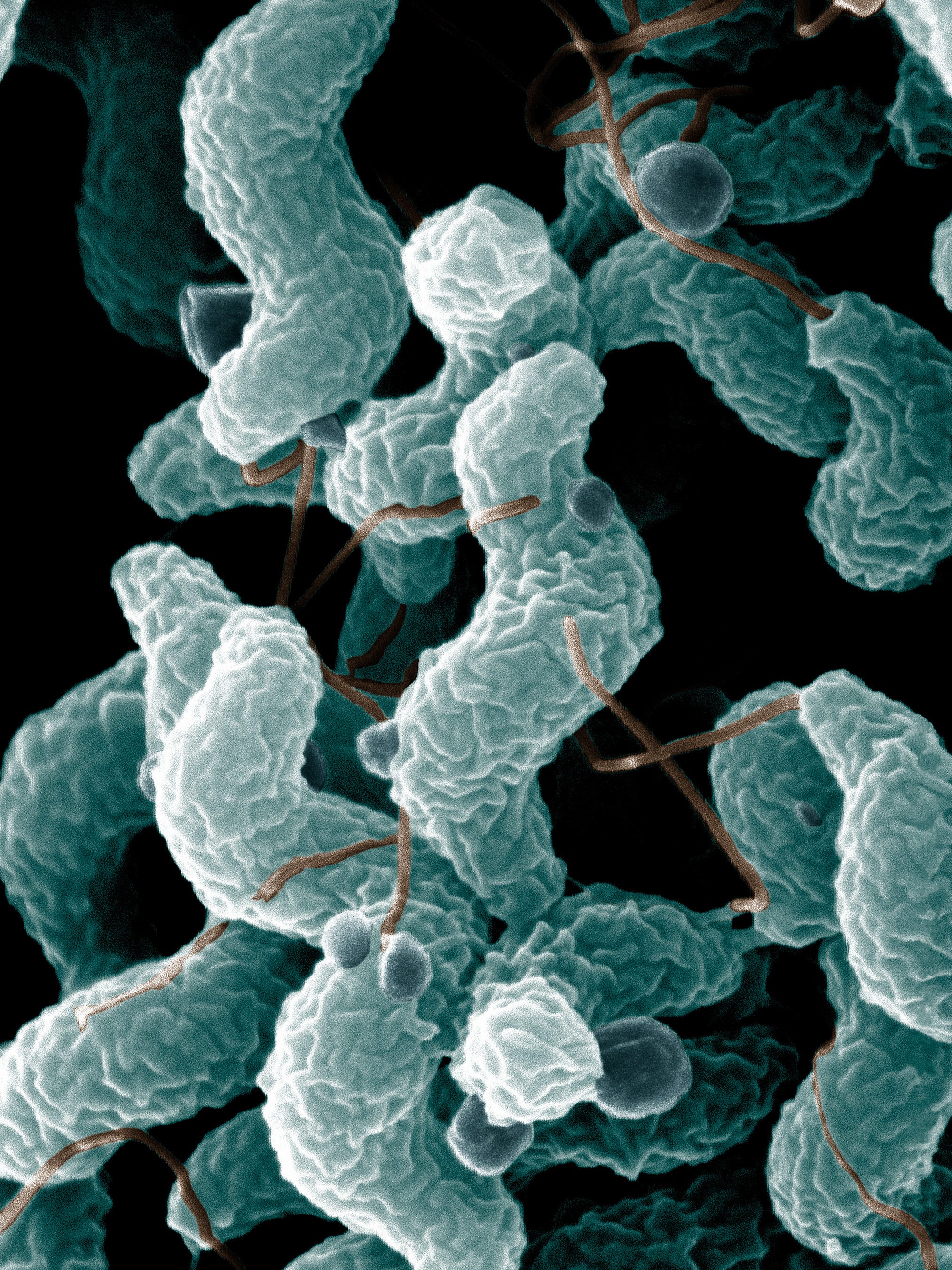
What is Campylobacter?
Scientific Name: Campylobacter jejuni (also C. coli, C. fetus)
Also affectionately known as ‘Campy’.
Classification: Bacteria
Mode of Action: Causes gastrointestinal illness by infecting the intestinal tract.
Morphology: Gram-negative, spiral-shaped rod, motile.
Reservoirs: Campy is found in the intestines of many animals – especially birds, cattle, and other livestock; can also be found in non-chlorinated water and flies.
Growth Characteristics: Microaerophilic (requires reduced oxygen: 3-5% O₂, 2-10% CO₂), fragile in the environment, sensitive to drying, heating, disinfectants, and acid.
Unique Traits: Not all strains are pathogenic. However, many strains isolated from chicken meat are pathogenic.
Impact and Burden
Campylobacter jejuni is a leading cause of bacterial diarrhoeal illness in the United States, causing more illnesses than Shigella and Salmonella.
Geographic Prevalence: Not carried by healthy people in the USA or Europe, but widely present in animals and nature.
Implicated in Foodborne Illness: Common
Commonly Implicated Foods
Poultry, raw milk, other meats, and contaminated water.
Routes to Illness
Contamination Sources: Contact with infected animals, contaminated food or water, and flies.
Contributing Factors: Hygiene failures, improper cooking and cross-contamination between raw and cooked foods. Cold chain failure can contribute, but Campylobacter is sensitive to freezing and drying.
Illness Mechanism: In humans, Campylobacter colonises the intestinal tract, triggering gastroenteritis.
Infective Dose: The infectious dose of Campylobacter is considered low, ranging typically from 500 to 10,000 organisms, with some studies showing infection with as few as 360–800 colony-forming units (CFU) (Kaakoush et al. 2015).
Symptoms, Duration
Onset of Symptoms (Incubation period): Usually 2 to 5 days after infection, but can range from 1 to 10 days.
Symptoms: Diarrhoea (sometimes bloody), abdominal pain, fever, nausea, vomiting, headache.
Duration: Typically 3 to 6 days. Usually resolves by itself.
Secondary/Long-term Symptoms and Outcomes: Campylobacter infection is a recognised trigger of reactive arthritis, and C. jejuni is one of the most common infectious triggers of Guillain-Barré syndrome, a rare autoimmune paralysis and there is one recorded case of toxic shock syndrome.
Mortality Rate: Low; higher in the immunocompromised, young children and the elderly.
Prevention, Control
Food Industry Measures: Maintaining proper hygiene during food handling, ensuring appropriate temperature controls to prevent bacterial growth, thorough cooking, and preventing cross-contamination. Pasteurisation of milk. Effective hand washing protocols and exclusion of infectious food handlers.
Case Study: Thousands of cases of Campylobacter, including 4 deaths and 3 cases of Guillain‑Barré syndrome from contaminated drinking water
In 2016, a large waterborne Campylobacter outbreak was traced to a municipal water supply in New Zealand.
Size of outbreak: Between 6,260 and 8,320 cases were estimated, with 953 physician‑reported cases, 42 hospitalisations, 3 Guillain‑Barré syndrome cases and at least 4 deaths linked to the outbreak.
Source: Untreated, groundwater‑derived reticulated drinking water supply serving Havelock North township.
Microbiological investigation: Campylobacter isolates from patient stool, groundwater samples and sheep faeces from adjacent paddocks underwent whole-genome sequencing, identifying 12 genotypes in human cases, several of which overlapped with genotypes from water and sheep.
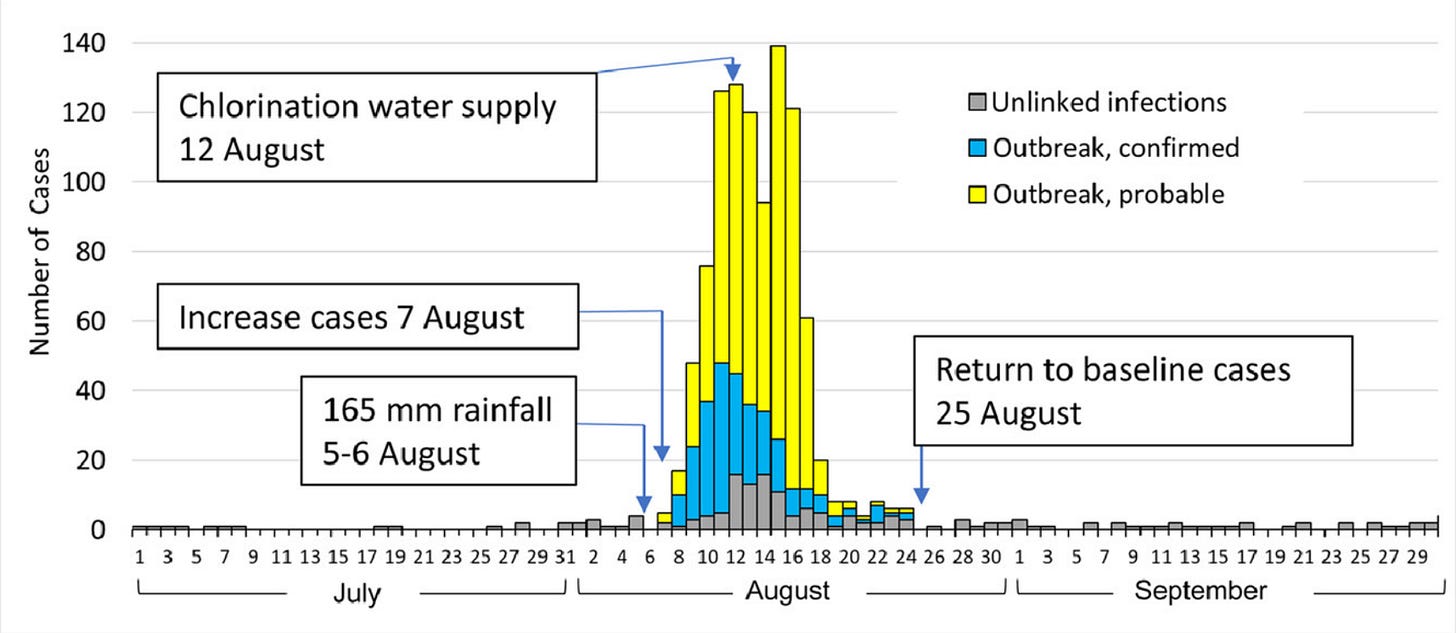
Timeline of outbreak. Source: Gilpin et. al. (2020) Root cause(s) and contributing factors:
A heavy rainfall event caused drainage of sheep faeces into a shallow aquifer from which the drinking water was drawn.
The water supply was untreated, with insufficient barriers in the water safety system, allowing Campylobacter contamination to reach consumers.
Agricultural intensification near the source increased the risk due to faecal contamination.
Reliance on routine surveillance rather than proactive source protection meant the contamination was discovered only after clinical cases emerged.
This outbreak is a classic multi‑barrier failure example: high environmental loading, inadequate source protection, absence of treatment, and delayed recognition.
Source: Gilpin, B.J., Walker, T., Paine, S., Sherwood, J., Mackereth, G., Wood, T., Hambling, T., Hewison, C., Brounts, A., Wilson, M., Scholes, P., Robson, B., Lin, S., Cornelius, A., Rivas, L., Hayman, D.T.S., French, N.P., Zhang, J., Wilkinson, D.A., Midwinter, A.C., Biggs, P.J., Jagroop, A., Eyre, R., Baker, M.G. and Jones, N. (2020). A large scale waterborne Campylobacteriosis outbreak, Havelock North, New Zealand. Journal of Infection, 81(3), pp.390–395. doi:10.1016/j.jinf.2020.06.065.
More about Campy
Mwangi, A., Kunyanga, C., Sogin, J.H., Ngala, S., Benard Aliwa, Onsare, R.S. and Ndiritu, A. (2025). Prevalence of CAMPYLOBACTER in specific food and food products: a systematic literature review and meta-analysis. Critical Reviews in Food Science and Nutrition, pp.1–14. doi: https://doi.org/10.1080/10408398.2025.2539402.
Epps, S.V.R., Harvey, R.B., Hume, M.E., Phillips, T.D., Anderson, R.C. and Nisbet, D.J. (2013). Foodborne Campylobacter: Infections, Metabolism, Pathogenesis and Reservoirs. International Journal of Environmental Research and Public Health, [online] 10(12), pp.6292–6304. doi: https://doi.org/10.3390/ijerph10126292.
Main source: United States Food and Drug Administration (2012). Bad Bug Book, Foodborne Pathogenic Microorganisms and Natural Toxins, Second Edition. Available at: https://www.fda.gov/media/83271/download
2 Unusual food safety incidents
1. Unusual recall: infant formula for unacceptable colour and odour
An infant formula company in France is recalling one batch of infant formula after reports of dozens of illnesses. One infant was hospitalised, and a stool sample was found to contain adenovirus; however, no pathogens were detected in the product.
Intriguingly, the manufacturer also received complaints about the colour and odour of the batch, confirmed by organoleptic testing. Cereulide toxin was not detected. The organoleptic changes are thought to be due to excessive heating of the batch. French authorities said the colour and odour changes make the product unfit for consumption, and a recall was initiated.
Complaints prompt infant formula recall | Food Safety News
2. Unusual root cause: Dried noodles linked to a widespread Salmonella outbreak
A long-term and geographically large salmonellosis outbreak has been discussed by the European Food Safety Authority (EFSA), with flavoured noodle products from one brand produced in Ukraine flagged as the most likely source.
This is unusual because flavoured noodles are rarely linked to illnesses caused by heat-sensitive non-toxin-forming bacterial pathogens such as Salmonella, which would usually be deactivated when flavoured dried noodles are prepared as directed using boiling water.
Nevertheless, there have been 106 confirmed cases across 13 EU countries plus the United Kingdom since November 2025, with one source reporting that some affected children may have eaten the noodles raw.
Comment: This reminds me of the deadly Listeria outbreak from heat-and-eat pasta meals in the United States last year, because some experts suspected that consumer cooking had effectively been treated as a defacto Listeria CCP (critical control point) by the pasta meal manufacturer.
In the current case, it’s possible that Salmonella controls similarly relied on consumers preparing the noodles properly and not eating them raw.
Got to admit, my kids frequently ate instant noodles raw as teenagers, and it never occurred to me that the flavour sachets could be a food safety risk - although it definitely should have, because high-fat, low-moisture powders are well known to support the survival of Salmonella.
Read more: Multi-country outbreak of Salmonella Stanley infections linked to flavoured noodle products | EFSA
Crimes against cheese
“We’re going to be banned from Italy after this”
… So said the YouTuber who decided to see if he could make car tyres out of a $1,200 wheel of Parmesan cheese.
Yes. Yes you are. The mind boggles.
Also, this is a definite crime against cheese.
Click the image below to watch the cheese wheels experiment in all its horrific glory.

Below for paying subscribers: Food fraud news and incident reports
In this week’s food fraud news:
📌 Authenticity or label problems in 97% of Dubai-style chocolates!
📌 Adulterated fennel seeds
📌 Black pepper method
📌 Incidents with beef, cheese and vehicle cleanliness reports
📌 Food Fraud News 📌
Good news about fraud in the food industry?
A new paper published in the Journal of Economic Criminology suggests that fraud is less prevalent in the food industry than in other industries.
The authors estimated that food fraud costs the United Kingdom £ 0.4 - £2 billion annually, which is lower than other industries. Why? Because