
247 | Cheese is resistant to pathogens (and other nonsense) | Cyclospora explained |
+ don't miss the PAS webinar on 14 July

This is The Rotten Apple, an inside view on food fraud and food safety for professionals, policy-makers and purveyors. Subscribe for insights, latest news and emerging trends straight to your inbox each Monday.
Cyclospora: a growing food safety threat
Food protection + PAS 96 webinar tomorrow
Waste diversion fraud on my radar
They did WHAT with the raw milk (Cheese maker shares a doozy)
Food fraud news and recent incidents
Hello lovely readers,
Summer time means parasitic foodborne illnesses in the United States. And this northern summer there’s a monster-sized Cyclospora outbreak underway; in fact, one commentator reckons it’s one of the largest on record.
This seemed the perfect time for us all to refresh our Cyclospora knowledge, since it’s quite a tricky beast when it comes to outbreak epidemiology and root cause analysis - not to mention there are pretty much no effective post-harvest controls for Cyclospora in foods consumed raw.
In addition to Cyclospora, I’ve got a couple of quick food safety notes for you, plus a link to a food protection webinar and a headscratcher of a story about cheese making with unpasteurised milk.
And our food fraud news sees me getting excited about snail DNA (what else!)
Thanks for being here.
Karen
P.S. I’m thrilled that so many of you are choosing to renew your paid subscriptions (shoutouts to 👏👏Jacqueline, Anna, Doris, Cathy and Mere👏👏). Our reader retention rate is miles above industry benchmarks: thanks for the vote of confidence.
Cyclospora – a growing food safety threat
Soaring summer Cyclospora cases in the U.S.
A significant number of domestically acquired Cyclospora cases have been recorded in the United States, with Food Fix saying it appears to be “one of the largest Cyclospora outbreaks on record”.
Exact numbers are difficult to pinpoint due to jurisdictional issues with case counting. Last week Food Safety News said Michigan had at least 572 cases, while the CDC logs a ‘national’ count but Michigan “is not one of CDC’s 17 states”. Other sources suggest that the true case count may more like 2,000.
Cyclospora is a single-celled parasite that causes explosive watery diarrhoea. And it is transmitted when people ingest oocysts in contaminated food or water.
So far, the food source for this large outbreak has not been identified. Past outbreaks have been linked to bagged salad leaves, fresh cilantro (coriander leaves), fresh basil and fresh berries.
Cyclospora cannot be cultured in the laboratory and is not suitable for genetic subtyping. It also has an incubation time of up to two weeks. Together, these characteristics make it very difficult to link food samples and environmental samples with infected people.
Read more about the current outbreak:
Cyclospora cases surge to nearly 600 in Michigan | Food Safety News
What we know so far about the growing cyclospora outbreak | Food Fix
What you need to know about Cyclospora
The information below is part of an article I first published in 2024. It is mostly sourced from a presentation by Michelle Danyluk, University of Florida, delivered at the International Association of Food Protection Annual Meeting (2024).
Cyclospora infection is a foodborne and waterborne illness caused by Cyclospora cayetanensis, a single-celled parasite (technically, a coccidian protozoan). In wealthy countries, it was rare until recently, and only seen in people who had travelled to tropical developing countries, where the parasite is endemic.
However, since the 1990s, Cyclospora infections have been seen commonly in wealthy countries as well as developing countries.

Cyclospora infections take around one week to develop and cause symptoms. The illness can last from a few days to more than a month. Symptoms include watery diarrhoea, bloating, flatulence, burping, abdominal pain, cramps, nausea, vomiting, loss of appetite, body aches, fatigue, and fever.
The most common food sources for Cyclospora infections are fresh produce such as leafy greens, salad mixes and fresh basil. In the United States, Cyclospora outbreaks were only linked to imported produce prior to 2018. However, after 2018 there started to be many cases of Cyclospora in people who had not travelled internationally, and at least some of these cases were presumed to be from domestically grown food.
I say ‘presumed’ because Cyclospora cannot be cultured in the laboratory and is not suitable for genetic subtyping, making it very difficult to link food samples and environmental samples with infected people.
How does Cyclospora cause foodborne illness?
Humans are considered the only reservoir for Cyclospora cayetanensis, and asymptomatic infection is common in people in some tropical developing countries.
Cyclospora is transmitted when infected human faeces contaminate food or water. It is not transmitted directly from person to person because it is not infectious until one to two weeks after being passed in a bowel movement. The infectious agent is the oocyst of the parasite (a sort of ‘egg’), which is excreted in the faeces of an infected person. The parasite forms the oocysts while living inside its human host.
After leaving its host’s body, the oocyst sporulates (‘hatches’). The sporulated oocysts cause illness when ingested in food, such as raw leafy greens, or perhaps in contaminated water.

Little is known about the biochemistry of Cyclospora oocysts, or their sporulation process. It’s not even known whether they sporulate while on food crops or elsewhere, such as in soil or water. Nor is it known how many oocysts survive in the environment, how long they survive on crops, whether they are killed by solar radiation, or how easy it is for them to cross-contaminate from soil or water onto food. It’s also not known whether they can be physically removed from food plants such as leafy greens.
Fortunately, thorough cooking inactivates Cyclospora oocysts.
It is thought that Cyclospora oocysts get onto food plants such as leafy greens through direct contact with contaminated hands – such as from farm workers – or from contact between contaminated irrigation water and crops. However, the transmission process from irrigation water to crops is unknown.
Irrigation water cannot easily be monitored for the presence of Cyclospora oocysts because they are very difficult to detect in water, and the methods used for recovering oocysts from environmental samples are often questioned, with a lack of consensus in the science community around the methodology.
Agricultural water treatment chemicals in common use have limited efficacy against Cyclospora.
How big is Cyclospora as a food safety problem?
We don’t have a lot of data about how many people are asymptomatically carrying Cyclospora at any given time, or how many oocysts people shed when infected. We also don’t know what the infectious dose is for Cyclospora.
This makes it difficult to understand how much of a risk it poses within food supply chains. However, case numbers in the United States appear to be on the rise, with some scientists now considering it endemic in the U.S.
Other scientists suggest that the increased effectiveness of clinical tests may be the reason for the sudden apparent increase in domestically acquired cases in wealthy countries.
Controls for Cyclospora
Some experts suggest we could solve the problem of Cyclospora by eliminating it entirely from the population, while others say we should prevent its spread using food safety controls.
Unfortunately, once the oocysts get onto food, it is difficult to know whether they are present, due to a lack of easy detection methods, and as mentioned previously, there are no known ways for removing them from food that is intended to be eaten raw.
Because it cannot grow or replicate outside the human body, prevention of Cyclospora must focus on keeping human faeces away from food and water. As Dr. Danyluk said of finding the source of contamination in Cyclospora outbreaks, the key is to… Focus on the poop 💩💩💩
Main source: Presentation by Michelle Danyluk, University of Florida, from a session titled Root Cause Analysis for Non-cultivable Foodborne Pathogens at IAFP 2024.
Taco Bell takes a cautious approach
As the number of cases grew in the U.S., a Detroit radio station reported last week that some Taco Bell locations were displaying signs saying they were not serving lettuce, cilantro, onions, guacamole and pica de Gallo - which commentators presumed was because of the Cyclosporiasis outbreak(s). Detroit is in Michigan, the state with the highest reported case count.
These Taco Bell stores appear to be taking a sensible approach: the source(s) of the parasite have not been named by U.S. State or national authorities, but - as we just learned - the disease is usually acquired from contaminated fresh produce, with produce washing ineffective at removing the oocysts. And this means the restaurants do not have an adequate way to protect their diners if there happens to be contaminated material in their supply chains.
Personally, I’m curious about why ALL Taco Bell stores in Michigan - or for that matter all restaurants nationwide - have not followed suit….
Read more about the Taco Bell stores: Some Taco Bell Locations Aren’t Serving These 4 Toppings For A Very ‘Explosive’ Reason | The Takeout
What do you think? Paid subscribers can add their thoughts in the comments.
3 Quick Food Safety Bites
Food Protection: PAS webinar 14th July
The most ‘official’ food protection guidance in the English-speaking world, PAS 96 has just been updated. Join its publisher, BSI, in its free webinar to learn what’s changed and get up to date with your food defence strategy.
Register here: https://page.bsigroup.com/PAS96Webinar
🍏 In case you missed it: What is PAS 96 and why is everyone so excited about the updates? | Issue 243 🍏
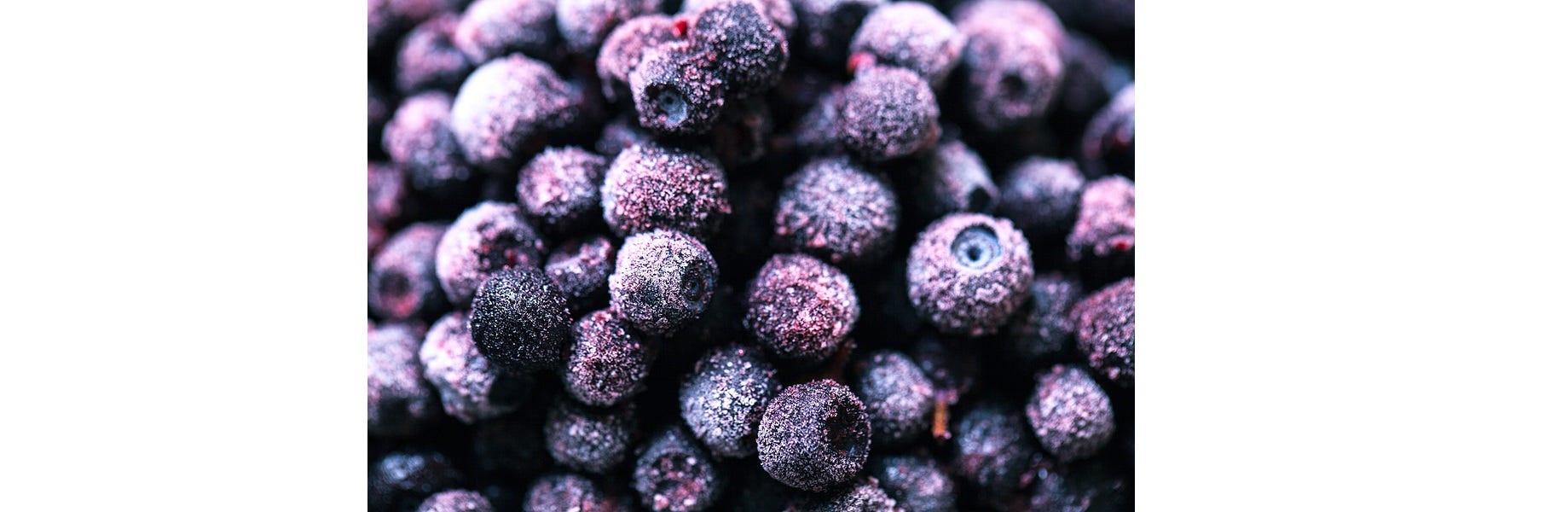
Unusual recall: Frozen blueberries for Shiga toxin-producing E coli
Frozen blueberries have been recalled in the U.S. after testing presumptively positive for E. coli O145:H28, a Shiga toxin–producing E. coli (STEC). The blueberries originated in Chile.
STEC contamination of fresh produce does occur, but it is usually associated with leafy greens, particularly leafy greens with ‘frilly’ shaped leaves such as Romaine lettuce. This serotype also appears less commonly than the most commonly isolated STEC: O157:H7.
Learn more: Frozen blueberries recalled, linked to E. coli outbreak | Food Safety News
Waste diversion food fraud on the rise (or just more visible?)
I’ve recently been talking a lot about waste diversion as a method of food fraud in private conversations and the bespoke training sessions and presentations I deliver to clients.
Waste diversion-style food fraud certainly seems to be happening more often these days - although, as with all things food fraud, that could be an observation bias rather than an actual increase in incidence.
Waste diversion is when a food company sends a rejected lot of food for disposal but the waste contractor or a third party diverts the food back into the food supply chain without the knowledge or permission of the food company, which typically receives a falsified certificate of disposal. Last year, such frauds were rarely reported publicly.
In the past week, however, two separate waste diversion incidents were reported by news outlets. I’ve included both in this week’s food fraud news. Shockingly, one was discovered because the food contained sharp metal and plastic fragments; the other was discovered following a food poisoning outbreak.
If you don’t have waste diversion fraud on your radar, and if you’ve been trusting your waste contractors to securely render your reject finished goods unsaleable without verification, now is the time to review.
They did WHAT with the milk?
Raw cheese maker tells journalist a doozy
The independent U.S. media outlet ProPublica has reported that Raw Farm, the company behind more than a dozen recalls and outbreaks, and whose owner has links to the Health and Human Services Secretary Robert F. Kennedy Jr., is doing something shocking.
The company’s owner and CEO, Mark McAfee, told a ProPublica journalist that every batch of its raw milk is screened for Salmonella, E. coli, Campylobacter and Listeria. As you would expect. But he also said that any batches containing E. coli, Campylobacter and Listeria are diverted to cheese making, rather than for drinking.
Yes, they send raw milk containing E. coli, Campylobacter and Listeria to their cheese-making processes.
Why? “Because, you know,” McAfee told ProPublica, “cheese is resistant to pathogens.”
“Cheese is resistant to pathogens”
Mark McAfee, Owner and CEO of Raw Farms, maker of unpasteurised cheese that was linked to a multistate E. coli O157:H7 outbreak earlier this year, per ProPublica
Batches of milk containing Salmonella are either sent for pasteurisation or dumped, according to McAfee.
The FDA told Raw Farms to stop using contaminated milk for cheesemaking in 2024, according to the article.
Raw Farms has been linked to more than a dozen recalls and outbreaks. When asked about this, McAfee, the owner and CEO, told ProPublica:
“I’ve put a couple kids in the hospital, and they have been sick, but they recovered. But here’s the thing: I’m a pioneer. And I’m going against the grain here. I’m climbing a mountain they say you can’t climb.”
BTW, just in case you aren’t 100% clear on this, raw cheese (cheese made with unpasteurised milk) is not “resistant” to pathogens; harmful bacteria can survive the typical 60‑day ageing period used for raw milk cheese.
Read the whole story: Mark McAfee Promotes the Wonders of Raw Milk. It Has Sickened Hundreds, Regulators Say | ProPublica
Below for paying subscribers: Food fraud news and incident reports
In this week’s food fraud news:
📌 Two waste diversion frauds
📌 Authenticating gastropods in processed foods
📌 Birds nest drinks found to be faked
📌 Lunchbox extortion racket, non-food species sold as food, French fry smuggling and more…
📌 Food Fraud News 📌
Not even food!
Austrian researchers testing a new authentication method discovered that products in their sample set were labelled as from one species but actually contained species not listed in the relevant country's list of approved food species. The foods were