
249 | The complete guide to EUDR for small and medium businesses |
Plus, 4 ways to improve your sanitation training

This is The Rotten Apple, an inside view on food fraud and food safety for professionals, policy-makers and purveyors. Subscribe for insights, latest news and emerging trends straight to your inbox each Monday.
The complete guide to EUDR for small and medium businesses
4 ways to improve your sanitation training
A dead ant dessert
Food fraud news, emerging issues and recent incidents
Welcome, hello, hi!
It’s fantastic to have you here for Issue 249 of The Rotten Apple. If you’re new here, I’m Karen and every week I collect the most interesting food safety and food fraud news from around the world just for you. My aim: to keep you up to date while respecting your inbox.
For this week’s issue, I spent wayyyy more time than allocated to build a complete guide to the European Union’s Deforestation Regulation (EUDR) for food businesses. And discovered some unexpected facts about the regulation in the process.
Also in this week’s issue, new research shows how to improve training for sanitation skills, plus a story about ants in desserts, and food fraud news at the end of the issue, for paying subscribers.
Enjoy!
Karen
Cover image: Supply chain for palm oil. European Commission (2026)
Special supplement: A complete guide to the EUDR
I discovered two unexpected facts while building this month’s special supplement for paying subscribers:
If your EU-based food business imports rubber gloves, paper wipes or wine casks to use on site, you have to comply with EUDR due diligence requirements - even if you don’t sell the items but simply use them in your business.
Chocolate is covered by the EUDR because it is derived from one of the seven deforestation commodities - cocoa. But soy milk and tofu are not covered, even though they are made from soy, another of the seven commodities.
Dive deep into these conundrums and more in this month’s special guidance for paying subscribers (take a sneak peek by clicking the preview box below).
EUDR Explained + Step By Step Guidance for Small to Medium Food Businesses

The European Union’s Deforestation Regulation (EUDR) is a law that aims to keep products linked to deforestation out of the European market. It affects businesses all over the globe, not just those in Europe.
4 ways to improve your sanitation training
Sanitation is a leading cause of nonconformance in food safety audits and inspections. In the United States, existing publicly available training such as ServSafe doesn’t go deep on hands-on sanitation tasks.
Researchers from the University of Massachusetts, the University of Maine, and NC State set out to change that by building a new sanitation training program: the Sanitation Controls Practitioner Program, or SCPP.
Their research paper, published in Food Protection Trends, describes how they:
created hands-on, sanitation-focused, practice-reinforced training; and
tested whether it actually improved trainees’ confidence and competency.
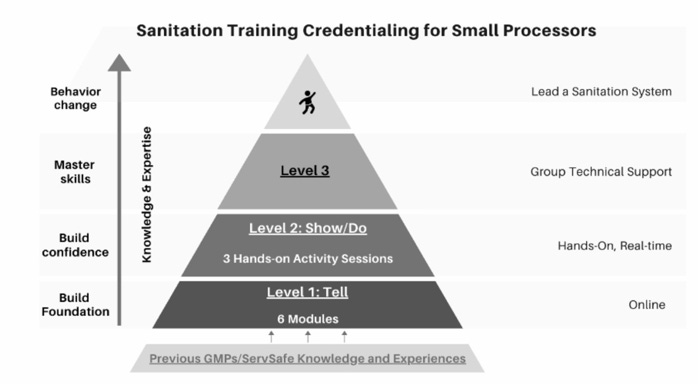
The researchers used the “Tell, Show, Do” model, starting with six self-paced online modules covering sanitation basics (Tell), followed by an in-person program where experts demonstrate cleaning, verification, and sanitising techniques (Show), followed by participants practising those tasks themselves under supervision (Do).
The curriculum was built with an advisory board of academics and industry representatives to identify job tasks that needed to be covered.
The program ran as a pilot from September 2023 to December 2024: 51 food processors did the online modules, 42 of them went on to the in-person sessions at three sites, and the program was evaluated through pre- and post- training surveys and focus groups.
The program was a success: preparedness rose across every sanitation topic, with statistically significant increases in titration, protein swabbing, ATP swabbing, and knowing which sanitiser to use on which surface. Smaller companies showed bigger preparedness gains than larger ones, likely because they have fewer in-house training resources.
Focus groups were generally positive about the program. Trainees enjoyed the hands-on, low-stakes practice elements best. However, the online portion was considered redundant by experienced staff while newer staff found it overwhelming.
Several participants said they would implement training based on the Tell-Show-Do model for new hires at their own facilities.
The authors concluded the program is a workable, scalable model for building sanitation competency.
What can we learn?
Here are four ways to improve your in-house sanitation training.
Use the Tell Show Do model. The “Tell, Show, Do” structure — online modules for context, live demos, then hands-on practice with an expert present — is effective and can be adopted on-site relatively easily.
Sanitation training needs stratification by experience. Experienced staff found some of the training redundant while newer staff found the same parts overwhelming. Managers running sanitation training should split content by skill level rather than using one generic session for everyone.
Cleaning verification-related skills are weakest. The researchers reported that the largest gains were seen in titration, ATP swabbing, and protein swabbing skills, rather than basic cleaning. That suggests these are the areas where staff are least confident and need the most hands-on practice.
Low-stakes practice builds confidence. Multiple participants said practising on non-production surfaces (not live equipment) was valuable, and low-stakes practice should be built into in-house training for consolidating and retaining skills.
Source:
Allingham, C.L., Depina-Londono, E., Machado, R., Stevenson, C., Johnston, L., Nicholas, K., Yamamoto, J., Moore, M.D. and Kinchla, A.J. (2026) ‘Practice makes perfect: a systematic approach to hybrid sanitation training using the tell, show, do method’, Food Protection Trends, 46(4), pp. 425–439. Available from https://www.foodprotection.org/files/food-protection-trends/jul-aug-26-Allingham.pdf
Meanwhile, somewhere in Seoul…
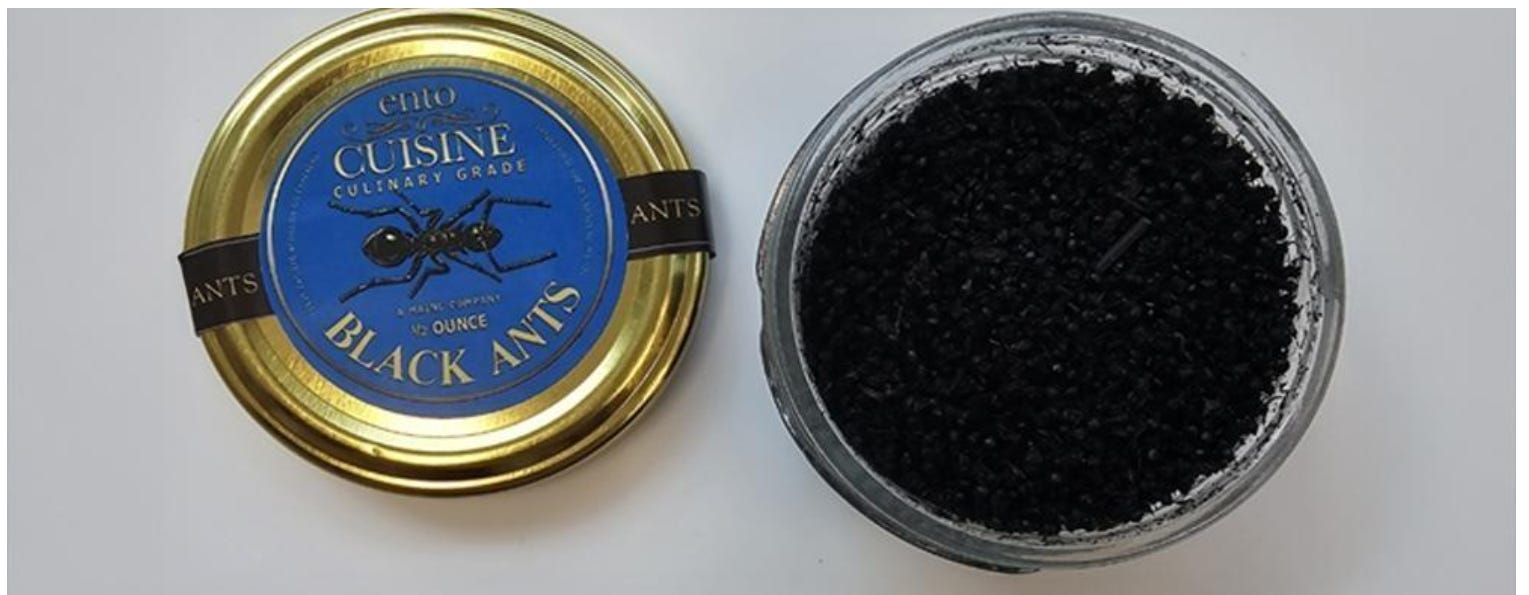
The chef of a Michelin-starred restaurant in Seoul, South Korea, faces jail over their use of unapproved ants served in desserts.
The ants were used as a garnish on sorbet. Prosecutors say the restaurant served approximately 49,000 ants with 12,200 dessert portions since 2021, though the restaurant disputes the count.
Ants are not on South Korea's approved list of 10 insect species for food use (which includes locusts and grasshoppers), but the court heard restaurants in countries including Denmark, the United Kingdom and Australia legally use ants as ingredients or garnishes.
Below for paying subscribers: Food fraud news, horizon scanning and incident reports
📌 Food Fraud News 📌
In this week’s food fraud news:
📌 FDA registration fraud warning
📌 New law for olive oil labelling
📌 Warnings for cereals and foods made with avocado oil
📌 Incidents with milk, shrimp, ‘halal’ pork (that’s a new one!), chicken feet and more.