

As food professionals, we all know what fermentation is. It’s when microorganisms grow in ingredients and convert them into good-to-eat foods like beer, sauerkraut and yoghurt.
But what is precision fermentation, and why are we hearing this term more and more?
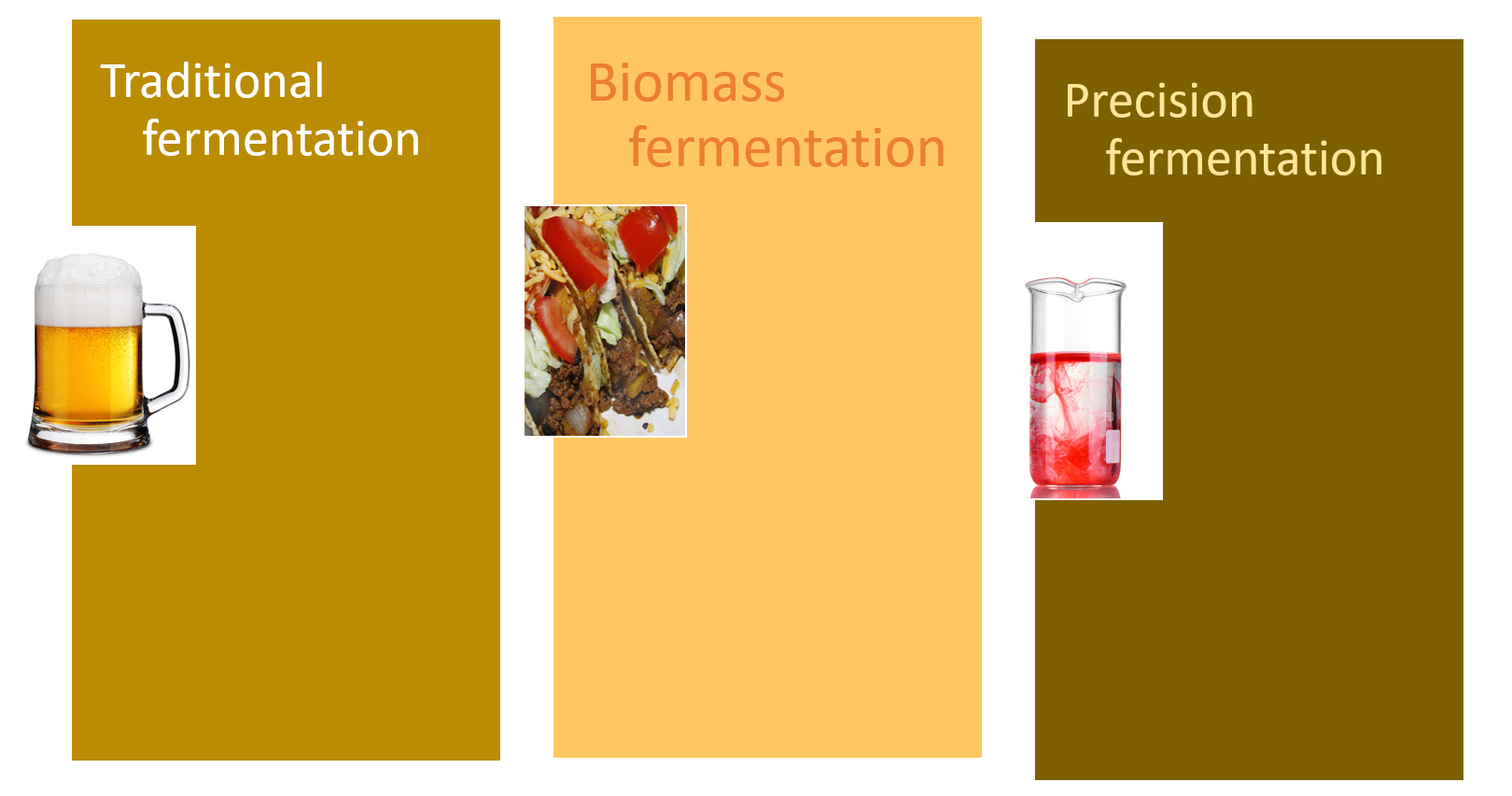
Beer and yoghurt are products of traditional fermentation, foods that have been changed by microorganisms.
Humans also perform fermentations for the purpose of eating the organisms themselves.
For example, Quorn is a food made from fungal mycelium, the fibrous vegetative parts of the fungus Fusarium venenatum. The production process for Quorn and other mycoprotein food ingredients is called biomass fermentation because we eat the biomass that is produced in the fermentation process.
With precision fermentation, we don’t consume either the food/substrate or the organisms themselves. In precision fermentation, the goal is to separate compounds produced by the organisms, leaving the biomass as waste at the end of the process.
Precision fermentation is used for making compounds that are too difficult or expensive to obtain through traditional methods.
The microorganisms used for precision fermentation are genetically modified to produce the desired compounds efficiently. For example, rennet a material used in cheese-making, which used to be obtained from calf stomachs, is now almost exclusively derived from precision fermentation processes*.
While precision fermentation for food enzymes and flavour compounds has been around for decades, we are hearing about it more often now because of its role in producing major components of novel foods.
One high-profile example of precision fermented food is ‘brewed milk’, a technology that is being developed by companies like Perfect Day.
Brewed milk is a fancy name for non-animal whey protein isolate, beta-lactoglobulin, produced by a genetically manipulated strain of the fungus Trichoderma reesei. The non-animal whey protein is being successfully used by Perfect Day to make climate-friendly, vegan imitation ice cream that is said to have a genuine dairy taste.
Fun fact: Trichoderma reesei was discovered in World War II when soldiers in the Pacific Islands noticed mysterious holes in their canvas clothes and equipment. The holes were the result of the T. reesei “eating” the cellulose in the canvas.
Other precision fermentation ingredients that have been approved for food use or that are in development are soy leghemoglobin, the blood-like component of plant-based Impossible Burgers and vegan egg proteins made by Every Company.
* For the pedants: More precisely, the fermentation-derived enzyme chymosin is now used in place of calf rennet.
In short: 🍏 Precision fermentation is the high-tech production of specific compounds using genetically modified microorganisms 🍏 It’s been used for decades for food enzymes and flavour compounds 🍏 It is recently receiving more attention because of new demand for non-animal-derived dairy, meat and egg proteins 🍏
Sources:
Perfect Day. (2021). Partnering with nature to use less and make more [online] Available at: https://perfectday.com/process/.
Lawton G (2021) Brewing Milk. New Scientist Issue 3347, pp 46–49.