
211 | Tip-truck to Table: Organized Crime’s Disgusting Recycling Scheme |
Plus, too much lead in protein supplements and 4 surprising truths about food safety training

Disgusting food fraud trend: waste diversion + organised crime groups
4 Surprising truths about food safety training
Food Safety News and Resources (including high levels of lead in two-thirds of protein supplements)
Best beef lesson ever
Food fraud news: horsemeat and beef (the tables turn)
Hello lovely readers!
This week’s main post is devoted to the growing crime of waste diversion. The latest figures are in, and enforcement agencies are alarmed. Also: 4 surprising truths about food safety training.
This week’s food safety news has scary results for lead testing in protein supplements and this week’s fraud news has some unusual incidents, including a case with horsemeat and beef (but not like you’d expect), and crimes associated with pistachio nuts and Dubai-style chocolate.
Thanks for being here,
Karen
P.S. Know someone who’d love this publication? Please tell them about it, and help grow our global food safety community (4.7K and growing strong!)
Tip-truck to Table
Organised crime groups are funnelling relabelled food back onto shelves
I’ve been wondering…
What exactly happened to the 160,000 pounds (72,600 kg) of frozen shrimp that were recalled in the US in recent months in relation to the radioactivity scare? Yes, it was recalled, but what happened to it after that?
What did the recalling companies and retailers actually do with each of the hundreds of thousands of 1.25 lb (570 g) bags of product? Did they empty the contents of every one and shred each package so it couldn’t be reused? Did they arrange for secure disposal with a trusted waste company and require a certificate of destruction? Or did they just dump them in a skip bin and let a contractor take them all away?
And why does this matter anyway?
It matters because the results of Operation Opson XIV have just landed. And they show that waste diversion crimes are at “unprecedented levels”.
Reminder: Operation Opson is an annual law enforcement initiative coordinated by INTERPOL and Europol with the aim of detecting and removing counterfeit, substandard, and fraudulent food and beverages from the market, and dismantling organised crime groups linked to such activities.
What are waste diversion crimes?
Waste diversion crimes in food involve illegally redirecting food, drink, or feed that is marked for disposal—such as expired, rejected, or unsafe goods—back into the human food supply chain through acts like relabelling or repackaging.
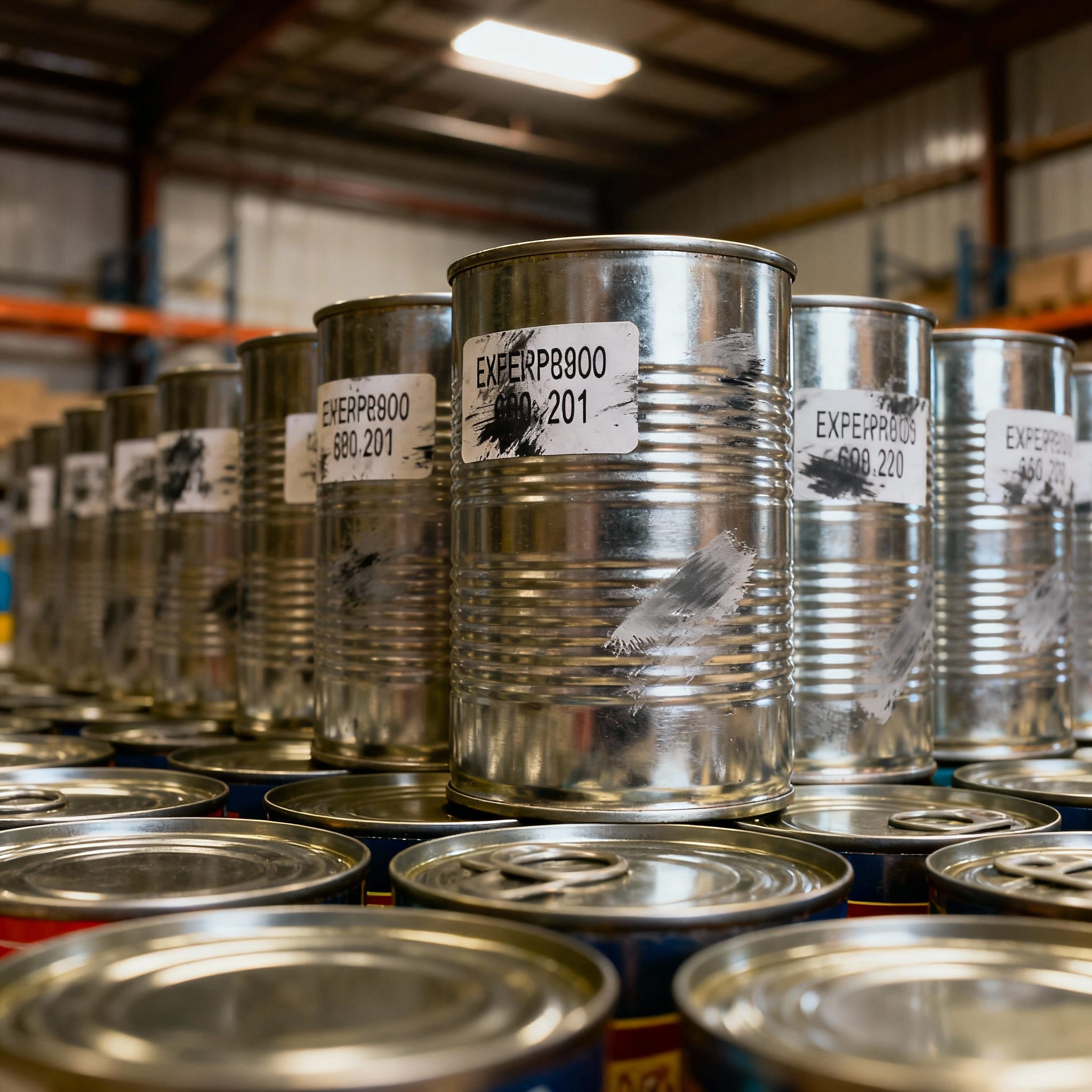
What do waste diversion crimes look like?
Here’s a hypothetical…
What if a seafood distributor involved in the recent US recalls decided the frozen shrimp was too valuable to throw away? What if senior management decided to make a few extra dollars by relabelling the cartons of product that had been returned to them rather than destroying them as required?
Could the distributor simply rebrand them or oversticker the cartons, add new expiry dates and keep them in the freezer until everyone has forgotten about the recalls, then sell them months or years later?
The short answer is yes.
It’s illegal and immoral, of course, but, with the shrimp worth $4 to $10 per pound, even a small quantity handled in this way can generate meaningful profits out of thin air – especially if the distributor received credits or refunds for the recalled stock.
Frozen seafood lasts many years - a man in Singapore was sentenced in 2023 for crimes related to storing frozen seafood that was almost 10 years past its expiry date - so there is plenty of scope for crime here.
In a different scenario, let’s imagine the seafood distributor does the right thing and sends the recalled shrimp for disposal.
In this scenario, what if the waste disposal company somehow had links to organisations that could relabel or repackage the shrimp and sell it back into legitimate supply chains later?
What if the waste disposal company didn’t just have links to criminals but was actually owned by an organised crime group that also owned repackaging facilities, warehouses and legitimate food distribution companies - a vertically integrated (mostly) legitimate supply chain? In this case, diverting the recalled shrimp back to retailers and restaurants would be easy.
But surely that’s too far-fetched, I hear you say. Sorry, I’m afraid it isn’t.
And anyway, Operation Opson is mostly in Europe. Surely this sort of thing isn’t happening in places like the USA? Sorry, I’m afraid it is.
The following story is not a hypothetical, but a real incident that happened in the United States.
The roadside spilling of a truckload of Skittles confectionery on its way to a cattle ranch, where it was destined for animal feed, made news headlines in 2017. When people protested that cows should not be fed Skittles, the brand owner, Mars, told reporters that the confectionery had been sent for destruction, saying they had no idea how the candies ended up on their way to a farm1.
Waste disposal crimes today
Things have changed since 2017. The price of food has increased dramatically, food security has fallen significantly, even in wealthy countries. There is also a growing body of evidence that documents the involvement of organised crime groups in food, in addition to typical crime sectors such as drugs and guns.
Today’s global landscape has made waste diversion crimes more attractive, not less.
In 2023, European law enforcement agencies dismantled two large crime groups that were reselling expired food after re-printing expiry dates or applying new labels, with 27 people arrested for their roles in a million-euro operation based in Lithuania, and selling food across multiple countries. They also arrested 3 people in Italy. In total, the agencies confiscated more than 1.5 million food and beverage items in the operations. The Lithuanian operation had been active since 2021.
At the time, Europol told reporters, “The phenomenon [of waste diversion crime] is new in its scale and diffused across several EU member states,”
Europol assured the industry that the criminals were working in food disposal, not food production, saying “There is no involvement of food producers, as intermediate suppliers or other entities working in food disposal are used as facilitators in this particular criminal activity.”
“Entities working in food disposal are used as facilitators in this particular criminal activity.” Europol (2023), via Securing Industry
In 2025, the situation seems worse. The most recent Operation Opson, Opson XIV, has just concluded, with 13 organised crime groups disrupted, 101 arrest warrants issued and €95 million worth of food and beverages seized.
One of the major trends for Opson XIV, said Europol, was finding waste disposal companies infiltrated by organised crime groups, which were using the waste companies to gain access to food destined for destruction.
This is not a new phenomenon, but this year, says Europol, the scale is “unprecedented”.
Examples everywhere?
Have you ever seen food that’s been through the waste diversion chain? You probably have, without even knowing it.
I can think of three recent incidents that could be linked to organised crime in waste providers.
1. Dodgy Diet Coke (Issue 209 and Issue 210)
‘Not right’-tasting Diet Coke discovered in London in 2025 could be expired product fraudulently reintroduced to the market – artificial sweeteners in diet soft drinks lose their sweetness, rendering old drinks tasting like soda water.
2. Jars of herbs containing glass (Issue 74)
In 2023, I reported on a waste disposal company in the Netherlands that was selling food products it had promised to destroy. The crimes were uncovered after a consumer was injured by glass in a jar of herbs from a batch sent for destruction.
The waste company was providing declarations of destruction which were false. A key person at the waste company had previously been convicted of environmental crimes.
3. Spaza shop mystery deaths (Issue 173)
In January, I wrote about the thousands of unexplained deaths in South Africa attributed to food purchased from spaza shops (small, independent and lightly regulated retail outlets).
A key complaint about the food from these shops is that it is often expired. Much of it appears to have been illegally imported by foreign nationals operating the stores without proper immigration status.
Video footage of a raid on one shop showed foods such as savoury crackers in transparent inner packs without their outer packaging or labels. Because they are missing traceability elements such as outers and labels, these foods could be from non-legitimate supply chains.
Officially, it’s said that Spaza shop owners use collective purchasing practices to keep prices low; however, it’s possible that groups of spaza shop owners source their products from overseas suppliers with links to waste disposal companies.
Takeaways for food professionals
Enforcement agencies are discovering the presence of organised crime groups in food waste disposal operations at unprecedented levels. Food that is intended for destruction and disposal is being diverted back into the human food supply chain after expiry dates or entire labels are altered or replaced.
Purchasers of packaged foods, such as grocery stores, independent retailers and food service outlets like takeaways, restaurants and cafes should obtain their supplies from legitimate, authorised stockists and wholesalers.
Manufacturers should be vigilant when disposing of packaged or branded materials.
Supplier approval processes should include the vetting of waste disposal contractors. Background checks are recommended – for example, have key personnel got a history of criminal convictions (as was the case in the Netherlands example)?
Certificates of disposal/destruction should be verified where possible.
As a former-soft-drink-company-employee told me in response to my Diet Coke story, “The correct disposal of branded waste and reject materials is a key factor for limiting the opportunity for these crimes.”
When purchasing food as a business or consumer, be on the lookout for:
Food that seems too old, despite being within date
Outer cartons and individual packs that are more scuffed, damaged or worn than expected
New suppliers that appear unexpectedly and offer products from multiple disparate brands, sometimes at lower-than-usual prices
Corner shops/spaza shops/tuck shops selling food in inner packs marked ‘not for retail sale’, or without exterior packages that would carry the batch codes or date markings
Packages with foreign language labels and no local information.
If in doubt about any such food, keep a sample and contact enforcement agencies and the brand owner to describe your concerns. Big food companies will investigate and take action against waste disposal crimes affecting their brands.
… and be on the lookout for suspicious frozen shrimp in the US for the next year or two…
In short: The involvement of organised crime groups in waste disposal operations was found at unprecedented levels in the latest Europol anti-food crime operation, Operation Ospon XIV 🍏 Food intended for destruction is being diverted back into the human food supply chain, often with altered expiry dates or new labels 🍏 Purchasers are warned to be aware and to report suspect products to the brand owner and enforcement agencies for investigation 🍏
Main source:
Europol (2025) Counterfeit and substandard food worth EUR 95 million seized in global operation (Operation Opson XIV). Available online: https://www.europol.europa.eu/media-press/newsroom/news/counterfeit-and-substandard-food-worth-eur-95-million-seized-in-global-operation
4 Surprising Truths About Food Safety Training
Every food company, regardless of size, shares a common mission: to build a workforce capable of making food that is safe 100% of the time without compromising on other deliverables like production efficiency, cost control, and consistent product quality. Yet while these goals are universal, food safety training challenges vary widely depending on a company’s scale, structure, and culture.
Food safety training works. A study by the US Centers for Disease Control and Prevention (CDC) found that establishments with certified food safety training experienced 20% fewer foodborne disease outbreaks. But delivering the right training and providing enough resources for training remains a challenge.
A recent survey revealed unexpected insights into how food safety training is perceived and practised across the industry. Here are four findings that challenge familiar assumptions and expose the real pressures involved in equipping every level of a food business with the knowledge, skills and motivation to keep food safe.
Takeaway 1: The biggest doubters of leadership buy-in are... the leaders themselves
One of the most unexpected findings relates to who struggles most with executive support. Across all respondents, only 5% cited “lack of leadership buy-in” as a top training challenge.
However, when looking exclusively at senior leadership—including directors, VPs, and CEOs—that figure more than doubles to 11%. This problem becomes even more acute in the largest organisations (1001+ employees), where at least 20% of respondents cite it as a key issue.
This counterintuitive result suggests the problem isn’t a simple disconnect between management and employees. Instead, it points to a lack of consensus and alignment among leaders in the organisation. If senior leaders themselves feel that their own colleagues are not fully committed, driving a unified food safety training strategy becomes significantly more difficult.
Key learning: Robust, effective and appropriately-resourced food safety training doesn’t only require management buy-in; it requires buy-in from all senior management, so that the entire leadership team is on the same page.
Takeaway 2: Training is delivered, but frontline workers say it isn’t working
Frontline workers are the employees who bear the brunt of implementing food safety protocols. Their perspective reveals a critical disconnect between the delivery of training and its practical application.
According to the survey, frontline employees are the only group to name “training comprehension” (15%) as one of their top five challenges. This suggests the issue isn’t just a lack of retention, but a potential flaw in the training methodology itself.
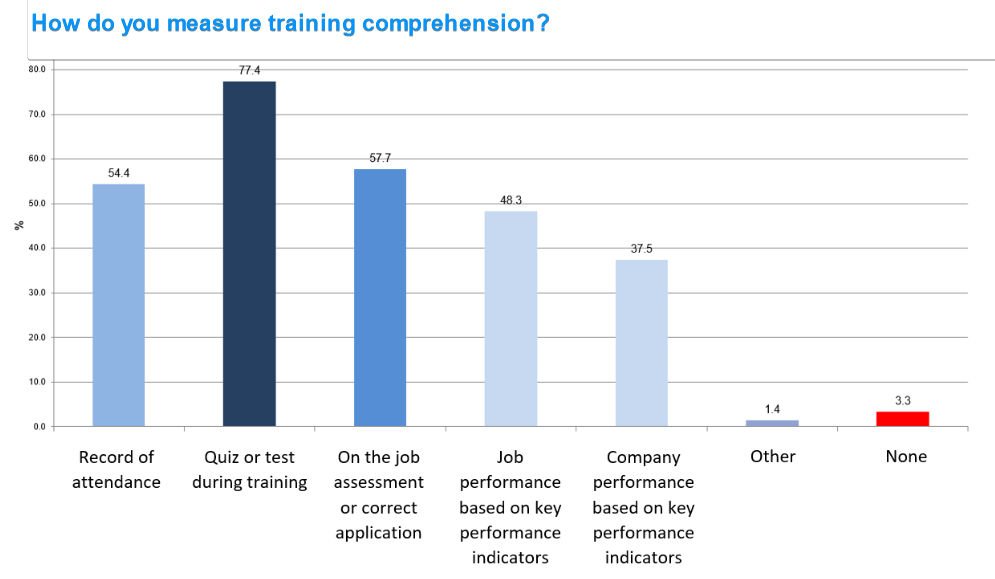
For learning to stick, programs must be practical, self-paced, and designed to be reinforced during the workday—not just in a classroom setting.
In a 2024 review of food safety training programs for migrant workers, the authors cited research that showed interactive training methods increased compliance rates by 35%, compared to traditional one-way training methods, while workers who engaged in role-playing exercises retained 40% more information compared to those who attended traditional workshops.
Frontline workers also rank “compliance adherence” as a challenge more than any other employee type (17%), which makes sense given that the burden of carrying out these detail-oriented tasks falls directly on their shoulders.
Key learning: The quality of training must be high, and interactive training is more likely to result in confident, consistent compliance on the factory floor.
Takeaway 3: For growing companies, culture is a core challenge
It’s no surprise that for small companies with 50 or fewer employees, the single biggest obstacle is a “lack of time,” cited by 41% of respondents. Small companies are often short-staffed, and every minute counts.
However, for businesses in the 51-200 employee range, a new major challenge emerges: “food safety culture.” It becomes a top-two issue, tied with “lack of time” at 38%.
This reveals a “growth paradox.” As a workforce expands, the problem is no longer just about finding enough hours in the day. The new, and arguably harder, challenge is maintaining consistent standards and embedding a unified safety culture across a larger, more complex team.
Key learning: For growing businesses, culture cannot be an afterthought; a culture that supports high-quality training, while allocating enough time for it to be done, must be a core goal.
Takeaway 4: Middle managers are caught in a vice between strategy and workflow
Middle managers serve as the eyes and ears on the ground, tasked with implementing the strategy set by senior leaders. Their challenges reveal a unique perspective, caught between the boardroom’s goals and the factory floor’s operational reality.
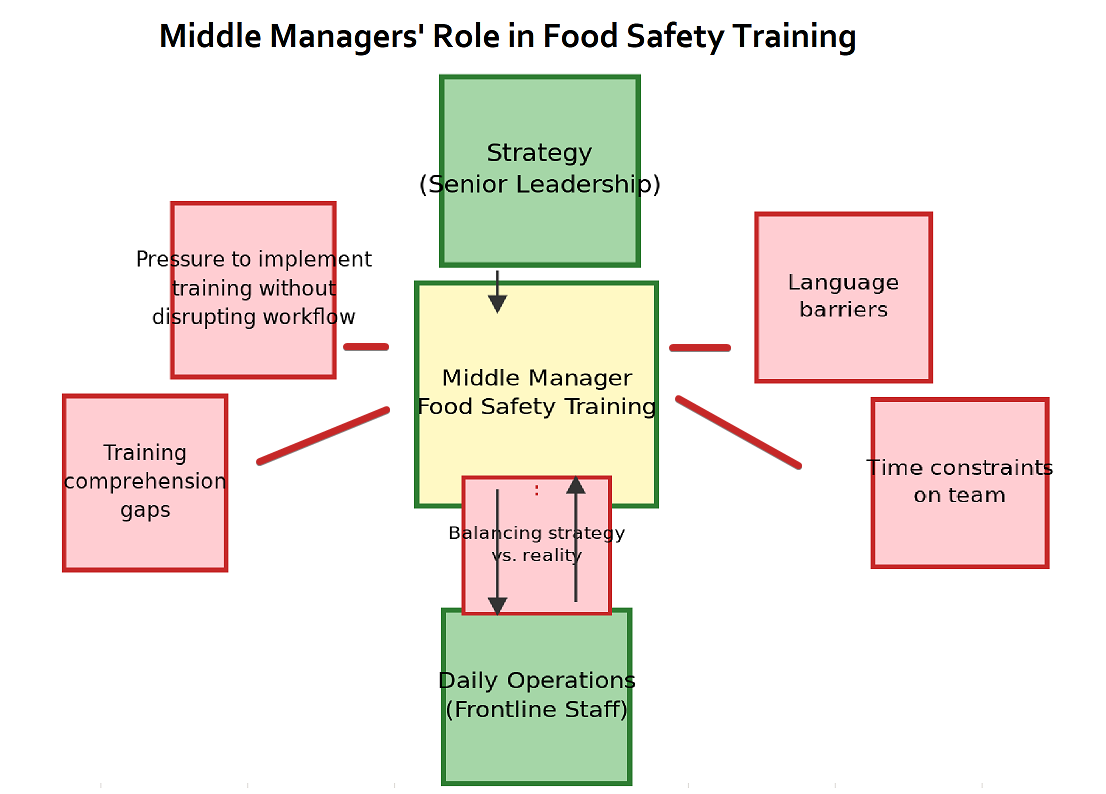
The biggest struggle for middle managers is the pressure to implement robust food safety training in a way that doesn’t disrupt team members’ workflow. Unlike senior management, middle managers are far more likely to see practical issues like language barriers firsthand.
They directly observe where training comprehension fails and are acutely aware of the time crunch on the manufacturing floor. Their role as the critical link between strategy and execution means they are caught between trying to balance food safety training requirements against the relentless demands of production.
Takeaways for food professionals
Effective food safety training is the backbone of safer food production, a resilient company reputation and a motivated workforce. However, in every business, food safety training exists within a landscape of competing priorities, and the obstacles visible on the factory floor are often invisible in the boardroom. Understanding these different perspectives is the first step towards strengthening a food safety training program.
Sources:
Emond, B. (2024). Highlights from the 8th Global Food Safety Training Survey – the industry can and should do much better - a blog from Campden BRI. [online] Available at: https://www.campdenbri.co.uk/blogs/8th-global-food-safety-training-survey.php.
RootWurks (2025) The Biggest Training Challenges in Food Manufacturing. Available online: https://www.rootwurks.com/lp/report-the-biggest-training-challenges-in-the-food-manufacturing-industry
Food Safety News and Resources
Our food safety news and resources roundups are expertly curated and never boring.
This week: scary results in protein supplement testing, a free in-person event for food fraud resilience and more.
Click the preview box below to access it.

Best beef lesson ever (Just for fun)
Adam Ragusea, amateur food scientist and YouTube cook, teaches all the cuts of beef using the muscles of a human bodybuilder in this slightly disturbing but extremely educational video.
For a less cannibalistic experience, the University of Nebraska also has a handy decoder , for example, pectoral muscles = brisket; hamstrings = bottom round.
Below for paying subscribers: Food fraud news and incident reports
📌 Food Fraud News 📌
In this week’s food fraud news
📌 Horse meat and beef; the adulteration tables are turned
📌 Suspect food contact items
📌 Undeclared colourants in Dubai-style chocolate
📌 Suspicious/fraudulent traceability on bulk lots of pistachios and more
Horse meat adulterated with beef?!
This unusual fraud caught my eye in the latest issue of the EU Agri-food Fraud Suspicion report: horse meat adulterated with (or completely substituted by) beef meat.
Why is it unusual? Because horse meat is usually cheaper than beef meat and adulteration only makes economic sense if the adulterant is cheaper than the product it is added to.
In the infamous horse meat scandal of 2013, the adulterant was horse meat - that is, horse added to beef or used instead of beef. This time, the situation