
237 | Rotavirus | Spice Fraud - An Introduction |
Plus, hairy craft beers

This is The Rotten Apple, an inside view on food fraud and food safety for professionals, policy-makers and purveyors. Subscribe for insights, latest news and emerging trends straight to your inbox each Monday.
Everything you need to know about rotavirus
Spice Fraud - An Introduction
FSSC 22000 V7 is here
Craft beers: sometimes good, sometimes ?hairy?
Food fraud news and recent incidents.
Happy Star Wars Day, lovely readers, May the Fourth (force) be with you.
Welcome to Issue 137 of The Rotten Apple, where I crack open another chapter of the pathogen files to bring you rotavirus, a foodborne (and person-to-person) illness that has a huge impact on global health, but which we rarely talk about in food safety circles.
Also this week, an introduction to spice fraud, news of an update to a major food safety standard and hairy-tasting beer. And, as always, food fraud news for paying subscribers, including a replay of the talk I gave on Friday.
Have a fabulous week,
Karen
P.S. Shoutout to 👏👏 Sundeep 👏👏 for becoming a paid subscriber. Subscribers keep this publication rolling, and every new subscriber makes a difference. Thank you.
The foodborne pathogen files: Rotavirus
Today’s pathogen file was inspired by a recent bout of watery diarrhoea I experienced exactly two days after eating a tasty bahn mi from a Vietnamese sandwich shop near my home.
Bahn mi are bread rolls filled with multiple types of high-risk foods such as fresh vegetables, green herbs, mayonnaise, pate and cold sliced meat as well as hot cooked meat.
There are so many potential touch points and possible contamination routes with bahn mi. After reviewing my symptoms and considering the onset of my illness, I decided that the sandwich was probably to blame. It’s a shame because it was super delicious…
🍏 Read about a bahn mi Salmonella outbreak that sickened more than 500 people in Issue 161 🍏
What is rotavirus?
Scientific Name: Rotavirus is a genus in the Reoviridae family.
Classification: Double‑stranded RNA virus.
Mode of Action: Infects and damages the epithelial cells of the small intestine, leading to malabsorption of fluids and nutrients and subsequent watery diarrhoea.

Impact and Burden
Geographic Prevalence: Infections occur worldwide, but symptomatic rotavirus gastroenteritis is most common and severe in infants and young children.
Implicated in Foodborne Illness: More often associated with person‑to‑person spread, but can be transmitted via contaminated food or water if hygiene and sanitation fail.
Commonly Implicated Foods
Foods at risk include ready‑to‑eat produce, salads and any food handled by an infected person with poor hand hygiene.
Routes to Illness
Contamination sources: Via human faecal contamination, either through an infected food handler or through contaminated water used for irrigation, washing or ice.
Contributing Factors: The virus can survive on surfaces and in some foods unless good hygiene and sanitation are enforced.
Illness Mechanism: Infects the enterocytes of the small intestine, causing villous atrophy and disruption of normal fluid reabsorption, which produces watery diarrhoea and dehydration.
Infective Dose: Very low numbers of viral particles can cause infection, especially in young children, due to high infectivity and low host resistance.
Symptoms, Duration
Onset of Symptoms: Typically begin 1–3 days after exposure.
Symptoms: Watery diarrhoea, vomiting, fever, abdominal pain and signs of dehydration (in severe cases).
Duration: Usually lasts a few days to about a week, with the most intense symptoms in the first 1–3 days.
Secondary/Long‑term Symptoms and Outcomes: Most children recover fully, but severe dehydration can occur if fluids are not adequately replaced.
Mortality Rate: Rotavirus was the leading cause of diarrhoea mortality in 2021, causing 214,700 deaths, mostly in children. Death is largely preventable with proper hydration and supportive care.
Prevention, Control
Food Industry Measures: Exclude workers with diarrhoea or vomiting from food‑handling roles until symptom‑free for a defined period; provide and enforce handwashing stations and gloves.
Sourcing/Growing Controls: Use clean, potable water for irrigation and washing produce; avoid using wastewater contaminated with human faeces on crops, especially those eaten raw.
Process Controls: Ensure thorough handwashing and proper use of hand sanitiser between tasks; clean and disinfect surfaces and high‑contact areas in institutional settings linked to food service.
Personal Hygiene: Wash hands with soap and water after using the toilet and before handling food.
Main source:
United States Food and Drug Administration (2012). Bad Bug Book, Foodborne Pathogenic Microorganisms and Natural Toxins, Second Edition. [Available at: https://www.fda.gov/media/83271/download]
Spice Fraud - An Introduction
When you sprinkle cinnamon on your porridge (oatmeal) or stir turmeric into a curry, you probably assume what’s in the jar is exactly what it says on the label.
But behind the bright colours and tempting aromas, the global spice trade has a dark side. The high value of herbs and spices, together with their complex supply chains and the difficulty of visually verifying their purity, make them one of the most frequently adulterated food categories worldwide.
A large survey of spices and herbs (n = 1885), carried out by the European Commission’s Knowledge Centre for Food Fraud and Quality in 2019, found spices including pepper, cumin, turmeric (curcuma), saffron, paprika/chilli and oregano to have suspected adulteration rates of 6% to 48% of samples (n = approx 300 each spice). Chilli/paprika was the ‘best’ with 6% adulteration. Saffron, cumin, turmeric and pepper were moderately affected, at 11% - 17%, and oregano was the ‘worst’ with 48% of samples affected.
Reminder: Herbs and spices refer to different parts of the plant. Herbs relate to the green parts, while spices come from other parts such as bulbs, roots, bark, flowers and seeds.
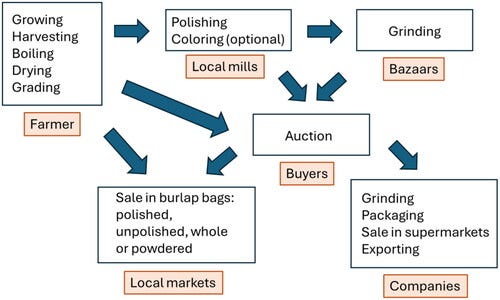
Oregano, cinnamon and chilli consistently appear among the most commonly adulterated herbs and spices globally. This is largely because they are traded in large volumes and are often sold in dried, ground or shredded forms that hide visual clues of tampering.
Ground cinnamon can be bulked out with cheaper plant materials or inorganic materials such as brick dust. In addition, lower‑grade cassia is sold as “true” cinnamon. Chilli powders are affected by the addition of unauthorised synthetic dyes to boost colour intensity.
Both “true cinnamon” (Cinnamomum verum) and “cassia cinnamon” (Cinnamomum cassia) are sold as spices. True cinnamon is also known as Ceylon cinnamon. Cassia cinnamon contains higher levels of naturally occurring coumarin (a toxic benzopyrone) than true cinnamon. In Europe there are legal limits for coumarin levels in foods.
Year after year, spices appear among the top food commodities affected by food fraud.
As Ron McNaughton, head of the Scottish Food Crime and Incidents Unit, told The i Paper in 2022, “There is no doubt that our food supply chains are under significant pressure as a result of Brexit, Covid, the war in Ukraine, and the general cost of living crisis.
“All these factors have the potential for criminals and organised crime groups to exploit… Spices are a commodity which are vulnerable to criminal exploitation.”
In the same article, The i Paper reported that it had found an India-based spice trader openly advertising coffee bean and black pepper husks online, on the basis they could be “used in grinding [of spices] to lower the production cost”.
In 2024, the UK National Food Crime Unit flagged continued risks of adulteration within the herb and spice sector in its Food Crime: Strategic Assessment Report (2024).
How they fake it
Cardamom – addition of colourants.
Food safety officials in India have reported that cardamom pods are being illegally dyed by farmers because consumers expect cardamom pods to be bright green, when in fact good-quality pods can be naturally pale green or yellow in colour.
Pepper – diluted with fillers, adulterated with colours. Whole seeds are fraudulently replaced with papaya seeds.
A targeted market survey of spices and spice blends in Canada found curry, garam masala, tandoori masala and cayenne pepper contained non-permitted colours or colours beyond the levels permitted in the regulations at a rate of 6% of samples (n = 101). The spices and blends originated in Canada, Iran, India and Pakistan.
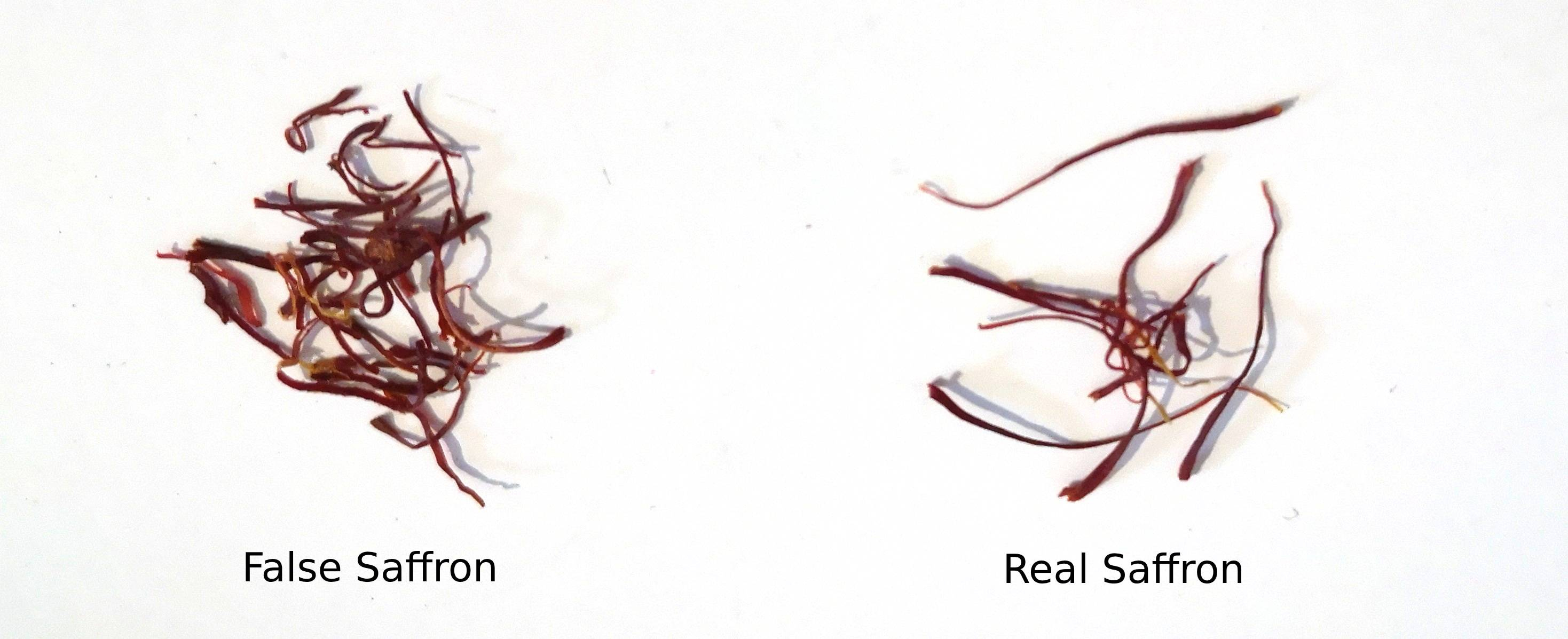
Saffron – adulteration with non-stigma parts of the crocus flower, use of safflower parts, the addition of dyes, and the misrepresentation of origin.
In a 2022 investigation dubbed ‘Operation Garden’, officials from the Spanish police and Europol uncovered a sophisticated criminal network trading chemically treated gardenia extract as saffron.
Gardenia extract closely resembles saffron in colour, but contains a tell‑tale molecule (geniposide) that authenticates it as non‑saffron. The fraudsters imported the gardenia extract from a Chinese factory that specialised in producing dyes.
They used a molecular process to eliminate almost all tell-tale traces of the molecule, making it extremely hard for any potential buyer to verify what they were buying as not pure saffron.
The authorities seized more than 2,000 kilograms of the fake ‘saffron’ and estimated that the company involved made around €3 million in illicit profit from selling the cheap gardenia extract labelled as saffron. Eleven people were arrested for crimes against public health, fraud, crimes against the market and consumers and membership of a criminal group.
Chilli – addition of colourants, including Sudan dyes, red oxide pigment and rhodamine-B dye. Can also be adulterated with cheap fillers to increase its weight, including dust and chilli stalks.
Tests conducted by Indian food safety officials on 650 food samples revealed a number of illegal and dangerous colourants in foods, including amaranth in beef chilli and Sudan I, II and IV in locally produced chilli powders.
Turmeric - adulteration with lead chromate.
Turmeric is prized for its bright yellow colour and has a long history of adulteration with the toxic textile dye lead chromate. A 2024 paper describes testing of 356 samples of dried turmeric root and turmeric powder, which found 14% contained more than 2 μg/g of lead.
Samples from three regions contained more than 1000 μg/g of lead. Samples with lead levels of 18 μg/g or more had molar ratios of lead to chromium of close to 1:1, suggestive of lead chromate adulteration.
In Issue 99, I told the story of researchers who had worked in Bangladesh to reduce the use of lead chromate in turmeric processing, and featured Mohammad, a turmeric trader who added lead chromate to his wares during the polishing process for whole turmeric roots.
The polishing process removes the outer layer of the root to reveal the yellow-gold-coloured interior. Lead chromate, a brightly-coloured textile dye, gives the roots an intense yellow colour which is associated with high-quality, fresh roots.
Mohammad learned this colour-boosting trick from other turmeric traders, who started doing it after a large flood affected the Bangladesh turmeric crop in 1988. Like the other turmeric traders in his region, he was unaware that the coloured powder was dangerous.
After the researchers partnered with the Bangladesh Food Safety Authority to develop an intervention program, which included awareness campaigns about the dangers posed by the yellow powder, education for business owners about the harms caused by lead and increased enforcement, Mohammad stopped using the dangerous colourant.He told reporters he is sorry for his past actions. “I have to answer to Allah that I used [lead-chromate] in food.”
🍏Read the story of Mohammad and the researchers who tackled turmeric adulteration at its source in Issue 99 | A Food Fraud Win for Everyone’s Favourite Yellow Spice 🍏
Cinnamon – adulteration, substitution and dilution.
Ceylon cinnamon (true cinnamon) was found to be substituted with or diluted with cassia cinnamon at rates of 9% of samples (n = 44) in a survey conducted by the European Commission’s Joint Research Centre (JRC). This and other problems affected 66% of all cinnamon samples in the survey (n = 104).
In addition to false claims about Ceylon cinnamon, other problems noted in that survey included quality issues, safety non-compliances and too-high concentrations of coumarin. Cinnamon adulterated with lead chromate caused a food safety scandal when it was used in millions of units of apple puree baby food in the United States in 2023. 🍏Read a case study of the scandal here 🍏
Standards
Purity and safety standards for herbs and spices are set at a national level and are often modelled on the standards codified by the Codex Alimentarius Commission (Codex), a joint FAO/WHO initiative that provides benchmarks for the quality, purity and safety of foods.
The Codex guidelines help ensure safe international trade by addressing purity, moisture, heavy metals, pesticides and microbial limits.
Country-specific regulations for spices typically align with or exceed Codex standards.
Testing
Authenticity testing of spices can be targeted to specific adulterants, such as identifying specific illegal dyes in chilli powders and paprika, or testing for the presence of starch or maltodextrin fillers.
Non-destructive spectroscopy tools – such as near-infrared (NIR), Fourier Transform Infrared (FTIR), and Raman spectroscopy – can be used for untargeted tests by comparing the spectroscopic signatures of a sample to statistical models of authentic samples, offering fast screening to flag suspicious materials.
DNA-based techniques provide precise confirmation of plant-based adulterants and substitutes, while visual microscopy can be used for identifying plant pieces in samples such as dried oregano and saffron.
Stable isotope ratio analysis (SIRA) examines carbon, nitrogen, or hydrogen ratios in samples to verify geographic origin, as cheaper substitutes often differ isotopically from authentic sources like premium saffron.
Chromatographic techniques, including gas chromatography-mass spectrometry (GC-MS) and liquid chromatography-mass spectrometry (LC-MS), target specific markers such as oleuropein in olive leaf adulterants or Sudan dyes in chilli, providing precise quantitative results.
Takeaways for food professionals
🍏 Spices are included in the top ten most fraud-affected food commodities year after year.
🍏 They are vulnerable because they are expensive, valued for characteristics like colour that can be fraudulently ‘improved’, often sold in powdered form and with complex supply chains containing many access points for unscrupulous activities.
🍏 Food fraud in spices can take the form of adulteration with undeclared and unapproved colourants, including carcinogenic Sudan dyes and heavy metal salts such as lead chromate, posing serious food safety risks.
🍏 If your company purchases powdered spices, heavy metal specification limits and analyses are recommended.
Main sources (others are hyperlinked inline):
A. Maquet, A. Lievens, V. Paracchini, G. Kaklamanos, B. de la Calle, L. Garlant, S. Papoci, D. Pietretti, T. Zdiniakova, A. Breidbach, J. Omar Onaindia, A. Boix Sanfeliu, T. Dimitrova, F. Ulberth, Results of an EU wide Coordinated Control Plan to establish the prevalence of fraudulent practices in the marketing of herbs and spices, EUR30877EN, Publications Office of the European Union, Luxembourg, 2021, ISBN 978-92-79-42979-1, doi:10.2760/309557, JRC126785
Milmo, C (2022) ‘Criminals leave a bitter taste for UK cooks by targeting £17bn herbs and spices market with fakes’, Bia Analytical, 15 August.
Michin, J (2022) ‘€3 million saffron fraud scheme uncovered by Spanish police’, New Food, 1 April.
National Food Crime Unit (NFCU) & the Scottish Food Crime and Incidents Unit (SFCIU) (2024) Food Crime: Strategic Assessment 2024. https://www.food.gov.uk/sites/default/files/media/document/FSA-Food%20Crime%20Strategy%202024.pdf
FSSC 22000 v 7 is here!
Enforcement from May 2027
Foundation FSSC has just published version 7.0 of the FSSC 22000 food safety management system certification scheme.
Key developments include incorporating the new ISO 22002-x:2025 series for prerequisite programs, aligning with the latest GFSI benchmarking requirements, strengthening support for UN Sustainable Development Goals (SDGs), refining food chain category structures, and editorial improvements.
Enforcement Timeline
While the document itself was published in May 2026, audits to version 7 start May 1, 2027, with version 6 certifications remaining valid until the end of the transition period on April 30, 2028.
All scheme documents are downloadable from fssc.com.
Learn more
Craft beers: sometimes good, sometimes ?hairy?
My city has become obsessed with craft beers in recent years. Some are great, others have flavour notes that just don’t appeal.
This 15-second video might explain the reason some craft beers taste just a little bit …hairy…
Below for paying subscribers: Food fraud news and incident reports
📌 Food Fraud News 📌
Webinar replay: Food Fraud in 2026
I really enjoyed presenting to the International Food Safety and Quality Network (IFSQN) on Friday.
I talked about best practices in vulnerability assessments and the changing state of food fraud prevention in 2026.
Watch the replay here: