
245 | 3 Quick Food Safety Bites |
Plus the best minds in food fraud (Part II) and the final word on pink pineapples

Last days to lock in 2025 prices
Insights from the frontline of food fraud (Part II)
Top 5 NCs to watch out for in 2027
3 quick food safety bites, plus the last word on pink pineapples
Food fraud report (deep dive)
Hi!
Welcome to Issue 245 of The Rotten Apple, where I celebrate more insights from the best minds in food fraud prevention and high-five the government of Canada for its exemplary work on the subject.
Also this week, I list the top 5 non-conformities in the latest audit stats and share two hidden gems I discovered in the process.
Finally, three quick food safety bites, plus the final word on pink pineapples.
Before we jump in, just a reminder that subscription fees increase this week, but only for people who sign up after June 30. Current subscribers keep the current price forever.
Being a paid subscriber means getting access to high-quality food safety resources and weekly food fraud reports. And supporting my mission to help you stay up to date without the boring bits.
Thank you!
Karen
P.S. Need more info about paid subscriptions? Learn more here. Or sign up today, beat the price freeze and….
Food fraud’s frontier: unexpected insights
Part II
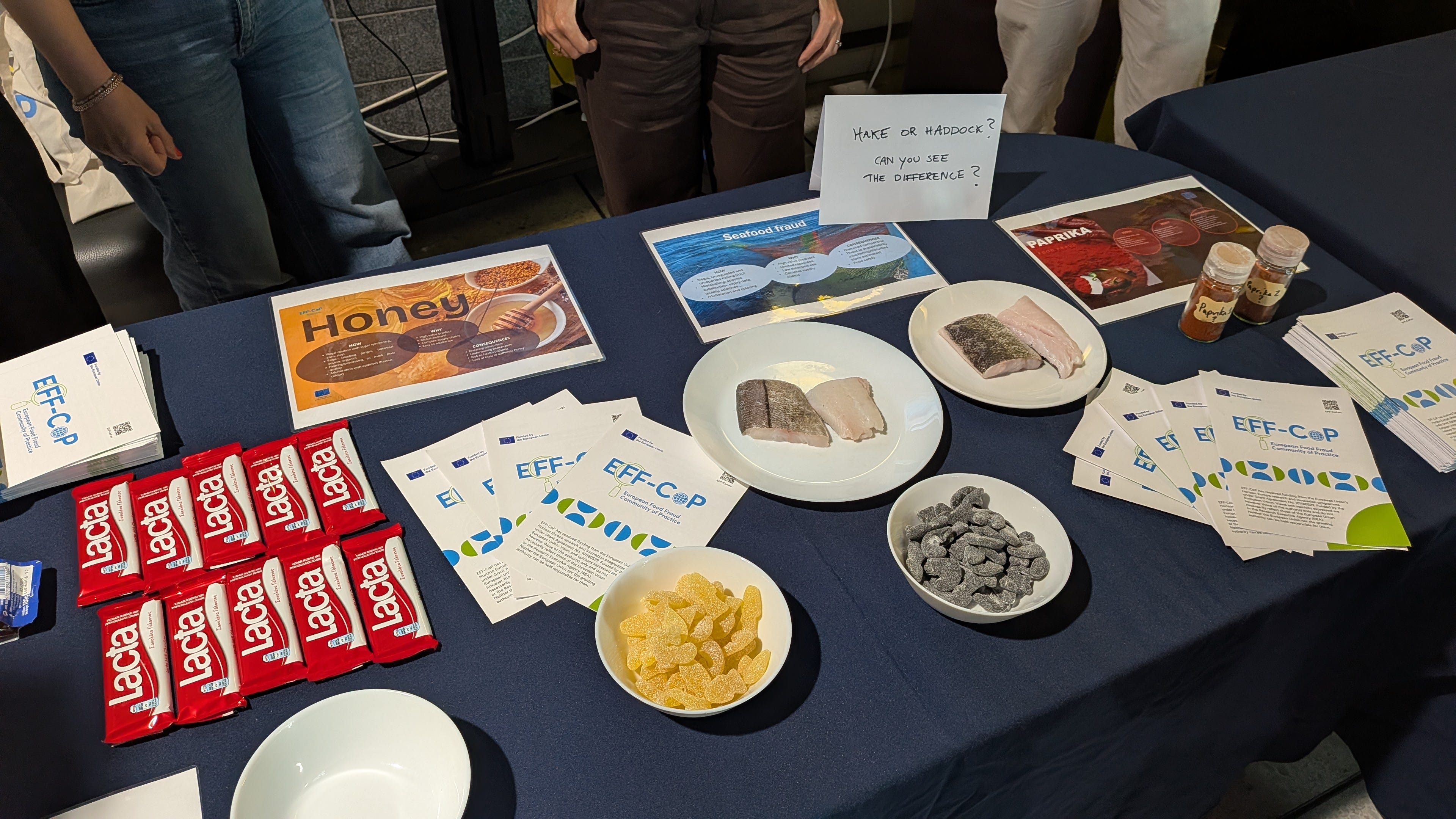
In last week’s issue, I shared a link to Part I of Insights From the Front Line of Food Fraud, as seen and heard at the Authentic Food Conference (EFF-CoP, 2026) in Dublin last month.
This week: Part II, which includes a fascinating peek into the neuroscience of dishonesty, tips on how to be a successful fraudster and insights from an anti-corruption consultant.
Click here to access Part I and Part II: From the frontlines: What the sharpest minds in food fraud are focused on right now
Top 5 food safety non-conformances
Plus 2 hidden gems from BRCGS
The food safety scheme owner BRCGS published its annual report last week.
I always get really excited when these reports come out because the non-conformance (NC) data provides a window into what food safety auditors and food safety specialists are thinking about right now when it comes to compliance with voluntary standards. This years’ BRCGS report is no exception.
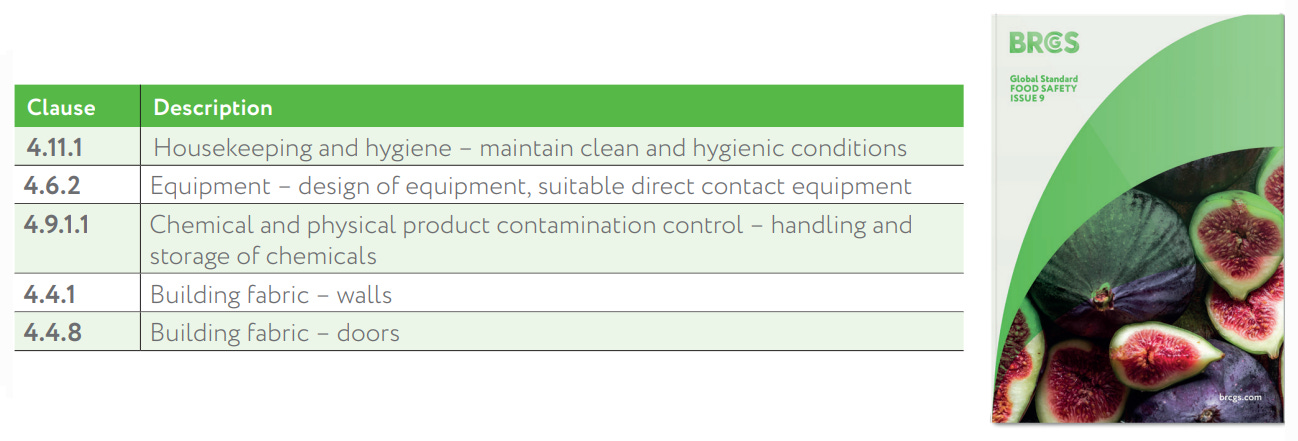
There is a definite pattern in the results, in that the top 5 non-conformances in food safety audits are all related to on-site activities rather than paperwork.
This could be due to an intentional focus or unintentional bias of BRCGS auditors, or it could be a genuine snapshot of where food companies are going wrong with their food safety compliance – it’s impossible to say from the data alone.
Here are the results.
Cleanliness: The top NC was against clause 4.11.1 “The premises and equipment shall be maintained in a clean and hygienic condition”.
Hygienic design of equipment: The second most common NC was also hygiene-related, specifically for not having hygienically designed equipment (clause 4.6.2 “The design and construction of equipment shall be based on risk, to prevent product contamination”). Last year, these two clauses accounted for almost half of all NCs.
Chemical handling system deficiencies were the third most prevalent NC (clause 4.9.1.1), followed by
Walls - the condition of walls (clause 4.4.1) and
Doors - maintenance and condition of internal and external doors (clause 4.4.8).
The ‘worst’ clauses in this year’s report are the same as those reported in last year’s report - only the order of the fourth- and fifth-ranked clauses has switched - and they are similar to those from other recent years. For example, hygiene, maintenance, doors, chemical controls and walls were top in 2022.
Other gems from the report…
Anonymous reporting mechanism
BRCGS has a confidential reporting system for reporting concerns about wrongdoings on BRCGS-certified sites and issues with certification bodies and auditors. The system has been active since 2020 and receives hundreds of reports related to sites, auditors and certification bodies per year.
Access it here: TellBRCGS
Supplier verification system
BRCGS also has a dedicated supplier verification system that provides live certification visibility, alerts and reporting for businesses that wish to monitor BRCGS-certified suppliers. Called Directory Pro, it was launched in October 2025. The system helps to reduce certificate fraud by giving purchasers a verified, up‑to‑date source of certification information for due‑diligence checks.
Learn more here: BRCGS DirectoryPro
3 Quick Food Safety Bites
1. Infant formula botulism update: German formula maker used the same supplier (wow)
Last week I shared the horrifying news that more babies had contracted botulism from infant formula, but that this time the product was made in Germany.
It was hard to see the link. I was sceptical that a German company would source milk powder from the United States. And, as usual, the United States authorities were not revealing sources or suppliers.
But now we know.
Nara Organics products are made in Germany, but the company began using whole milk from Organic West and Dairy Farmers of America (DFA) when it first started producing formula, as it searched for an EU-based supplier. During that time, Organic West supplied the fluid milk, and DFA’s plant in Nevada turned the milk into powder, Nara Organics told Helena Bottemiller Evich of Food Fix.
Organic West and Dairy Farmers of America (DFA) supplied ByHeart, the infant formula brand linked to the 2025 botulism outbreak.
Nara Organics products are linked to the most recently reported cases of infant botulism and are currently being recalled.
2. Food safety misinformation on TikTok
In a paper published in the latest edition of Food Protection Trends, researchers from Toronto Metropolitan University describe not just the proportion of TikTok videos that have poor food safety practices, but also the alarming finding that the ‘bad’ ones are more likely to be saved by viewers.
Videos with poor food safety practices are more likely to be saved than those with compliant food safety practices
On TikTok, the videos that get saved most often tend to be “how-to” content that people intend to return to and act upon. That is, videos with food safety misinformation are more likely to be re-viewed and used as a source of instructions, not just passively viewed once.
The researchers focused on two food safety practices: produce washing and checking the cooking doneness of ground meat and small cuts of meat and poultry, such as steaks and pieces of chicken, analysing 100 TikTok videos to see whether the food safety information provided by the video creators matched government guidance.
Seventy-six of the one hundred videos in the study dataset contained information that didn’t align with government food safety guidance — a 76% non-compliance rate.
Food industry professionals (chefs, butchers, farmers, food scientists, etc.) were significantly more likely to follow guidance than general creators: 42% vs 16%.
For produce washing, roughly three-quarters of videos recommended chemicals, most commonly vinegar (47%) and baking soda (40%), despite guidance saying plain water is sufficient and chemically equivalent for microbial reduction.
For cooking doneness, only 24% recommended a thermometer as the primary method of determining doneness. Most videos suggested the use of meat colour, texture, or cooking time, methods which do not reliably indicate safe internal temperatures.
Perhaps most alarmingly, videos with higher save counts were more likely to contain non-compliant information, and this was statistically significant.
Read the paper:
Achireko, A. and Young, I (2026) Food Safety Information in Produce Washing and Cooking Doneness Videos on TikTok, Food Protection Trends, July/August 2026, pp 450 – 457. Available at: https://www.nxtbook.com/nxtbooks/trilix/fpt_20260708/index.php#/p/450
3. Free risk assessment resource
FDA-iRISK is a free tool that can be used for predictive modelling of microorganisms, such as growth and inactivation, so that the impact of interventions can be measured.
Provides a model framework, built-in functions, and data-entry templates
Enables users to enter data and build scenarios
Directly connects data on probability and consequence through specification of a Risk Scenario (a risk assessment model) specific to food-hazard combinations.
It also includes chemical hazards and can be used for chronic chemical exposure risk assessments by calculating the lifetime average daily dose (LADD) distribution.
It is used by people who are knowledgeable about the hazards, foods and processes they are describing, but not necessarily familiar with risk assessment methodology and experienced risk assessors who wish to develop risk assessments more quickly.
Learn more and see a live demonstration in this webinar:
Pink pineapples — the final word
I may have got a little ‘in the weeds’ with the regulatory status of Del Monte’s genetically modified PinkGlow pineapples in the past two weeks 😊, aided and abetted by reader Theo of EUginius, the European GMO database. Mysteriously, it seemed the pineapples were approved for eating but perhaps not for growing.
The final word comes from Theo, who wrote to tell me that the Biosafety Clearing House (BCH) has a listing for the GMO pineapple and a record of its authorisation for planting and production in Costa Rica. Mystery solved!
Below for paying subscribers: Food fraud news
📌 Food Fraud News 📌
This week’s food fraud news is dedicated to the Canadian government’s annual food fraud report
I know most of you aren’t from Canada, but I’m diving into it for two reasons:
1) Because the situation in Canada is likely to be similar to the one in your country, particularly for commodities that are imported. Many of the non-compliant samples described in the report were imported, and some are likely from the same sources as similar foods in your country.
2) Secondly, the activities described in the report, and the report itself, represent best practice for government food authorities when it comes to food fraud prevention, awareness, detection and enforcement.
I’ll start with the best practices described in the report, then dive into the analytical results.