
250 | Tomato Fraud Bombshell |
Plus a new seafood pathogen, allergen label guidance and the craziest chip flavour yet

This is The Rotten Apple, an inside view on food fraud and food safety for professionals, policy-makers and purveyors. Subscribe for insights, latest news and emerging trends straight to your inbox each Monday.
Tomato fraud bombshell
3 Food safety quick bites
Traceability guidance
Insane chip flavour (did you say “battery”?)
Food fraud news, horizon scanning and recent incidents
Happy Monday, food champion,
Welcome to Issue 250 of The Rotten Apple where I discover yet another reason not to eat raw fish (and yet I love sushi and sashimi!) It’s called Kudoa septempunctata and it’s a (relatively) newly discovered food pathogen.
Also this week, my take on the tomato fraud bombshell that’s been rocking international supply chains and resources for traceability systems.
Plus an update on allergen labelling rules, reactions to the Cyclospora situation in the U.S. and battery-flavoured chips (crisps). Yup, battery flavoured!
Enjoy,
Karen
P.S. Shoutout to 👋 Steve from South Africa 👋 for upgrading to a paid subscription. Every subscription counts. Thank you!
Tomato Fraud Bombshell
A food fraud bombshell exploded in the processed tomato industry last week after an Australian documentary revealed widespread origin fraud in tomato pastes and purees.
The impact is being felt globally. No matter where you are in the world, if you purchase processed tomatoes, you should be afraid. Very afraid.
Journalists from the respected Australian public broadcaster the ABC commissioned authenticity testing to determine the geographic origin of processed tomato products. They found that many products which claimed to be made with Australian-grown tomatoes had chemical profiles that match Chinese-grown tomatoes.
Specifically, 221 products from 39 brands were tested, with approximately 25% found to have a disconnect between the origin claims on pack and the origin determined by authenticity testing.
Not surprising. We have known there’s an oversupply of tomatoes in China’s Western provinces for a while. And there was a similar issue with UK products in 2024.
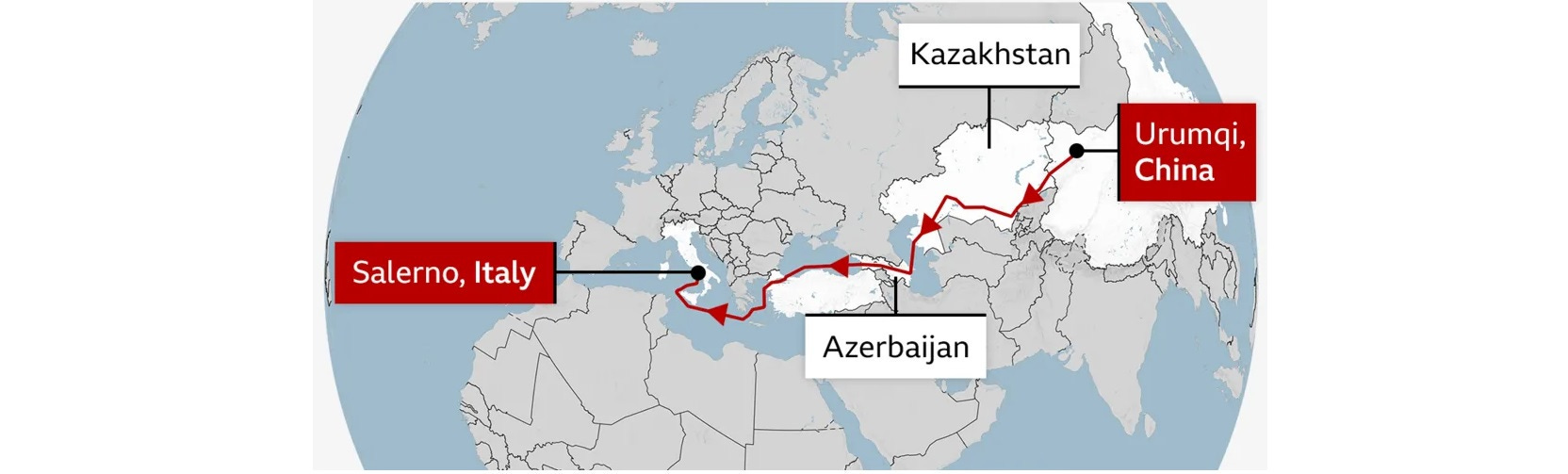
What is surprising is that almost all the Australian brand owners of the suspicious products were willing to go on the record with written statements saying they had robust traceability information from their suppliers, and that this traceability information gives them “the utmost confidence” that their products were made with Australian-grown tomatoes.
[Note that Australia has super-strict laws about origin claims and every single food product sold in Australia must be labelled with its country of origin by law.]
What’s happening here? Why would brand owners go on the record saying they are sure there’s no problem with their products if there’s a credible question about their authenticity?
It’s an unusual response. In my experience, brand owners accused of authenticity issues are more likely to prevaricate or provide vague denials, rather than publish definitive, specific statements of confidence in their supply chain and their own verification processes.
This points to two unique circumstances in this investigation:
The investigation began some months ago, and the results have only just been published. I can confirm this has been a long-running investigation because I assisted the journalists in the early stages of their research in early 2026.
The brand owners were given sufficient time to properly deep dive into their own supply chain verification systems and that of their suppliers. (Sadly this usually isn’t the case when allegations of food fraud are published).
The result: the brand owners could go back to the journalists with on-the-record statements that their supply chains are clean and that their suppliers’ traceability systems are robust enough to show the tomatoes are Australian-grown before the allegations were published.
But here’s the problem: the science disagrees.
So is the science wrong, or are the brand owners wrong?
I say neither.
I have faith in the brand owners who have had these allegations levelled against them. We are talking about large, prestigious Australian brands, with plenty of in-house technical expertise, knowledge of food fraud and years of experience. If they say the traceability records are robust, I believe them.
I also have faith in the scientists who designed and ran the authenticity tests, at Source Certain. They stand behind their test results, which were obtained using trace element analysis (TEA) and/or stable isotope ratio analysis (SIRA). Their methods are robust, and this is not the first tomato origin project they have successfully completed.
So if I trust the brand owners and the science, how can I explain the discrepancy?
What do I think has happened?
I think someone upstream in the processed tomato supply chain has done an extremely good job of creating credible traceability records, possibly accompanied by some sort of transshipping of processed tomatoes through Australian locations.
Other respected food fraud professionals agree.
It’s a shocking allegation, but I think someone, or multiple people, have faked traceability records in a highly skilled and systematic way. In doing so, they managed to successfully deceive the brand owners of these processed tomato products, and ultimately, consumers. And that is food fraud.
How is this different to the UK tomato paste scandal?
Testing of tomato pastes in the United Kingdom in 2024 found Chinese-grown tomatoes in various products. The results were published by UK broadcaster the BBC and presented as fraud, but the legal situation was murkier, and mostly related to allegations that the supply chains were affected by forced labour.
In Australia, there are strict rules about how the origin of foods is labelled, and every package must explicitly carry a country of origin statement in a specific format. Products that are labelled ‘Australian’ or made with Australian-grown tomatoes have certain legally defined criteria they must meet.
This means the problems with origin claims alleged in the current scandal are a clear regulatory breach - the situation is more clear-cut than in the United Kingdom.
What do insiders say?
I’ve been told that physically moving Chinese tomato paste into Australian facilities in order to pass it off as Australian-made would be difficult to do clandestinely due to the quantities involved, the distances of major tomato growing areas from sea ports and because bulk containers for Australian-processed and Chinese-processed pastes look different. This has been presented to me as evidence that the lab tests can’t be trusted.
I’ve also heard that one of the Australian brands was purchasing from Petti in Italy - a tomato processor that was accused of misrepresenting the origin of its ingredients in 2021. It was investigated by Italian authorities, which told the courts Petti had systematically and fraudulently misrepresented the origin of the tomatoes used in its products by mixing foreign tomato concentrate with semi-finished Italian products and selling them as ‘100% Italian tomato’ and/or ‘100% Tuscan tomato’. Petti denied the accusations and the matter was settled out of court.
Petti was named as an Italian supplier of Chinese-grown tomato products in the 2024 BBC investigation. During that investigation, Petti told the BBC that it bought Chinese tomato paste but refuted the BBC’s assertions that its supply chains involved forced labour.
I’ve also heard speculation that tomato plants grown with fertiliser sourced from China could bear tomatoes with elemental and isotopic profiles that mimic Chinese-grown tomatoes. Could this be a contributing factor? I don’t know, but it’s an intriguing angle.
What happens next?
Will we ever find out exactly how these alleged frauds were perpetrated? Probably not. Internal investigators will find out, but in circumstances such as these, the results rarely end up being shared publicly.
Pleasingly, multiple tomato brands that weren’t named in the documentary have been contacting experts to make sure they can verify the traceability information their suppliers provide.
Prosecutions? Maybe. I’ve been asked whether Australian enforcement agencies will commence criminal proceedings against the companies named in the documentary.
I think there will have to be some sort of action. The relevant authority (the ACCC) won’t be able to ignore this issue, since it has gained widespread interest from Australian consumers. However, they are more likely to take a collaborative approach with the accused brands than to pursue a criminal prosecution.
I say this because in 2016 the ACCC was made aware of fraud in seven brands of oregano and used non-prosecution approaches with all but one of the brands (read more about that here). (And criminal prosecutions are, of course, much more resource-intensive than other enforcement approaches)
Internationally, purchasers of tomato paste and tomato purees are already checking their supply chains to make sure they are not being misled about the origin.
What to do with this information?
If you purchase processed tomato products such as pastes or purees, be aware that this investigation – and the brands’ responses – has revealed possible frauds that seem to be both widespread and sophisticated.
In 2025, I shared information about vulnerabilities in the tomato paste supply chain with paying subscribers, and warned that products marketed with specific country of origin claims were most at risk.
Those vulnerabilities still exist. The frauds I warned about included transshipping and reprocessing to disguise the true origin of Chinese pastes, other false origin claims, blending, dilution, addition of fillers and other adulterants to extend the volume or enhance the apparent value of low-quality pastes. And I warned that Chinese-origin tomato pastes have been linked to labour violations and modern slavery (full entry and source here).
In short: It’s been alleged that multiple Australian brands of tomato paste have been marketed with false origin claims due to credible testing based on trace element analysis (TEA) and/or stable isotope ratio analysis (SIRA) 🍏 The brands say their supply chains are trustworthy 🍏 Experts suspect deep and sophisticated document fraud to create robust-looking traceability 🍏 Insiders disagree 🍏 Enforcement action is likely, although this may not include criminal prosecutions 🍏 If you purchase tomato paste or puree, update your vulnerability assessments and fraud mitigations urgently 🍏
Main sources (others are hyperlinked inline):
Four Corners, ABC Australia (2026). We tested your groceries. This is what we found. Available on YouTube
Rudin, M. (2024). ‘Italian’ purees likely to contain Chinese forced-labour tomatoes. BBC [online] 1 Dec. Available at: https://www.bbc.com/news/articles/crezlw4y152o .
Dongo, D. (2021). Petti canned tomatoes, trade fraud. Maxi-sequestration of RACs - FoodTimes. [online] FoodTimes. Available at: https://www.foodtimes.eu/consumer-en/petti-canned-tomatoes-trade-fraud-maxi-sequestration-of-racs/
3 Quick Food Safety Bites
U.S. Cyclospora outbreaks update: almost 21K affected
Illnesses continue to occur in the United States, with almost 21,000 cases now recorded (that figure is based on a sum of case counts from all fifty states). The official CDC count is “at least 1,947”.
The FDA’s outbreak investigation page lists four outbreaks of cyclosporiasis for June and July 2026: three outbreaks that are ongoing and one that has ended. Only one outbreak has a food source identified, and that is iceberg lettuce from Mexico supplied by Taylor Farms.
With so many illnesses, unknown food sources for two of the three ongoing outbreaks, and questions about government handling of the situation, U.S. commentators have given the situation a new name: Lettuce-gate.
New pathogen Kudoa septempunctata
Today I learned about a new(ish) pathogen in seafood: Kudoa septempunctata (thanks Food Safety News). It is a myxosporean parasite and was first described in 2010. Cases were increasing until the COVID pandemic, and researchers in South Korea are calling for increased surveillance as consumption of raw fish normalises to pre-pandemic levels.
Unless you’re connected with sushi supply chains, you probably don’t need to worry about this parasite, since it primarily affects food made from the olive flounder fish (Paralichthys olivaceus) and is inactivated by cooking.
Kudoa septempunctata causes acute vomiting and diarrhoea within hours of consuming affected fish. The symptoms are usually temporary but sometimes severe enough to require hospital care.
Myxosporean parasites are microscopic, spore-forming parasites that infect fish and other cold-blooded aquatic animals. They have complex life cycles, often involving two hosts, commonly a fish plus an aquatic worm. Myxosporean parasites are not common foodborne pathogens, with species in the Kudoa genus being the only members of this taxonomic group associated with foodborne illness.
Olive flounder (Paralichthys olivaceus) – the primary food source of this pathogen - is a saltwater fish with a firm texture and mild flavour. It is one of the most important farmed flatfish species in Korea, and is also farmed in Japan and China.
It is exported to countries including Canada, the United States, Europe, Australia, and Gulf countries, sometimes as live fish.
Olive flounder (Paralichthys olivaceus) was previously known as Hippoglossus olivaceus and is also labelled as Japanese flounder, Korean halibut, and hirame.
Allergens: Official PAL guidance from Codex
In recent years, precautionary allergen labelling such as “may contain nuts” has become so prevalent that allergic consumers have begun to lose trust in food labelling. With the overuse of such labelling, allergic consumers were either avoiding foods that would have been safe to eat or ignoring warnings.
Earlier this year, in Food Safety: What’s in store for 2026? I mentioned that Codex Alimentarius was working on guidance for precautionary allergen labelling (PAL) for packaged food.
Now, the guidance has been published.
It provides food businesses with science-backed thresholds to determine whether their products are safe for the vast majority of food allergy sufferers so that precautionary allergen labelling can safely be used only when necessary.
In a nutshell, the guidance states that precautionary allergen labelling must be risk-based, evidence-based and used only when justified.
The guidance has been adopted and will be published as an annex to the General standard for the labelling of pre-packaged foods (CXS 1-1985).
You can get the standard from this page: Standards | CODEXALIMENTARIUS FAO-WHO
Traceability Resources for the FSMA Traceability Rule
One of the complaints about ‘Lettuce-gate’ is that the size and duration of the Cyclospora outbreaks would have been limited if the (U.S.) FSMA Traceability rule had been implemented in January 2026, as planned, instead of being extended more than two years until July 2028 by a congressional directive.
I’m not sure that a lack of traceability is solely to blame for lettuce-gate, because, as we saw in Issue 247, Cyclospora is difficult to isolate from food and environmental samples, which makes food sources hard to confirm.
But, despite the delayed compliance, there’s no excuse not to have a rock solid traceability system in place, and the FDA has provided a heap of resources for food businesses, including a video explainer, links to frequently asked questions and guidance documents.
Get all the resources here: Getting Started with the Food Traceability Rule
More like this: 🍏 What you need to know about data exchange for FSMA traceability | Issue 226 🍏
Is this the most insane chip flavour ever?
In my quest to bring you the best food safety and food fraud news each week, I stumble upon some crazy stuff!
But this might just be the craziest yet: battery-flavoured corn crisps. Battery. As in 9 volts. The brand Rewind launched battery-flavoured corn crisps in the Netherlands in 2025. Their idea: to recreate the sensation of touching a battery to your tongue.
The flavour contains a blend of citric acid and sodium bicarbonate to create a tingling effect with mineral salts for a metallic note. They’re said to taste like an extra-sour crisp that is “surprisingly tasty”. Here’s a live tasting on YouTube.
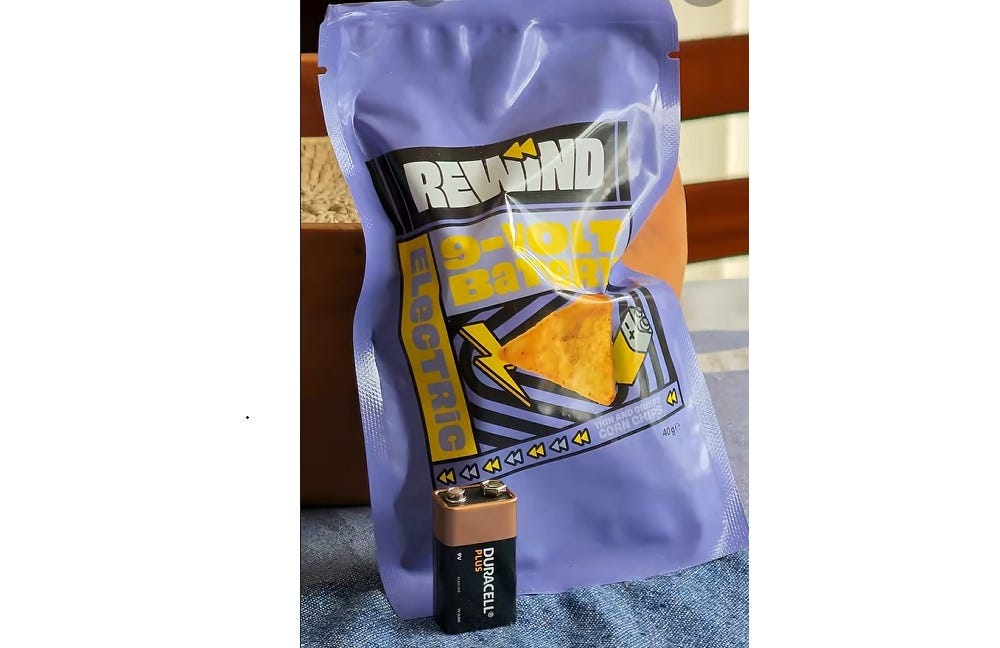
Source: Hyslop, G. (2026) Why weird works: The most left-field product launches of the past 12 months BakeryAndSnacks.com.
Below for paying subscribers: Food fraud news, horizon scanning and incident reports
📌 Food Fraud News 📌
In this week’s food fraud news:
📌 Spices mix containing undeclared peanuts
📌 Wildfire smoke threatens French wine
📌 Fake donkey meat
📌 Honey with sildenafil (Viagra) recalled