
220 | The worst and weirdest food safety moments of 2025 |
Plus, how to deep fry a Christmas turkey

Weird and (not)wonderful moments from food safety for 2025
Top posts of The Rotten Apple this year
Food safety news roundup
How to deep fry a Christmas turkey
Food fraud news
Happy Christmas to those of you who celebrate it.
I got a gift for you, our wonderful readers (you’re one in a melon!). The gift is watermelon seeds from Oxfam International. It supports women to start their own businesses, including growing fruit and veg to feed their communities.

Welcome to Issue 220.
In this issue: the worst and weirdest food safety moments of 2025, what you missed from The Rotten Apple in 2025 and how to fry a Christmas turkey.
This is the final issue for the year. Normal programming recommences in two weeks. In the meantime, we’ll continue to monitor food fraud and food safety news and catch you up on anything you missed on 12th January. Until then, my assistant Jane and I wish you all the best.
Karen
💝 🌲 👪 🌞 👪 🌲 💝
P.S. If you want to catch up on past issues, all 219 of them are accessible (and free) on the website for your holiday reading pleasure 🙄. Paying subscribers can access an index of past articles organised by topic for easy browsing.
Worst and weirdest food safety moments of 2025
From ropey cakes to anthrax and weird myths about hand sanitiser, to botulism-causing baby formula and Listeria‑laden pasta meals, 2025 delivered some unsettling reminders of how badly things can go wrong in the food system.
This roundup describes some of the weirdest and worst food safety moments of the year, and what they reveal about the cracks in our systems.
Weirdest: Snake ice cream
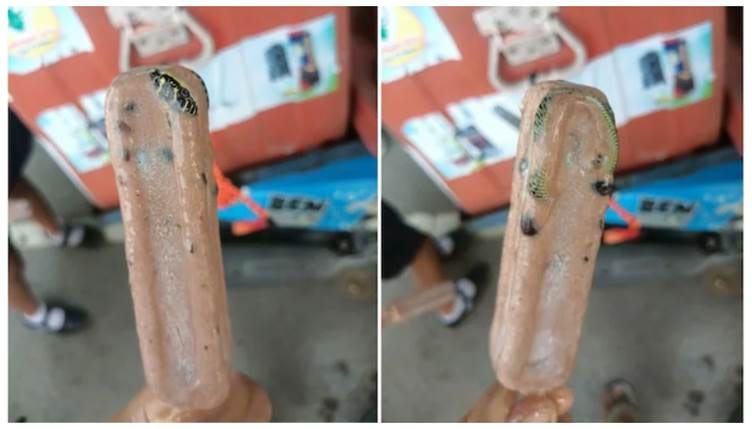
In March, a consumer in Thailand unwrapped a single-serve black‑bean ice cream and found an entire black‑and‑yellow snake frozen inside. The photo went viral on social media, prompting questions about how the snake or its carcass got into the mould.
(Comment: black-bean ice cream? I’d love to try that - without the reptile surprise)
Source: Snakes, sharks and surprise contaminants | Food Safety News
Radioactive shrimp
Recalls for radioactive food are rare.
In the United States, multiple brands of frozen shrimp were recalled between August and December, after inspectors found traces of caesium‑137, a radioactive isotope, in food sampled during import. The contamination may have originated in a metal recycling facility near the shrimp processor in Indonesia.
Get the full story: 🍏 Radioactive Shrimp: The Story Behind the Recalls (+ The Funniest Memes) 🍏
Weird hand sanitiser myth
In 2025, I heard the weird myth that you can “kill” or “disinfect away” food allergens on your hands with alcohol hand sanitiser, as if allergens behaved like bacteria.
In this fantasy version of hygiene, a quick squirt of sanitiser is seen as a substitute for washing off residues of peanut, milk, egg, gluten or other allergens. Unfortunately, allergens are mostly proteins that need to be physically removed, not inactivated like microbes, and hand sanitiser does not remove them, but simply smears them around.
It is a strange belief for people who would never dream of skipping pathogen control but who remain willing to rely on hand gel after handling allergenic foods.
Hand sanitisers will NOT remove food allergens from hands.
You might also like: 🍏A Complete Guide to Allergen Management for Food Safety Professionals 🍏
Anthrax from undercooked beef
Anthrax, a serious infectious disease caused by the bacterium Bacillus anthracis, usually causes skin or respiratory infections through contact with infected animals and inhalation of B. anthracis spores.
But anthrax can also cause foodborne illness. In April, at least 638 people were potentially exposed to anthrax after butchering livestock and eating raw or undercooked beef from infected cattle in Thailand. One person died.
From: 🍏 Food Safety News and Resources | May 2025 🍏
Ropey cakes and a new foodborne pathogen
Also in May, I reported on a curious outbreak caused by a different Bacillus species, Bacillus velezensis, one that has never before been linked to foodborne illness. The victims ate cakes affected by ‘ropiness’, a form of spoilage in bakery products caused by bacteria whose spores survive baking and germinate in warm, moist conditions.
Ropiness gets its name from the sticky, stringy, and slimy crumb in spoiled breads and cakes, which can include long, web-like strands when the product is torn open.
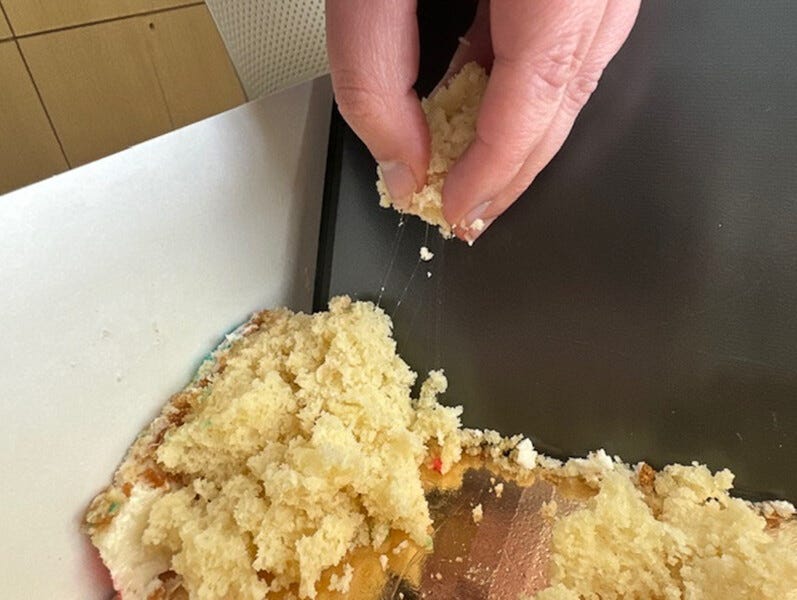
People who had eaten rope-affected cakes served at a company event experienced gastrointestinal symptoms, and those who had not eaten such cakes had no symptoms, with a dose-response relationship between the quantity of cake consumed and symptoms, giving credence to the link between the bacterium and the illnesses. Bacillus velezensis was found in leftover cakes, but B. cereus was not present.
B. velezensis is used as a natural biocontrol agent for plant pathogens, including phytopathogenic fungi. It can be found in Syngenta’s ARVATICO and CERTANO agricultural pesticides.
Its endospores could have been present in the flour used to make the cakes due to the use of biocontrol agents in wheat growing or storage.
Full story: 🍏 Issue 187 | (Another) foodborne pathogen you’ve probably never heard of… 🍏
Seed oils are hateful?
Okay, maybe it’s not “weird” exactly, but the 2025 US-led campaign against seed oils is definitely a head-scratcher.
In 2025, representatives of the United States government, working within the ‘Make America Healthy Again’ policy platform, launched a set of actions against seed oils, including soybean, canola, corn, cottonseed, sunflower, safflower, rice bran and grapeseed, amid online depictions of the oils as “hateful”.
Concerns cited include the use of solvents in refining processes, high omega-6 concentrations and the oils’ use in ultra-processed foods; however, evidence that seed oils are inherently unsafe is in short supply.
Full story and all sources: 🍏 Seed Oils - A Food Safety Issue or a Beat Up? | The Rotten Apple 🍏
Pork causes brain seizures
In 2025, a case study published in The Lancet described a cluster of seven children in Belgium with pork tapeworm cysts in the brain (neurocysticercosis). Some of them suffered epileptic seizures as a result. The infections were traced to a single student who had eaten pork contaminated with the parasite Taenia solium while travelling abroad and then passed infectious tapeworm eggs to other children through faecal-oral exposure.
Source: Neurocysticercosis school outbreak in Belgium | The Lancet
More unexpected outcomes
A 2025 multi‑country burden‑of‑disease analysis pulled together more data confirming that foodborne infections are contributing to significant long‑term outcomes. Examples include impaired kidney function after Shiga-toxin producing Escherichia coli infections (STEC), Guillain‑Barré syndrome and chronic nerve disorders after Campylobacter infections, infertility from dioxins and intellectual disability in children from maternal methyl‑mercury exposure in food.
The paper, published in PLOS Global Public Health, asserts that cardiovascular disease, liver cancer, chronic kidney disease and neurodevelopmental disorders should be seen, in part, as downstream consequences of food exposures, rather than simply as classic non-communicable diseases.
More like this: 🍏 Sequelae: The Mysterious Long-term Outcomes of Foodborne Illness 🍏
Worst? Infant formula botulism outbreak and recall (USA)
In November, we learned of a possible link between a brand of infant formula made with grass‑fed whole milk and organic prebiotics and babies suffering from infant botulism.
The link has since been confirmed, with government agencies reporting the outbreak includes cases that date as far back as December 2023. The current case count is 51 (at 10 Dec 2025), with 0 deaths. Multiple batches of product have been recalled.
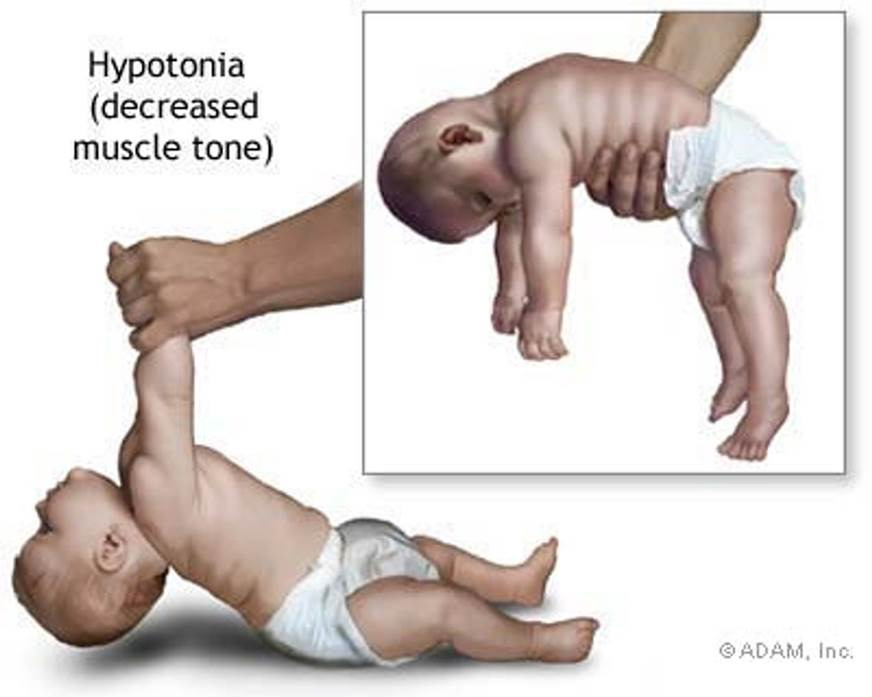
Infant botulism occurs when a baby swallows Clostridium botulinum spores that then grow inside the baby’s large intestine, producing toxin that causes paralysis. Older children and adults are protected by their mature gut microbiota, higher stomach acidity, and well-developed gastrointestinal immune systems, which prevent the spores from germinating and colonising the colon.
The United States usually experiences 150–180 individual cases of infant botulism annually, but the Centers for Disease Control and Prevention (CDC) has confirmed this as the first outbreak of infant botulism in the country (CDC).
The outbreak was discovered because the California Department of Public Health’s Infant Botulism Treatment and Prevention Program (IBTPP) observed a concerning increase in the incidence of infant botulism, typically a rare illness, in infants consuming ByHeart infant formula in 2025.
What makes this outbreak and recall one of the worst for 2025?
Babies (!)
Initial response from brand owner (“Not our fault”)
A history of problems at Byheart’s manufacturing facility
An ineffective recall
When Byheart was first made aware that cases of botulism had been linked to its products, the company posted a statement on their website titled ‘Update for our Byheart Family’, which said, in essence, that the illnesses were not its fault.
The company’s statement, with its breathtaking stance of blaming parents for letting dust get into cans of formula, was captured by Food Politics before the company amended it to something more conciliatory a few days later.
The company has a history of food safety failures. In December, the United States Food and Drug Administration (FDA) released inspection documents from the Byheart Ohio facility that included the following observations (verbatim, via Food Safety News).
“Observation 1: You approved and released for use an ingredient that was not manufactured, packaged, labeled, or held under conditions to prevent adulteration.” “Observation 2: You did not exclude pests from your food plant to protect against contamination of food.” “Observation 3: You did not maintain a building used in the manufacture, processing, packing or holding infant formula in a clean and sanitary condition.” not monitoring the floor conditions adequately at the dryer ____ (level __ and level __) when there were findings of confirmed Cronobacter Sakazakii.”
Two additional observations include the firm not having clear barriers separating hygiene zones, and not monitoring bathhouse differential pressures.
The recall has been ineffective. In mid‑December, the FDA issued warning letters to four major retailers (Albertsons, Kroger, Target, Walmart) for failing to remove ByHeart infant formula from shelves in dozens, if not hundreds, of stores.
One retailer even promoted the recalled formula with a special discount after the recall had been initiated, and in several cases, product returned by consumers as part of the recall was placed back on shelves for resale.
All four retailers seem uninterested in correcting any problems with the recall. The FDA’s warning letters to each of the retailers state, “Despite [up to 6] follow-up emails, the [retailer’s employees] have not provided FDA with any information demonstrating that corrective actions to implement this recall have been put in place.”
Sources:
CDC’s Rapid Response Helps Solve First Infant Botulism Outbreak Linked to Formula | CDC Newsroom
FDA releases more inspection documents from ByHeart infant formula plants | Food Safety News
FDA warns retailers who failed to pull recalled ByHeart formula | Food Safety News
(Also) Worst: Listeria in pasta meals
A Listeria monocytogenes outbreak from heat-and-eat pasta meals that began in August 2024 was only publicly linked to pasta dishes in June 2025, and continued to cause illnesses and deaths even after recalls started.
The source of the contamination was not identified for many months: only in September 2025, three months after recalls commenced, did authorities confirm that pre-cooked pasta supplied to the ready-meal manufacturer, FreshRealm, carried the outbreak strain.
Listeria monocytogenes is a particularly dangerous food pathogen because it grows at refrigeration temperatures, causes severe invasive disease (sepsis, meningitis, miscarriage) in elderly, pregnant, immunocompromised or chronically ill people, and has a long incubation period that makes outbreaks slow to detect.
In this case, there was a three-month lag after the outbreak strain was found in FreshRealm pasta meals (19 March), before recalls commenced. The supplier of the pasta ingredient, Nate’s Fine Foods, continued to ship “certain lots” of cooked pasta for months, and these were used in salads, deli bowls and other ready-to-eat foods by many manufacturers even as the ready meals were being recalled.
It appears that FreshRealm and Nate’s Fine Foods effectively treated “no pathogen detected in a particular sample” as a green light, despite an unresolved Listeria problem and the known limitations of product testing.
Notably, the supplier of the cooked pasta ingredient, Nate’s Fine Foods, held Level 2 SQF certification with an “Excellent” rating.
What makes this outbreak and recall one of the worst for 2025?
The manufacturer appears to have continued to produce ready meals during the period between the first recall (June) and the identification of the source of the Listeria.
Post-cooking contamination at the pasta supplier appears to have been ongoing for a period of at least one year.
Investigations and the green-lighting of incoming ingredients and finished products appear to have relied heavily on negative Listeria test results, despite known limitations with microbial testing.
Possible very high levels of contamination in implicated products. Assuming a typical infective dose estimate for L. monocytogenes for vulnerable populations of 105 per serve, the food would have had to contain almost 300 cells (102) per gram to cause illnesses.
Brand owners may have ignored signs of hygiene and sanitation failures: dozens of product reviews for the recalled pasta alfredo on a retailer’s website reveal major ongoing spoilage problems for within-date product, with such reviews dating back to more than a year before recalls commenced.
Unresolved questions about the effectiveness of consumer heating: the Walmart brand version of the recalled pasta alfredo, Marketside, was accompanied by instructions to microwave for 2.5 minutes. The Kroger brand, Home Chef, of an almost identical pack size, states “Ready in 4 min”.
Read a selection of the one-star reviews here: 🍏 Deadly Listeria outbreak from heat-and-eat meals | Issue 194 🍏
Get the full story (and all sources) here: 🍏 Pasta disaster: Case study of a food safety train wreck | Issue 214 🍏
Next time: The weirdest food fraud moments of 2025
The Rotten Apple in 2025
It’s been a huge year for The Rotten Apple. We’ve had phenomenal growth, passing 5,000 readers, and the statistics elves tell me I averaged 12 posts per month in 2025 - that’s pretty crazy for a once-per-week newsletter!
In 2025, we published:
4 regular issues per month; plus
4 audio versions per month (did you know you can listen in a podcast app - just search for The Rotten Apple Food Safety); plus
1 special supplement for paying subscribers per month; plus
3 posts dedicated to resources and ‘best-of’ articles per month.
Most popular issues of 2025:
173 | Mystery Poisonings Stalk Citizens | 14 Rules for Bad Quality Managers (Yes, “The machine is haunted” is an acceptable root cause analysis)
196 | Chocolate Fraud, Chocolate Safety, Chocolate Mysteries |
214 | Pasta Disaster: Case Study of a Food Safety Train Wreck |
Most loved post:
Your favourite topic:
🍏 Check out our collection of free food safety resources 🍏
In other news, this month I had to remove the monthly subscription option due to an increase in bot activity (money laundering using credit card disputes/refunds and intellectual property theft).
This will not affect you if you already have a monthly subscription: your current rate is locked in and safe.
Food Safety News and Resources
Our food safety news and resources posts are hand-curated collections of unusual recalls, learnings from outbreaks, guidance documents and helpful free webinars. It’s a quiet one this week.
Click the preview below to read.
Food Safety News and Resources | December

22 December | Large norovirus outbreak, infant formula with B. cereus, good news for peanut allergies, a highly praised guidance document and fewer import inspections...
Deep Frying a Christmas Turkey
When Uncle Kevin volunteers to deep fry your Christmas turkey in a giant pot of peanut oil over an open flame in your garage… what can possibly go wrong? This video has it all.
(Actually, the DIY deep fryer worked, and the results look pretty good! Thanks, Uncle Kevin).
Thank you for making space for us in your inbox this year. We wish you and your family a safe, relaxing and joyous holiday period.

Below for paying subscribers: Food fraud news, research and incident reports
📌 Food Fraud News 📌
In this week’s food fraud news:
📌 A food fraud conference with a difference (save the date!);
📌 Warnings for feta cheese and pork;
📌 Matcha supply issues;
📌 Fraud in coconut water, olive oil, fish, honey, hard cheese, fruit juice and more.
Food fraud conference with a difference
🚨 The EFF-CoP: European Food Fraud Community of Practice conference will be in Dublin, Ireland, in May 2026. Its organisers are promising an event packed with unusual sessions:
🍽️ A Food Fraudsters vs Fighters live debate in a Debating Chamber
🧠 Fraud Insights from Unexpected Places — neuroscience and trade flow economics meets forensic accountancy
🔐 Escape the Fraud Room
🎮 The serious game Dirty Money
🔬 A Mini Science Lab & poster market
📖 Dangerous Stories — from a scientist, a prosecutor and a media expert
🎬 A mini food fraud film festival in the UCD Cinema
🎶 Science in Tune Café with live evening music
🚚 Food-truck dining featuring authentic foods
🧩 Roundtables, workshops, shared good practices, Guess the Fake
📢 Plus classic conference sessions — abstract submissions will be invited.
👉 Register your interest at the link below to be notified when registration opens: